Artist Profile: Spacemoth

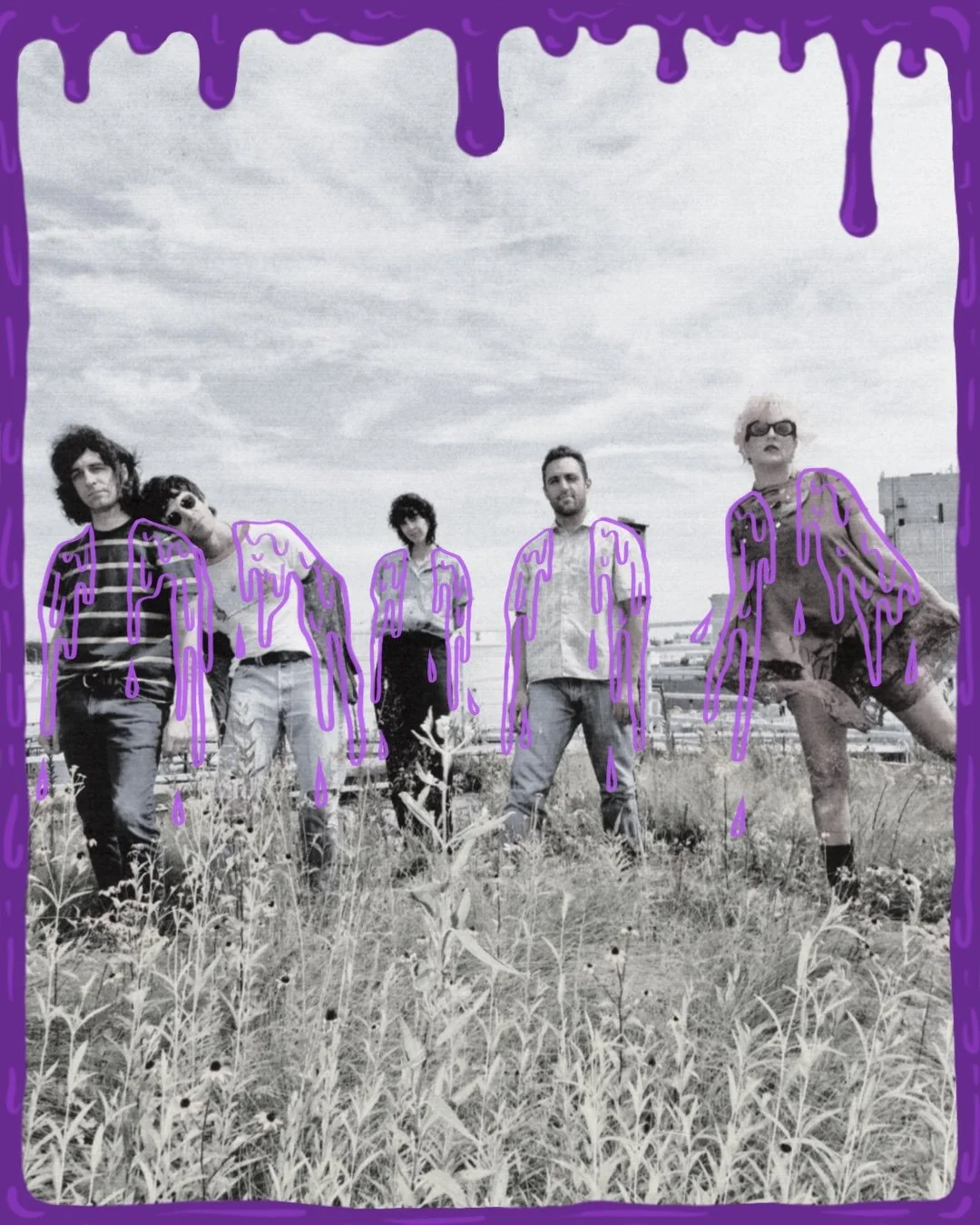
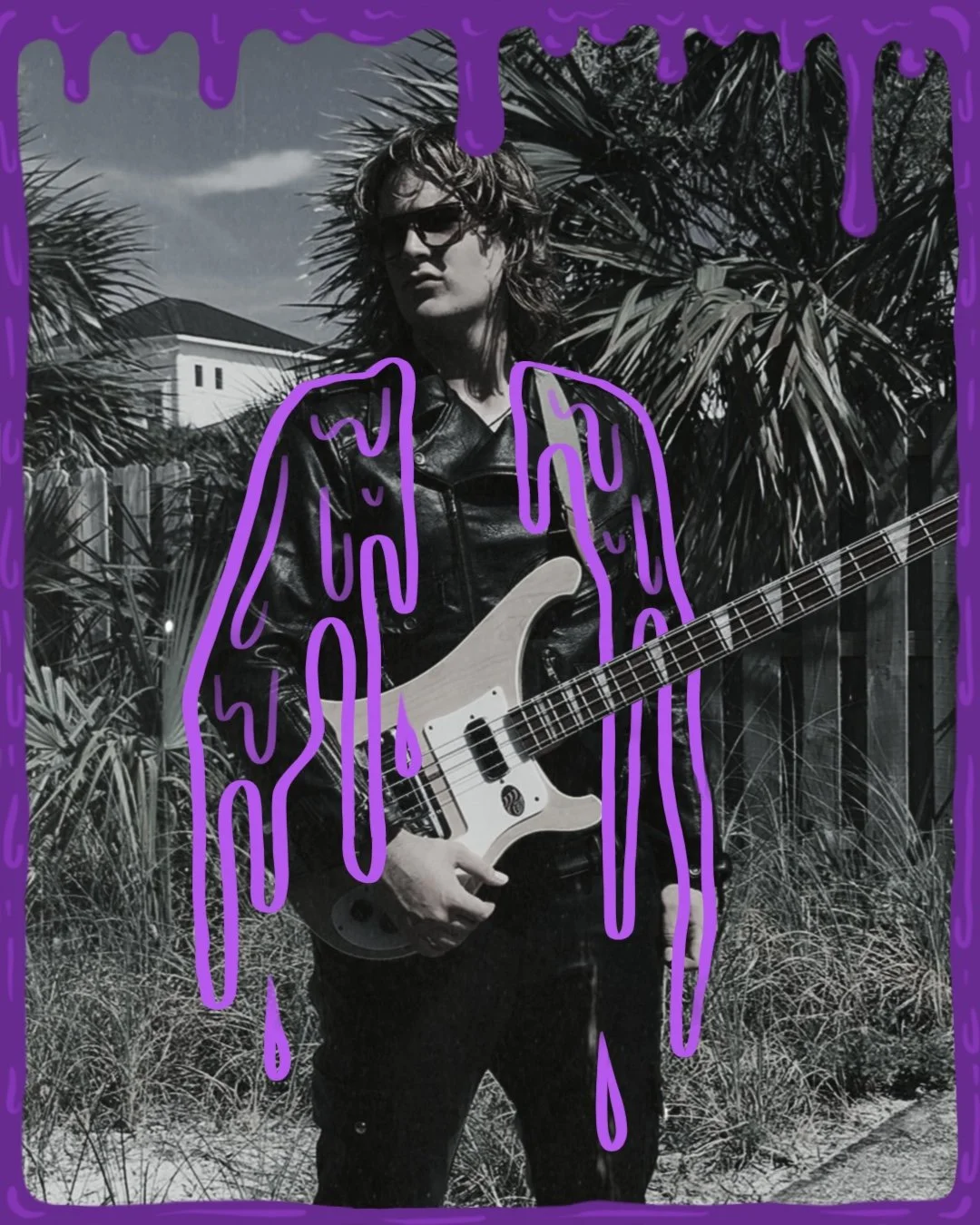
Photo Credit: Cat Coppenrath
Spacemoth has served as the experimental playground for instrumentalist and songwriter Maryam Qudus since 2020, and in that time she has developed an otherworldly sound— one that has expressed itself in both a resolute darkness and a cosmic playfulness. But the thread of creativity, of a desire to explore and experiment, goes all the way back to her childhood. Her latest record Inward Eye, in many ways, represents the culmination of these efforts and experiences.
Across its 10 indelible tracks, Inward Eye is the ideal encapsulation of everything that makes Qudus’ creative paradigm unique.
As a child, Qudus first real musical obsession was the synth-heavy ballads of Depeche Mode. But as she got older, and her friends introduced her to acts like Black Moth Super Rainbow and The Flaming Lips, her tastes grew wider and wider. By the time she entered high school, she was listening to virtually everything, regardless of genre, that she felt captured the ‘weird’ and ‘outsider’ sound she was searching for. Eventually, this led her down an electronic rabbit-hole as well, introducing her to bands like Stereolab and Broadcast, both of whom were pioneers in their respective musical niches.
Her journey as an instrumentalist aligns closely with her development as a listener. Qudus played guitar and piano all throughout her childhood. But it wasn’t until she first bought a loop pedal for her guitar that she truly began to understand how she wanted to express herself creatively. She began experimenting with her instruments, stacking loops on top of each other and reversing piano chords to create unique sounds. Although she hadn’t yet acquired the versatile skill-set that defines her music now, it was the ability to replicate some of what her favorite bands were doing that caused her to gravitate toward music as an art form.
“I think starting off with [the experimentations] from an early age really defined how I make music now… And I think it kind of opened up music-making to me because, in any sense, you don't really have to be the best [instrumentalist] to make music. It's just about how you're using creative tools. I have been around very skilled musicians— virtuoso-level guitar players, violinists, drummers, etc— but not all know how to contain that skill musically. I remember interning at studios and watching producers take away pedals, remove cymbals, etc to make a musician play less. It taught me that playing creatively and intuitively is just as valuable, if not more valuable than being ‘the best’ musician.”
Throughout high school, Qudus wrote songs over various loops in her bedroom, crafting a series of intricate demos and working to enhance her skills both as an instrumentalist and as a songwriter. Her friend eventually told her to go record some of her songs in a studio, and Qudus acquiesced— this is where she encountered Tiny Telephone, and its founder John Vanderslice, for the first time.
“It was so welcoming and inviting at [Tiny Telephone]. What I loved about working there, both with John and also the engineers that I'd worked with, was that they invited me into the recording process with open arms and excitement. They would showed me an amp and would be like ‘This is my favorite amp, try it out’… Or, ‘Here's this pedal- these are the cool sounds you can make with it.’ So I think that approach— inviting the people you work with to play around with the tools in the studio—that stuck with me a lot and really shaped how I like to work in the studio when I am producing / engineering with other artists.”
After Qudus recorded those songs at Tiny Telephone, getting the opportunity to work extensively with the equipment in a hands-on setting for the first time, she knew that the art of production made sense as an extension of her musical interests.
Doe Eye and T E L E V I S I O N, the lone album Qudus released under that name, possess an intricate sense of space— one that’s founded heavily on her experimentations with guitar loops and electronic sound-layering.
But as she continued to gain experience as a producer, interning for a time at both Tiny Telephone and the San Francisco-based Women’s Audio Mission, she began to etch out a new sound. It maintained many of the same spacious sensibilities of her earliest record, but it was infinitely more focused and direct. At the very least, it was new to Qudus, and she decided to break off from her old venture. Thus Spacemoth, named after Stereolab’s track from their 2001 album Sound-Dust, was born.
“I hadn't even come up with that project name at the time. I was just sort of making the music that I was making. And a lot of it was studio experimentations— me just trying stuff out and seeing where it would go. What I wanted for the record I was working on was to really just narrow down what exactly I was trying to make... And the more that I focused it, the more that the songs came together and it became a record. [It felt] like something different, felt like something new.”
That project, 2022’s No Past No Future, was indeed vastly different from what Qudus had accomplished under the Doe Eye alias. In the deeply-compressed and sparse rhythms of tracks like “Pipe and Pistol” and the wavering soundscapes of tracks like “Mind Modulation” and “Flutter Memory” there is contained an astounding level of nuance and complexity, one that is carefully balanced with the tenebrosity that looms over the record as a whole. Qudus’ direct songwriting remained much the same, but much of the sonic sphere under which she operated was completely altered.
As she began to work on her second Spacemoth record, which became 2026’s Inward Eye, she knew that she wanted to advance those changes even further— this time in a lighter and freer direction.
“I wanted the feeling of the record to be really light and to be really playful and fun. No Past No Future has more darkness to it, which I really love. I think that's my tendency is to go sadder, darker. So it was more of a challenge for me to make something that is really light and groovy… Also I wanted the record to feel really hypnotic and kind of pulsating. There's a lot of rhythmically-driven elements, interlocking grooves, things that I wanted to bring forward on this record.”
It’s safe to say that Qudus’ pursuit of a lighter sound was successful. From the grooving bassline of the opener, “Do We Exist?”, to the fluttering electronic elements and expanse-filling vocal lines of “North Star” and the closer, “In The Garden,” there is an unparalleled focus, but also a deliberate playfulness, that permeates the entirety of the album.
Now, as Qudus continues her work as a producer and continues to delve deeper into the sonic niche she’s created for herself, her focus is on translating the sound of Spacemoth to a live setting, using creative loops and pedal-board combinations to create the exact atmosphere she hopes to achieve for her audience.
But even in that pursuit, it is that initial drive toward experimentation, that constant pursuit of original sounds, that drives her forward— just as it has since she was a child toying with her first loop pedal.