Artist Profile: Gritfall
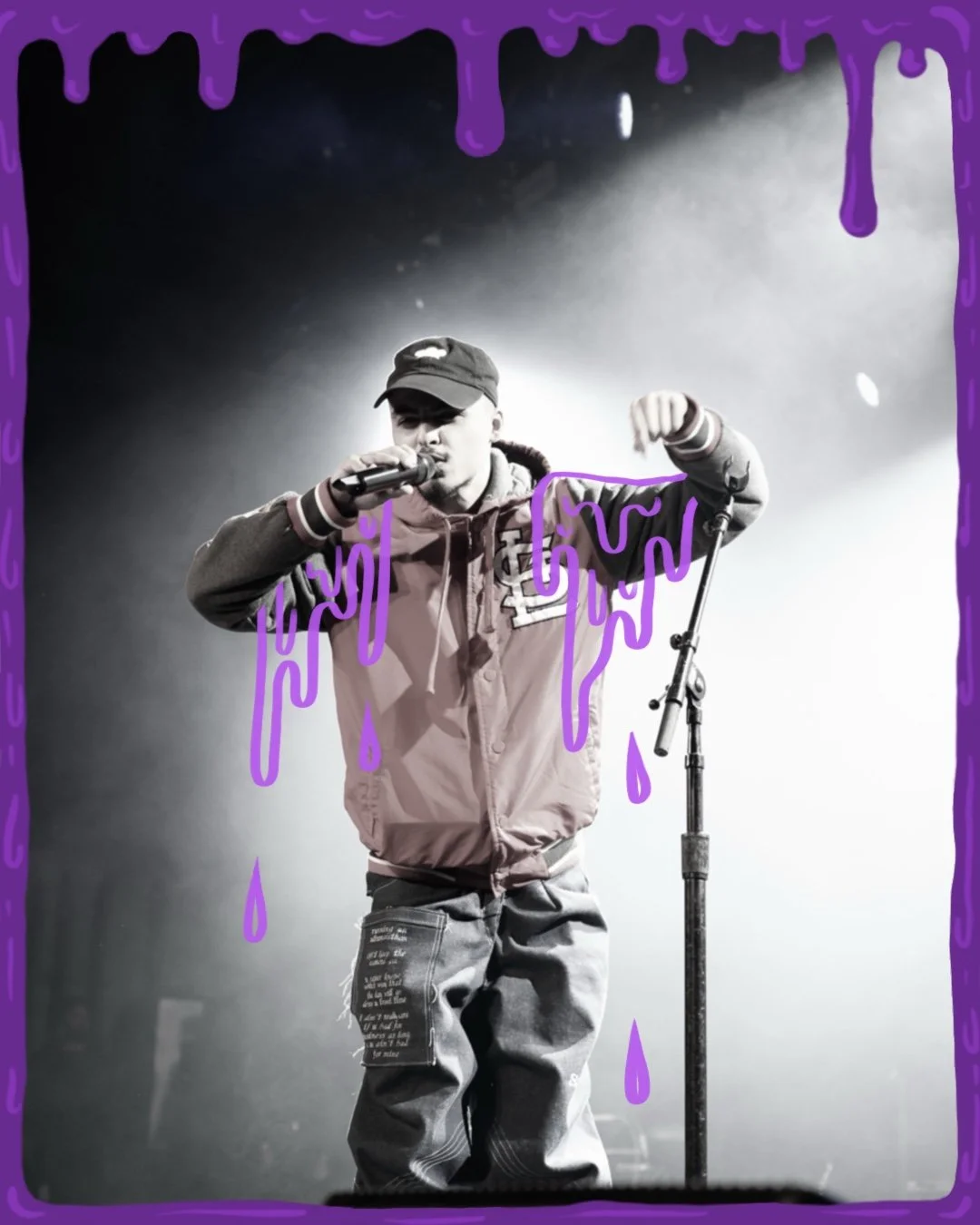
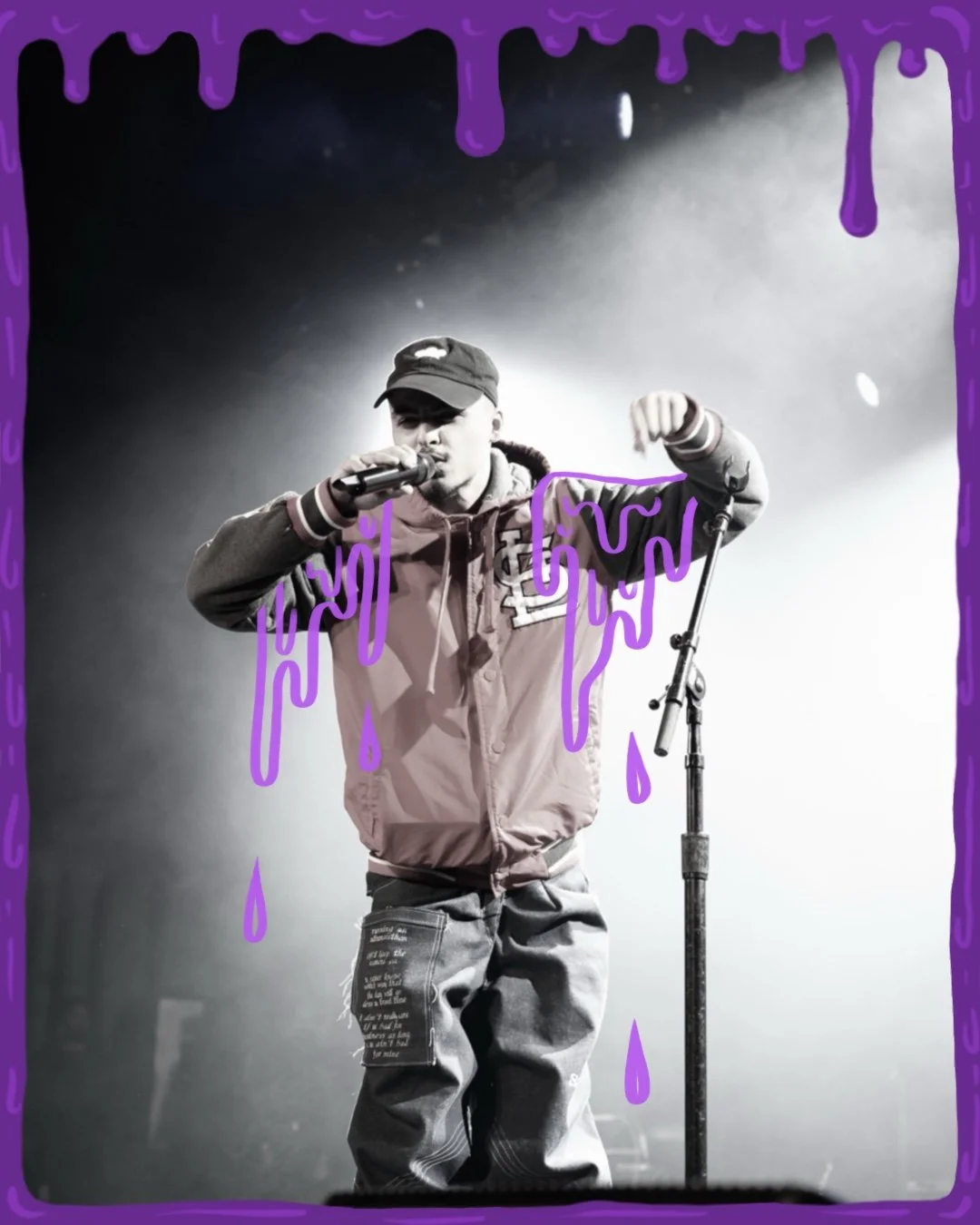
Toronto-based rapper and producer Gritfall has had a concrete idea of who he wanted to be artistically since he was stuck at home in middle school, bumping Odd Future on his iPod. But over the course of 17 full-length products and years of churning out of instrumentals, he’s honed his voice and his style in a way that, above all else, exudes a sharply defined focus and intention.
Fall Classic, which Gritfall considers as his true debut project, serves as ample evidence of that fact.
Although artists like Earl Sweatshirt and MF Doom served as Gritfall’s true awakening to hip-hop, it was his exposure to Michael Jackson—and the disco tracks that dominated his mother’s tastes during his early childhood— that first founded his love for music. He has stark memories of sitting in front of the computer, barely old enough to form sentences and type, and searching up Michael’s music videos, sitting mesmerized in front of the screen as tracks like “Thriller” and “Smooth Criminal” played over and over again.
Hip-hop, though, was at its cultural peak of the 2010s as he began to mature and started to seek out his own music on the Internet,. At first, he fell in love with the raw energy and scatter-brained approach that artists like Chance the Rapper exemplified. But it was the artistic maturation of Earl Sweatshirt, as he released I Don’t Like Shit, I Don’t Go Outside and Some Rap Songs, and Gritfall’s discovery of artists like MF Doom and J Dilla that truly opened his mind to the sheer multitude of what was possible within the genre.
“Earl was very scatterbrained as when he was young… And I'm hearing these [new] albums— I'm like, ‘What the f*ck?’ He really grew up in front of our eyes. It blew my mind. It helped me grow up. And then getting into DOOM, he built his own world. He built his own universe, and it reminded me of Michael. And it reminded me of the way that Michael made me feel when I was a child.”
As Gritfall dove deeper and deeper in these catalogues and those of other artists, he gravitated more and more toward their dusty samples and lyrically and emotionally dense approaches to their craft. It was inevitable that he would start rapping himself, and he knew that if he was going to do it like his heroes, he was going to need to learn to produce like them.
But learning to produce while also trying to settle on your sound vocally presents a distinct challenge—everything feels like it’s on constantly shifting ground, and the threat of self-comparison is constantly present. Gritfall, though, used that as motivation—he knew that his ear and his tastes were refined enough to carve out his own niche. He simply needed to work until his technical skills caught up with his creative vision.
“It was extremely difficult and frustrating. Because I would be listening to J Dilla, I would be listening to Madlib, and I'd be listening to DOOM and I'd be like, ‘How the f*ck did they produce this? How did you create this?’ And I would listen to my own beats at the time [and get discouraged]. But I knew if I stuck with it, I could do something because I always had an ear. That's half the battle. I already know what's real because I've heard a lot of music. I knew I just had to go through the frustration.”
As time went on, Gritfall got a tighter and tighter handle on the sound he wanted to pursue, releasing tracks on Soundcloud and slowly gaining traction around Toronto. But it wasn’t until his first encounters with Raz Fresco and BKRSCLB Records that Gritfall felt he had found his initial form as an artist.
He won a competition to be able to record a track produced and engineered by Raz Fresco, and he went to Fresco’s house with his mind filled with the rhymes he had spent years accumulating in his notebooks. Fresco and his collaborator Eric Right showed Gritfall the first beat, and after taking a minute to put together his lyrics, the young rapper banged out the song in under 10 minutes.
Rather than stop the session there, Fresco and Right provided him with another beat. Then another.
By the time the day was done, the duo had amassed nine tracks—which ultimately became Gritfall’s debut project GRIPTAPE.
He then released a series of projects over the following two years. But he marks his 2024 effort, Sensory Overload, as a landmark of that period. Feeling overwhelmed by the future and the daily swarm of obligations that dominated his life, Gritfall, for the first time in his career, set out to execute a full concept over the course of an album. Each of Sensory Overload’s eight tracks focus on a different sense, and the myriad beat switches and general chaos of the project serve to reflect the burden that Gritfall felt weighing on his shoulders at the time.
It was, in some ways, an artistic proof of concept for Gritfall— he had finally acquired the command over his craft and his style that he had sought out since his early adolescence.
While Fall Classic, the follow-up to Sensory Overload, doesn’t have that same fully fleshed-out concept, it shows another great leap of artistic maturation. Where Sensory Overload is intentionally chaotic, Fall Classic is controlled— Gritfall’s every vocal feint and turn of phrase displays a coolness and intention that rivals that of his heroes.
For Gritfall, Fall Classic is evidence of the growth he’s undertaken since he first arrived with BKRSCLB: the fruits of years of endless labor both as a producer and a lyricist.
“I was an excited child coming into BKRSCLB Records. I was very loud, and whenever I got on the microphone, I didn't sound like myself. I didn't sound like how I talk… And then on Sensory Overload, I still had a little bit of that excited child in me. Then Fall Classic is me. I'm sitting down having a little glass of water, a little smoke break, a little tea and just, I'm being myself more so than I've ever been before.”
From his irrevocably spacious pairing with Bahamian rapper Obijuan on “so peaceful” to the pure, unbridled rhymes he unleashes on tracks like “+2rain” and “pick up the phone,” Fall Classic feels distinctly like an energy harnessed, a reflective eye turned inward as life’s changes settle more peacefully into Gritfall’s creative understanding.
Now, as Gritfall settles into the lane he’s created during his time with Baker’s Club Records, he’s focused on attuning himself to the influences around him— both within and outside of his creative circle. But the result, filtered through the quiet knowledge and gentle focus of Gritfall’s artistic vision, is certain to be wholly unique.