Artist Profile: Cooper Kenward
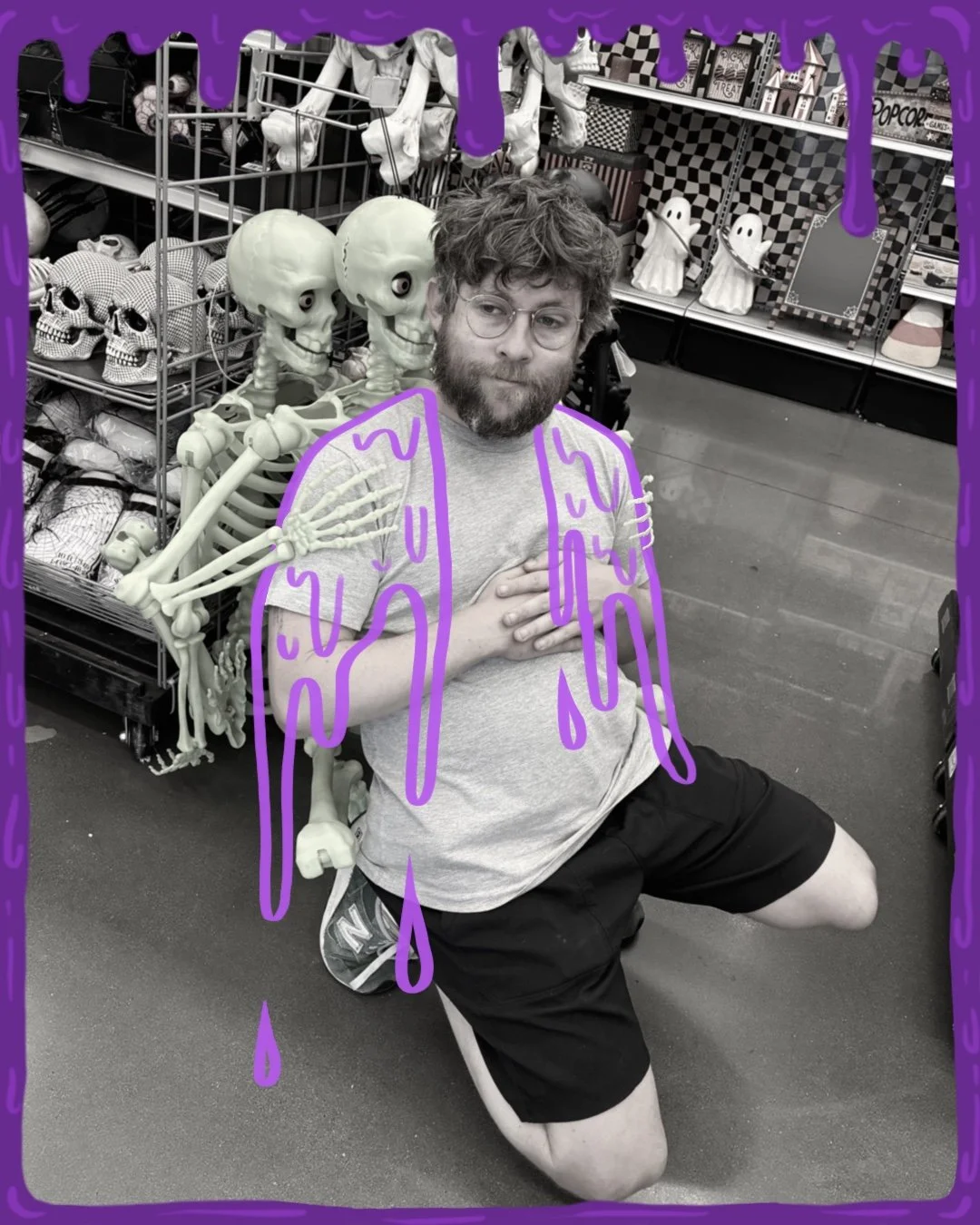
Cooper Kenward has been writing songs, spread across various genres and modes of expression, since he was just a pre-teen in his bedroom messing around with his friends. But even when the habit fell to the wayside as he advanced into the real world and focused on his film career, he always knew, deep down, that it was something he couldn’t truly let go. The start of his solo endeavour, culminating most recently in the release of his fourth studio album Call Me the Knife, has served as more than simply a creative outlet over the past few years—it’s represented a return to the sort of expression, and the centrality of voice, that makes Kenward such an endearing storyteller.
Although Kenward didn’t grow up in a necessarily musical family, the roots of the love for the art form were planted in him from a young age. His father worked in promotion and booking in the ‘70s, and he came in close contact with acts like Bob Marley and the Wailers and Tom Waits. He also kept an extensive record collection, which focused heavily on classic rock, jazz, and classical music, that Kenward spent hours of his childhood listening to.
When Kenward picked up the guitar and, later, the bass in middle school, it seemed like the most natural extension of his interests to that point. He also began downloading music wholesale on websites like Limewire and Napster, digesting whatever he could get his hands on in the early ages of music on the Internet.
This expanded his sonic horizons drastically, but it also left him with a bit of a strange blend of tastes.
“It was a mix of nu metal and folk music. I really liked the Bob Dylan stuff, which made me look into his influences. It was very much like two ends of the spectrum; I was going down rabbit holes and making mix CDs. I would give mix CDs to friends and I would feel bad because they'd just be so all over the place [laughs]... Just having access to so much music online really made me have a very scattered music taste.”
For Kenward, the next natural development was for him to pick up songwriting. He and his childhood best friend, Jonathan, began etching out songs in their bedrooms— improvising on different themes and exploring all the genres they had within their range as young teenagers.
That’s an aspect that has decidedly stuck within Kenward’s repertoire. As his songwriting continued to develop through his high school and college years, there was never a true focus on genre. It was instead the voice and the narrative perspective that was always prioritized, while his tastes—which spread their tendrils in later years as far as pre-war blues music and pop rock artists like Ben Kweller—informed the ultimate output in a more ambient, subsidiary sense.
“There's so much stuff we digest nowadays that the idea of a genre feels almost rare. If someone is a pure something— a pure rock and roll artist, they only do that one thing— that feels very rare. I'm always fascinated with people who can do that, because I can't. I'm always listening to everything I can get my hands on. I admire those people that can do the one singular thing.”
While songwriting was Kenward’s primary mode of expression throughout his teenage years, he and his friend Jonathan also experimented with filmmaking around their small town, working on short, often comedic, clips that served, in a way, as an extension of his narrative impulse. When he was pressed to enumerate what made his interests unique on his college applications, Kenward realized that filmmaking was what he could use to separate himself from other applicants.
He ultimately attended UC Santa Barbara with a major in film, and for years afterwards, while he was working in commercial film in San Francisco, his songwriting pursuits fell to the side.
But when he had the opportunity to join a band with some of his friends in SF, though, he didn’t hesitate. He began songwriting again in a band setting for the first time in high school, and while the efforts of the band were partially comedic and informal, he was officially flexing his creative muscles again in that capacity—and he was having immense fun doing it.
Almost as soon as the band began playing shows around the Bay Area and finding a small following, though, Kenward decided to move back down to the Los Angeles area for work. Back closer to his hometown and having lost his collaborators, Kenward used the isolation of the Pandemic to turn his songwriting efforts inward.
He settled into a more acoustic-based sound, and when the restrictions of the Pandemic loosened up, he began taking his freshly-written songs to various open mics around the city. Before he knew it, he was churning songs out at a rate he’d never seen himself operate at before in his life, and he had set up a home recording studio to begin releasing music under his own name.
It wasn’t necessarily a conscious decision to begin taking his songwriting more seriously, but it was a decidedly natural one. It was also a process, for Kenward, of overcoming any strictness or self-doubt he had internalized during his time away from songwriting as a consistent pursuit.
“The hardest challenge was that I can be a real tough critic of myself. It’s just never good enough, or I like it when it happens and then I come back to it and I don't like it. So I just can be a little bit fickle about songs. But that has taught me also to be a little bit more open and free about it and kind of let it be its own thing… learning to let go of the songs a little bit and not over overcook it or think it needs to go in a certain direction.”
Kenward’s self-titled debut project, released in 2022, is the earliest time capsule of his return to solo songwriting. Recorded at home and at his producer Rob Shelton’s house, tracks like “Mediocre Motions” and “Birdwatcher,” while fully displaying many of the album’s DIY roots, also show a budding voice— there’s a certain layer of gentle humor and irony that permeates even Kenward’s more serious works.
His next two projects— 2023’s Dying in a Diner and 2025’s haha, now i’m sad—are where things truly started to come together, though. Kenward found a rotating group of collaborators around L.A. to help hammer out the songs in a studio setting, and as he became more receptive to their input and to the improvisational re-shaping of his songs, he discovered that, in a way, that collective aspect is what had drawn him to music all along.
“I've just really loved to work with other musicians and other people because it just brings so much energy. I've learned that I love to be in a room with musicians and do it live. I think I can get a little burned out doing it piece by piece and recording it and comping vocals and stuff like that. I just kind of like the energy and the weirdness that can happen and the mistakes that can happen and doing it live… I think on haha, now i’m sad was the first time it really felt like it all clicked.”
If haha, now i’m sad was Kenward’s first full step into his solo project’s current iteration, Call Me the Knife is the full realization of the relationships and the evolving sound that resulted. Steeped in various alt-country motifs—including pedal steel from his frequent collaborators—Kenward’s voice takes on a distinctly mellower and more relaxed tone as he explores themes of friendship and connectedness.
It’s a fitting subject for a record shaped by the contributions of his collaborators, and for Kenward, who’s always loved music as a communal pursuit, the project as a whole represents more than simply one of the many avenues in his wide-ranging palette of explorations. Call Me the Knife is another proof of concept: another record that puts Kenward’s indelible and never-ending songwriting reflex on full display.