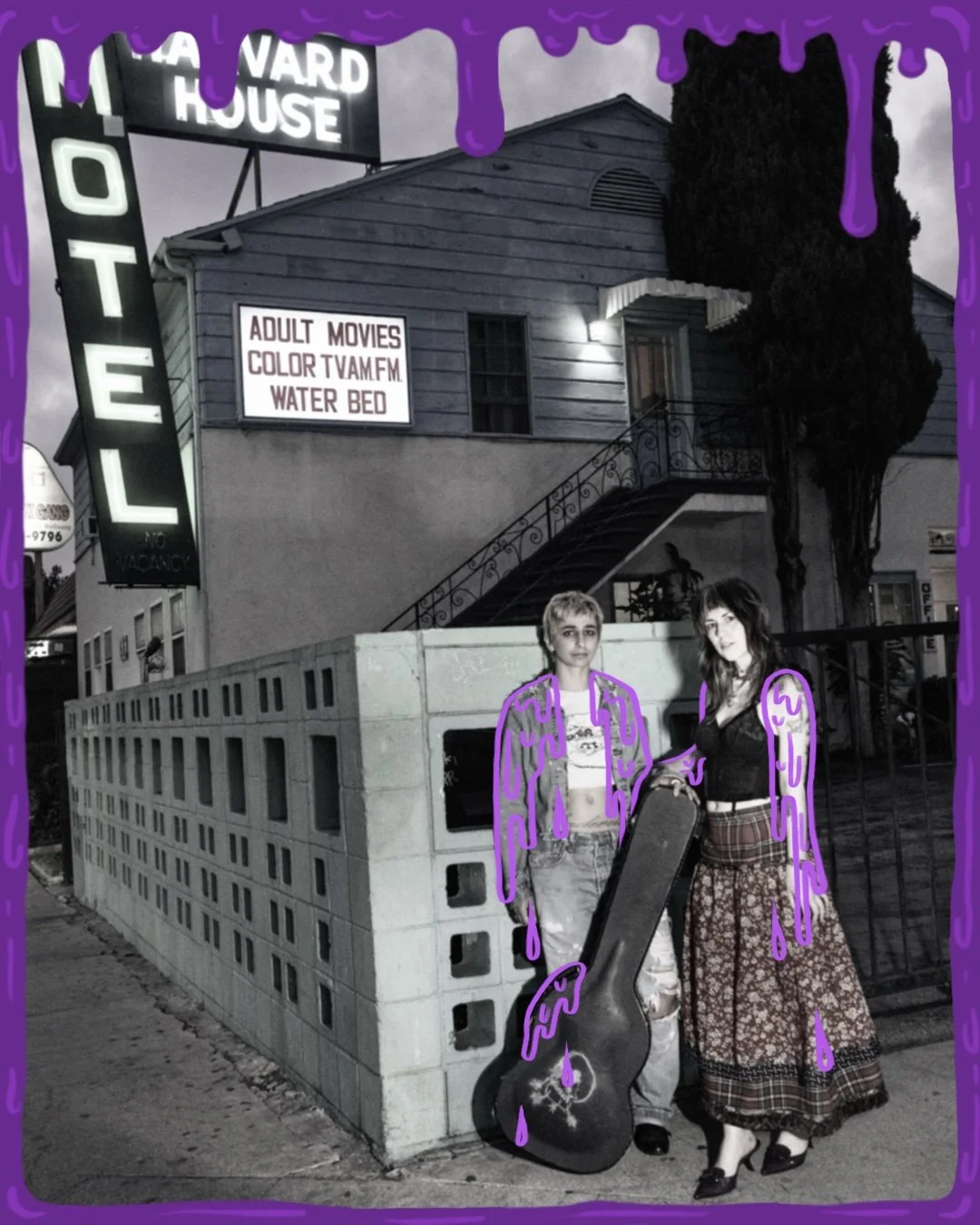
For Los Angeles-based songwriter GABI JR, the release of their debut album, light shine on you, is more than a broad first step into the creation of a more expansive discography. It’s the result of hundreds of hours spent, both in solitude and with their various friends and collaborators, etching out songs in their free-flowing, improvisational style, and across 12 swooning, folk-inspired tracks, it also represents GABI JR’s creative process come to life, finding form and function from the nebulous and swirling thoughts and sentiments that underlie each of their tracks.
Gabi didn’t grow up, for the most part, surrounded by or even consistently exposed to music. When it came to them for the first time, in the sense of their own, idle experimentations, it was a revelation.
They grew up, in fact, with skateboarding as their primary passion. They devoted virtually all of their energy to it, and they steadily fell in love with the community that it provided—by the time they were in their early teenage years, they had a sponsorship from a local shop and was even starting to travel to competitions.
But for most skateboarders, it’s only a matter of time until bumps and bruises force you to the sidelines—at least temporarily. For Gabi, it was a pair of painful ankle injuries that did them in during their late high school years. In that void of boredom, without true access to their main source of community, they picked up the guitar their parents had purchased for their sister for a music class they were taking—long since abandoned for the sake of other interests.
It started with just random chord progressions, but it rapidly turned into a love for songwriting on Gabi’s part. They downloaded Audacity, and they discovered that they enjoyed working around and with the limitations of the software, all the while gaining proficiency on their instrument.
By the time they started to actually etch out full songs, though, their creative process was relatively formless. For Gabi, songwriting is an act not just of improvisation but of letting their creative whims flow without any sort of outward guidance. If a song comes, it comes, and if it sticks in their mind, they decide to move forward with it.
“I sit down, and I'll play guitar, and maybe it comes out immediately. Other times, you know, I'll be playing for an hour or whatever, and through that kind of the song will reveal itself. And then once I feel that, I'll sit with it. The next day, if I remember what I played, then I'll make a voice memo of it. And if I remember the next day, then it feels like, ‘Okay, that song was meant for me’. Otherwise, it's a song just kind of passing through the window, you know, and I get to enjoy it for that day. And then if I can't remember it, then it's meant for someone else.”
It’s certainly not the most ‘productive’ workflow, but it allowed Gabi, especially in the early period of their songwriting activities, to begin to let go of some of the anxiety and need for control that typically come with being a young, inexperienced artist.
By the time they went off to college in Salt Lake City, they had already amassed a collection of songs—and they had begun to dial in on a sound that suited their inherently confessional and candid songwriting style.
“I think it's always been lying in some folk realm, kind of the early days where folk and country were going back and forth trying to figure out this honest sort of songwriting… I think that era is very honest and kind of punk rock. And it's confessional, but it's also just observational. And I think I kind of always have been a little bit in that zone.”
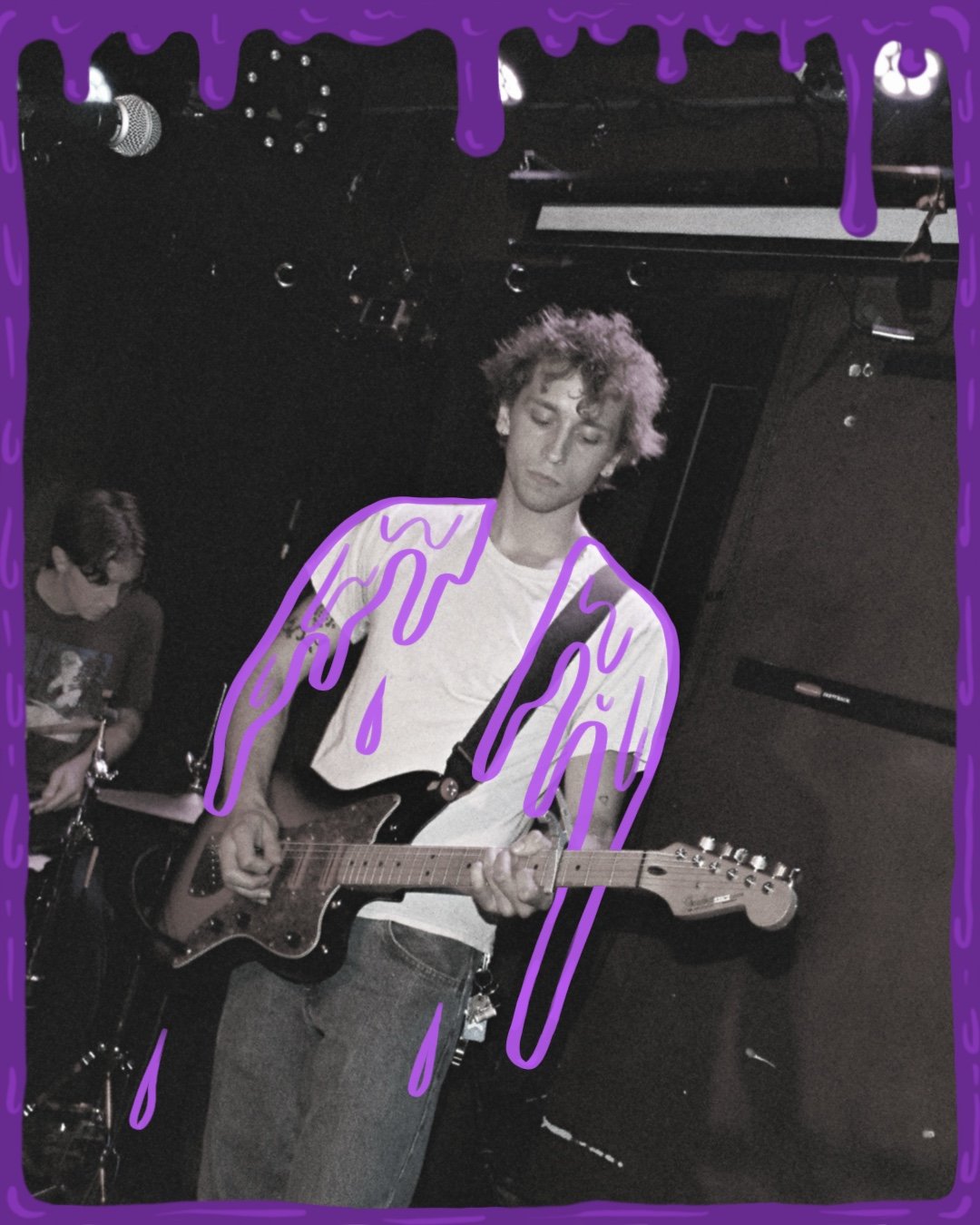
Once there, they put out an EP on Bandcamp composed primarily of songs they had written back home, and a friend reached out to their offering to connect them with a drummer they knew that was living in Salt Lake at the time. From that initial connection, Gabi formed a band to perform their songs, and as the tracks themselves took on fuller lives, so did their immersion into their music.
Their overarching creative approach was still just as formless, but in the context of their friends and collaborators, they had more memories, and a wider variety of tastes, to help them choose their confessional directions. During this period, they collaborated on an EP with the band Neu Blume, and during those sessions, they had etched out a demo for a track they had promptly forgotten about. When Colson Miller, a member of Neu Blume and a close collaborator of Gabi’s, sent their a voice memo of him playing the song months later, they told him that he could have the track.
But after numerous iterations on his part, something still didn’t feel right. He asked Gabi if they record the track together instead. From that initial spark, light shine on you was born.
Gabi reached out to all of their friends and collaborators, asking them to highlight the tracks that had stuck with them over the years or that they would like to see professionally recorded. She then put together a list of the most vital responses, and that became the basis of the tracklist for the album.
Rather than operating off of their own, free-flowing creative whims, Gabi was given the privilege of constructing their debut off of the desires of people who genuinely loved their and their music—a rare experience for anyone in the artistic world.
“I added in an instrumental that I really liked and one little voice memo. And that was it. I was just ordering [the tracks], putting them in order and recording them… I love all my friends so dearly, and to know what little songs had stuck with them and why was a special experience. I don't know if I'll ever really get to do it again.”
That sense of community and constantly willing confession permeates almost all of the tracks on light shine on you. From the indignant chorus of “Apologize” to the supple harmonizations of “mud”—from the heartsick guitar tones of “in your world” to the atmospheric ramblings of “big pimp’n”—Gabi’s voice is front and center, but it’s the sounds of their thoughts, filtered through the memories and passions of their friends, that sets the basis for the projects’ emotional thrust.
Gabi, in a way, considers their songwriting style to be analogous to abstract painting. Even if you don’t begin with a form in mind, there’s often naturally a form that comes out or manifests itself by the time the work is done.
Even in ceding the song choices on the project to their friends, then, a narrative form came to fruition—in as fitting a way to Gabi’s artistic ethos as might be possible.
“When we were finishing it, and I was kind of looking at the record, I thought it was more about sadness and heartbreak… But listening to it, I remember being surprised that it was a lot happier than I remember or more about love than I thought it was…. And I think this record is kind of in awe of love. Anytime I have a major growth or a major realization, or a major acceptance in my life, it is ultimately, you know, dunked into the pool of love, and then comes out differently. I wasn't expecting that.”