Artist Profile: rug
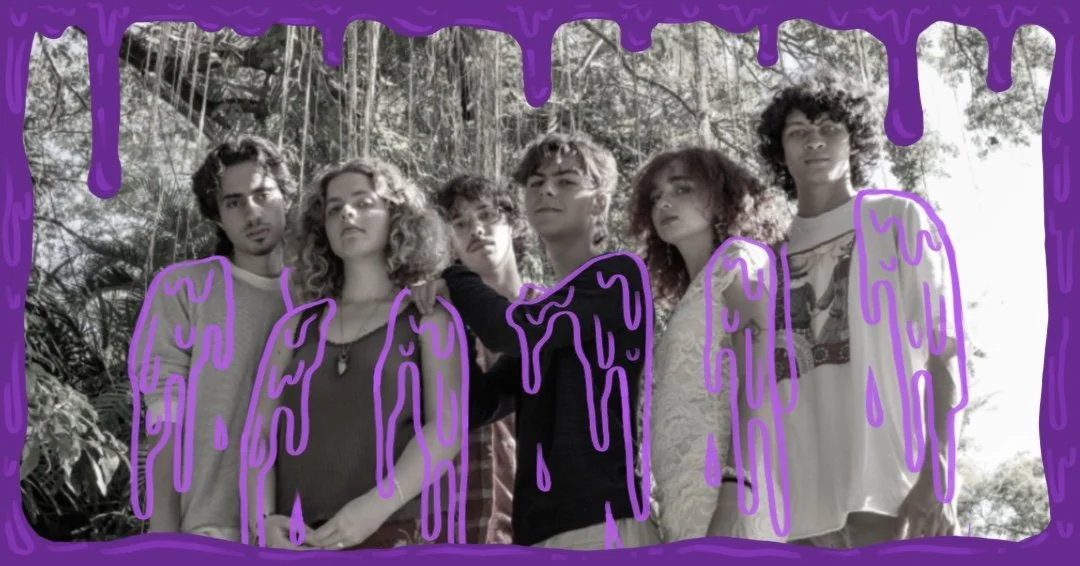
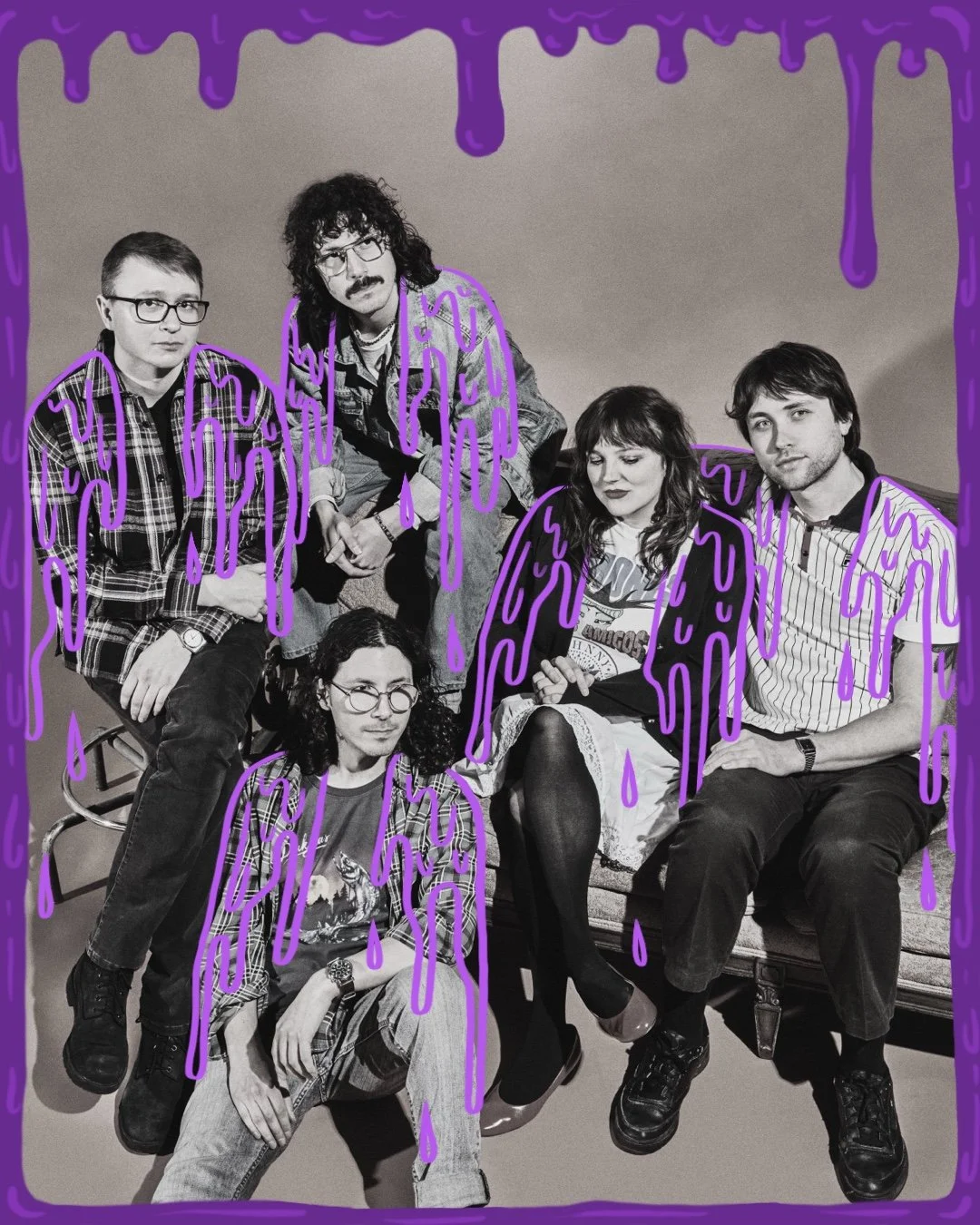
When Violet Beller and Anakeesta Ironwood first met at the University of Miami, they knew immediately that they would click as friends. Their similar musical and creative affinities ensured it. But what they didn’t know was the coiling twists and turns that their original sapling of an idea would take on, incorporating member after member from their scene until rug, as a sprawling, seven-piece indie band, came to find its complete form.
Beller and Ironwood met as freshmen studying songwriting at the Frost School of Music, and they immediately fell in line with one another creatively. Beller, who grew up in Brooklyn and had a classical background, had slowly carved out her own brand of indie-rock inspired songs. Ironwood, who was born in Tennessee but also went to high school in New York, came from more of an acoustic-folk background.
Nevertheless, the two found they made an intriguing artistic pairing. They wrote their first song together relatively quickly, and they decided to bring the demo to some of their other newfound friends in the music program to see if they wanted to collaborate on it.
“One day we're like, ‘Okay, let's write a song,’ very, very early on,” Anakeesta described, “And then we were like, ‘What if we get our new friend Ian [Liu] to play on it? And so we went to his dorm, and then Sidney [Blumenfeld] was living with Ian. So then we were like, ‘Oh, what if Sidney played saxophone? Let's do that too.’”
Once their contributions were added to the track, things snowballed very quickly into what would eventually become rug. Liu and Blumenfeld joined the band immediately as bassist and saxophonist. After meeting Tomás Tobolski in one of their classes and showing him their first tracks, they asked him to join the band as a guitarist. Although he initially declined, he quickly changed his mind.
As a five-piece, the band then recruited drummer Dante Anello after he saw them play multiple gigs around the area. Although he was doubtful the band needed drums, they ultimately convinced him that they indeed could benefit from his services.
The seventh member of the band, cellist Quinn Olson, joined to temporarily replace some of the sounds the band lost when Blumenfeld went to study abroad. But even once Blumenfeld returned, the band felt like it was natural to keep Olson in the lineup.
“Natural” is the term that most of the band would use to describe those earliest formations of their creative process, in fact. Even though adding more layers, more sounds, and more contributors can often complicate things, especially in the songwriting stage, Beller and Ironwood both felt as though their vision was being enhanced and improved upon with each new layer of creative consciousness it passed through.
“I mean, I think that was like the greatest thing [is that] it was so easy,” said Beller, “I think everyone had a really clear and similar understanding of what the songs were gonna be. In the past, I would bring my songs to people and I would hate how they made it sound… Finding six musicians that you bring a song to and you love [their contributions], or even think it sounds better than it did, is so rare.”
They quickly found their stride creatively, and as they began to carve out songs, they started to book more and more gigs around their local scene. Their first EP, 2025’s Revelry, was essentially composed of the first four songs they wrote. Each song started from an idea or a full demo that Beller or Ironwood would bring forth and was ultimately expanded and arranged by the band as a whole.
That free-flowing creative identity is more than evident across those four tracks, however. From the folk-like swellings of “Dear Mom” to the entrancing harmonies of “Caterpillar Girl”, from the alternating dynamics of “Upstairs” to the saccharine drippings of “Love Of”, at no point do rug’s various layers and contributors sound forced or out of place. Each member of the band in turn adds a fold of sound, or a turn of a musical phrase, that propels each track forward in its own time.
It’s that collective intuition, which admittedly was not easily expressed in a studio setting on their first project, that has come to define rug’s sound.
“It's just so effortless and easy and everything flows naturally. Obviously we converse, obviously we talk about things, but the disagreements that come are never insurmountable,” said Anello, “And everything ends up the way it should, generally speaking, from demo idea to full song in less than a week usually.”
In the process of working on their debut album, this intuition carried them into an even more collaborative creative process. Almost every member of the band, at some point, has brought forth an idea that has made it into the forefront of a song. Although the roots often still begin with Beller or Ironwood, the seven musicians have now spent such an extensive amount of time playing together and understanding each other’s creative nuances that they truly feel as though they’ve found an unparalleled chemistry.
“It feels methodical. It doesn't feel like we don't know what we're doing,” said Liu, “because I think we spend so much time with these songs and each other as musicians and as friends that, you know, I think we have a natural intuition when it comes to working with such a big group of people. And I feel like it's never a downside that we have so many opinions in our band. Who cares if we have disagreements… it's all serving towards the music. And I think we all are aware of that.”
While almost none of that first EP was live-tracked as a result of the band members’ inexperience playing together at that point, they knew they wanted to make their debut album take on many of the characteristics of their live shows. According to Tobolski, who did most of the production for the project in addition to his duties on electric guitar, that decision, combined with their intimate familiarity with every track on the new project, allowed them to unlock a whole new layering of their sound. They didn’t shy away from doubling or overdubs, but they also strove to capture some of the rawness that is present in their natural sound.
“I think we just kind of took advantage, not to rush ourselves and be like, ‘We need to have something out there’,” said Tobolski, “Just be more patient with it and be more accepting of what perks a studio environment can bring.
This, in turn, allowed them to hone in more closely on some of the experimentations with dynamics they undertook on their first project. According to Ironwood, the album thematically centers on a sense of longing and absence, and those swelling and collapsing dynamics that were present on the first record are implemented more frequently and more intentionally in order to underscore those themes on the new one.
“I feel like that's developed a lot since we started being a band— our attention to dynamics. I think that, for some reason, we're drawn to having these moments of quiet that then go crazy… We already kind of were interested in that. But I feel like with the album, we really expanded on experimenting with, ‘How do we build this? How do we make this different than any of the other songs dynamically?,’ figuring out that as a journey, with the whole album, being more of a story.”
rug has steadily built a following in and around Miami, and it’s been a result of their complete and impressive creative lockstep, which is constantly displayed both in their recorded work and through their live performances.
As they await the release of their debut album, this sentiment rings more true than ever.