Artist Profile: Emma Harner
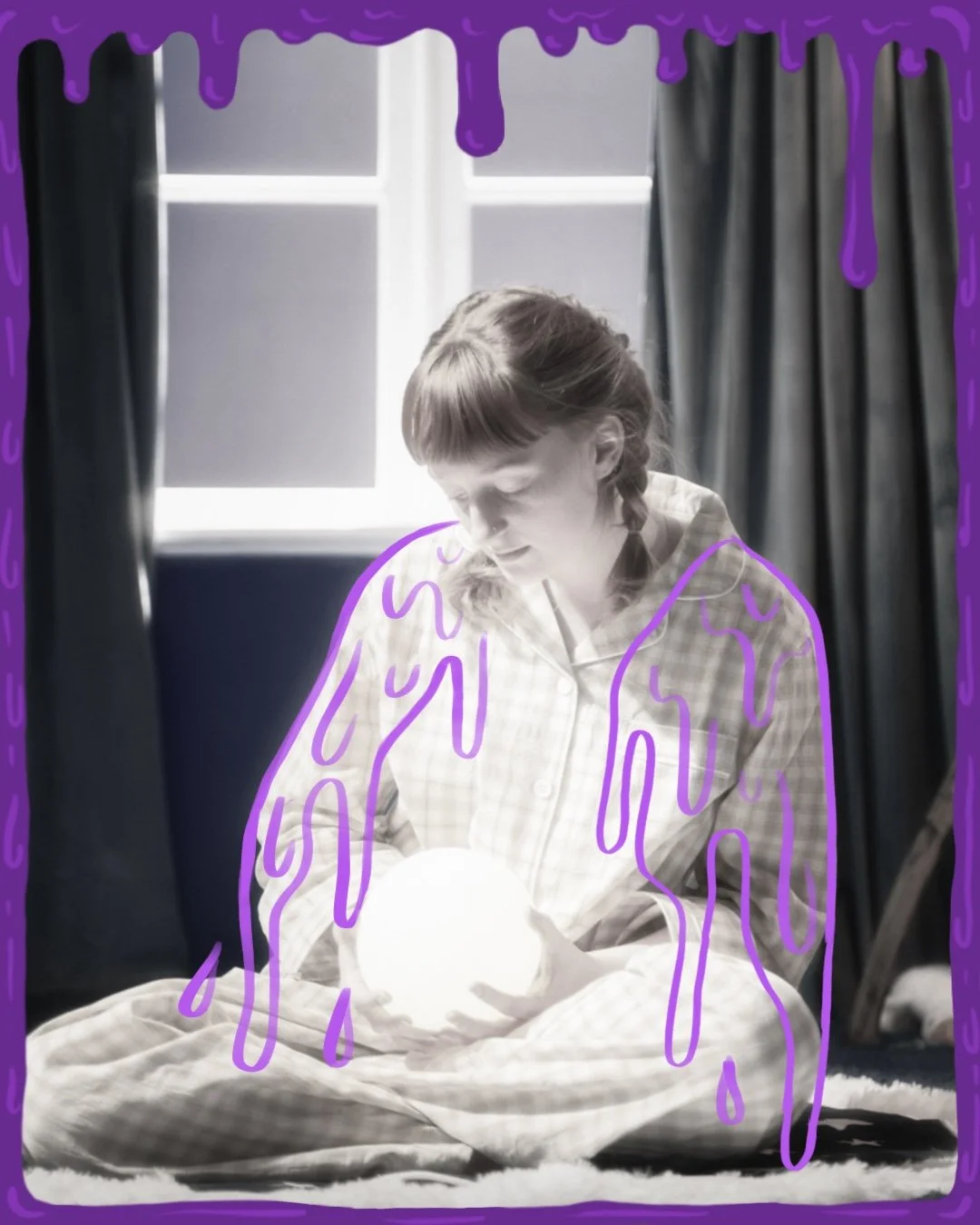
Photo Credit: Tony DeBacco
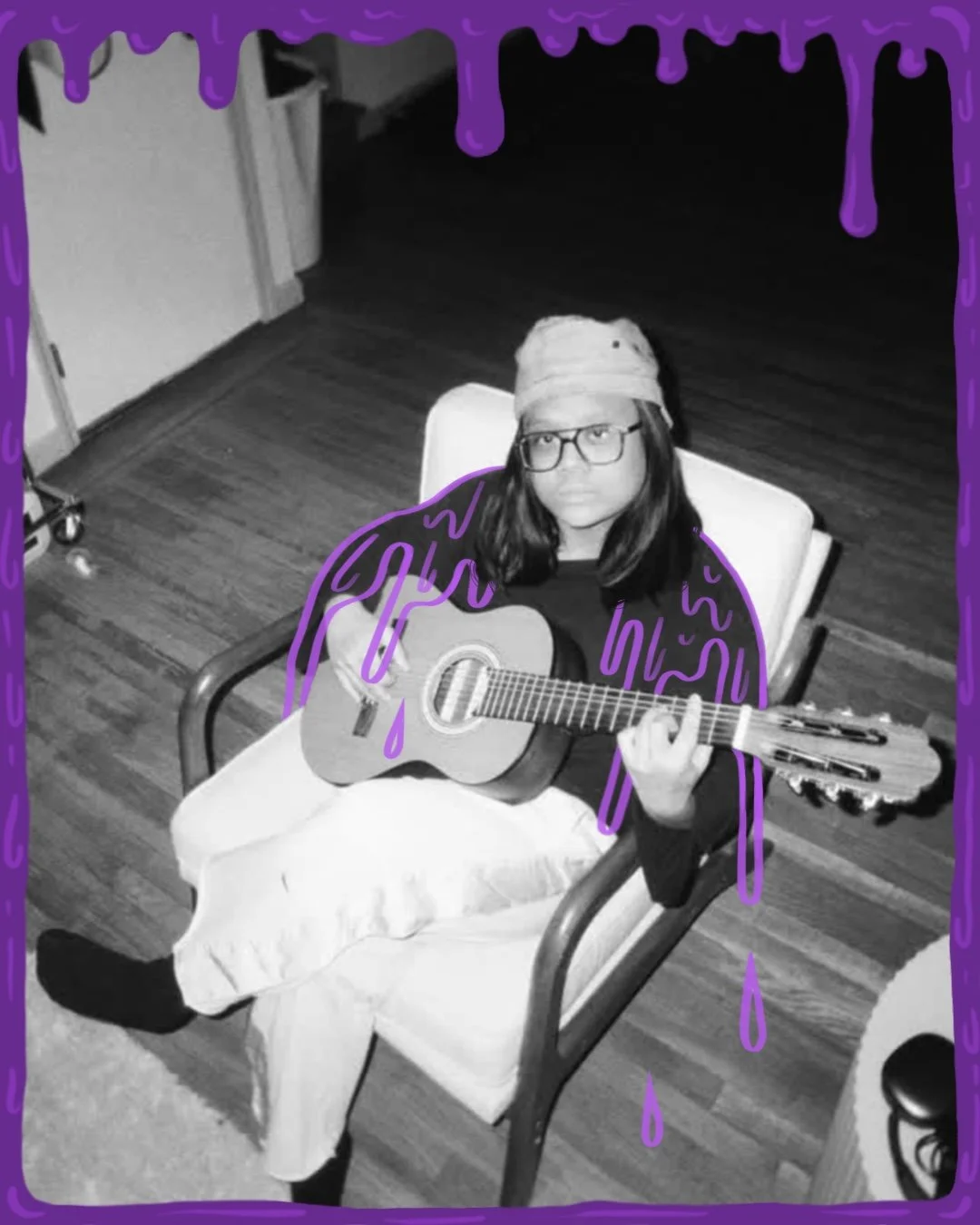
For Emma Harner, the Nebraska-born “math-folk” guitarist and singer-songwriter, the technical aspects of music-making have never truly been her primary pursuit. Although a quick look through her social media will reveal a number of impressive feats of finger-picking and odd-time-signature experiments, spurred by her training as a classical guitarist at the Berklee College of Music, it is the depth of her sound— and its sheer capacity for carrying piercing emotion in its sonic breast— that truly separates Harner as an artist.
With the release of her debut album, Evening Star, she has provided undeniable proof of this fact, tracing a lonely plain of personal turmoil and indecision over a distinctly incisive and intense 11-track run.
From the time she was a child, Harner was always intrigued by music in some way. Her parents put her into violin lessons at a young age, and she was constantly etching out melodies and short songs in her head that, in many ways, spawned directly from her father’s love of acts like The Beatles and Paul Simon.
When she reached middle school, she picked up the ukulele and the piano for the first time, beginning to realize the potential that rested in her ongoing creative outlet. She spent much of her adolescence engaged with these instruments, writing pop-influenced ballads and devoting herself heavily to the orchestra program at her school.
Guitar, however, didn’t truly come into her life until she was late in her teenage years. When the world shut down as a result of the COVID-19 Pandemic, Harner stumbled upon a guitar that used to belong to her father. With nothing else to do, she picked up the instrument and tentatively began learning chords.
In many ways, nothing was ever the same from there.
“It was like all of the other instruments were just a couple feet deep and the guitar was the Mariana Trench. It was intimidating to me for a while. And then, once I started playing with it again, eyes were not on me during this time; no one was checking in on my progress… It was just me by myself sitting completely alone. And there were no expectations of what might happen for me either because I was just trying to get through the days at first.”
Although Harner began with no expectations, she quickly became enraptured with the instrument, often spending between six and eight hours a day practicing new progressions and contorting her hand into new chord shapes.
By the time she graduated high school, her obsession had taken full hold. She made the decision to pursue music school, and she was ultimately accepted to Berklee.
When she departed for school, however, she did not yet have a concrete idea of what sort of musician she wanted to be. She had learned the guitar in isolation and was prepared to become immersed in theory and technical studies, but she was unsure of the niche she truly wanted to pursue with her art. It was the tutelage of Professor Abigail Zocher, who quickly recognized an intention in Harner’s guitar-playing, that ultimately helped to bring her artistic idiosyncrasies forward.
“She kind of saw what I was attempting to do with fingerpicking. My technique was bad, but she saw through it and saw the potential, probably, for me to be playing a little better… I thought that I was going to get molded and shaped into something that I wasn't at the time. But really, what ended up happening was Abby [Zocher] saw what I was already trying to do and just made that happen in a better way.”
Over the next couple of years, Harner would do everything within her power to refine the emotional impact of her songwriting in tandem with the technical skills she was gaining through her education. She quickly decided she was going to pursue a lane as a solo artist, erasing her two high-school-aged, pop-centric albums from existence and beginning afresh.
Her first singles and her EP, entitled Taking My Side, are landmarks of Harner’s process of feeling out the balance between the technical aspects of her music and the emotion she wants to convey through the inherent warmth of her songs. She always knew that her experimentations were only meant to serve the songs, not to overtake them, but she often found herself pushing things to the limit in the process of creating that first EP.
“A lot of songs on [Taking My Side], I feel, are kind of testing it, going to 100 and trying to pull myself back in terms of how complicated the song was… When I think about that time and writing that EP, I was still testing my limits there, trying to see the perfect combination of complicated to uncomplicated, emotion to mathematics. I think when I listen back to it, I can really hear that push and pull.”
Yet anyone who’s heard that EP, even without the knowledge or ability to recognize Harner’s technical feats, can attest to its emotional appeal. From the bitter-sweet melodies of “False Alarm” to the swelling and repeating choruses of “Lifetimes”, the project oozes lyrical intentionality.
From the very onset of its bitingly cynical opener, “Woman of the Hour,” Evening Star only builds upon this.
“What I'm focusing on is how, as a listener, what I feel about a song. I'm always trying to make songs that I would listen to… I always try to focus on the emotional and let the technical be a tool in my toolbox instead of something that I'm trying to balance with the emotional side of the song.”
Evening Star was written over the course of two years, during which Harner embarked on her first tour and underwent a number of life changes as she slowly withdrew from her education at Berklee. The project, therefore,is not only evidence of Harner’s continued and exponential progression as a songwriter but also a testament to the benefits of her lengthy creative process. Lyrics get written and then scratched, while melodies get saved for later and tossed around in the mind, sometimes over the length of months, as the songs are gradually formed.
For Harner, this means that her songs often contain the dominant themes of months, or even years, of her personal thoughts, turmoil, and figurative expressions.
“I find that, when I try and force a song to be done and be written, it just suffers for it. So these songs were truly like explorations of what was bothering me over the course of two calendar years… I think it's a transitional album in that way. Because when it started, my life was so different than when I put it out in terms of what I do on a day to day basis. Now I'm so lucky that I actually get to think about stuff like this and put a lot more time into my project.”
The album is not simply a sonic development upon Taking My Side. It is representative of a fresh creative era for Harner— one that has yielded a deeper understanding of who she is and what exactly she wants to accomplish artistically.
That growth becomes immediately apparent across Evening Star. It’s an experience, in its simultaneous complexity and bold-faced vulnerability, that is not easily forgotten.