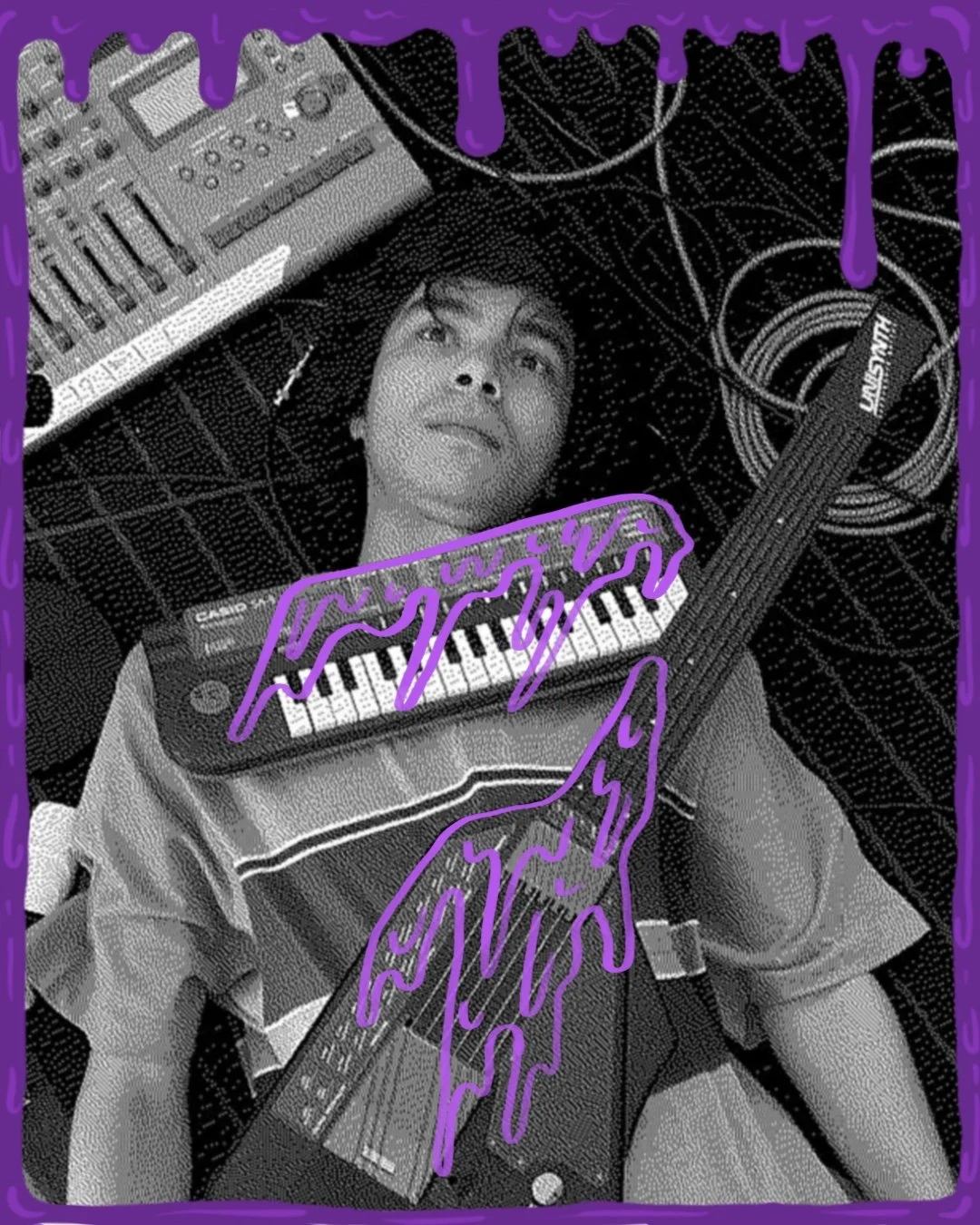
MELT Exclusive: FORAGER
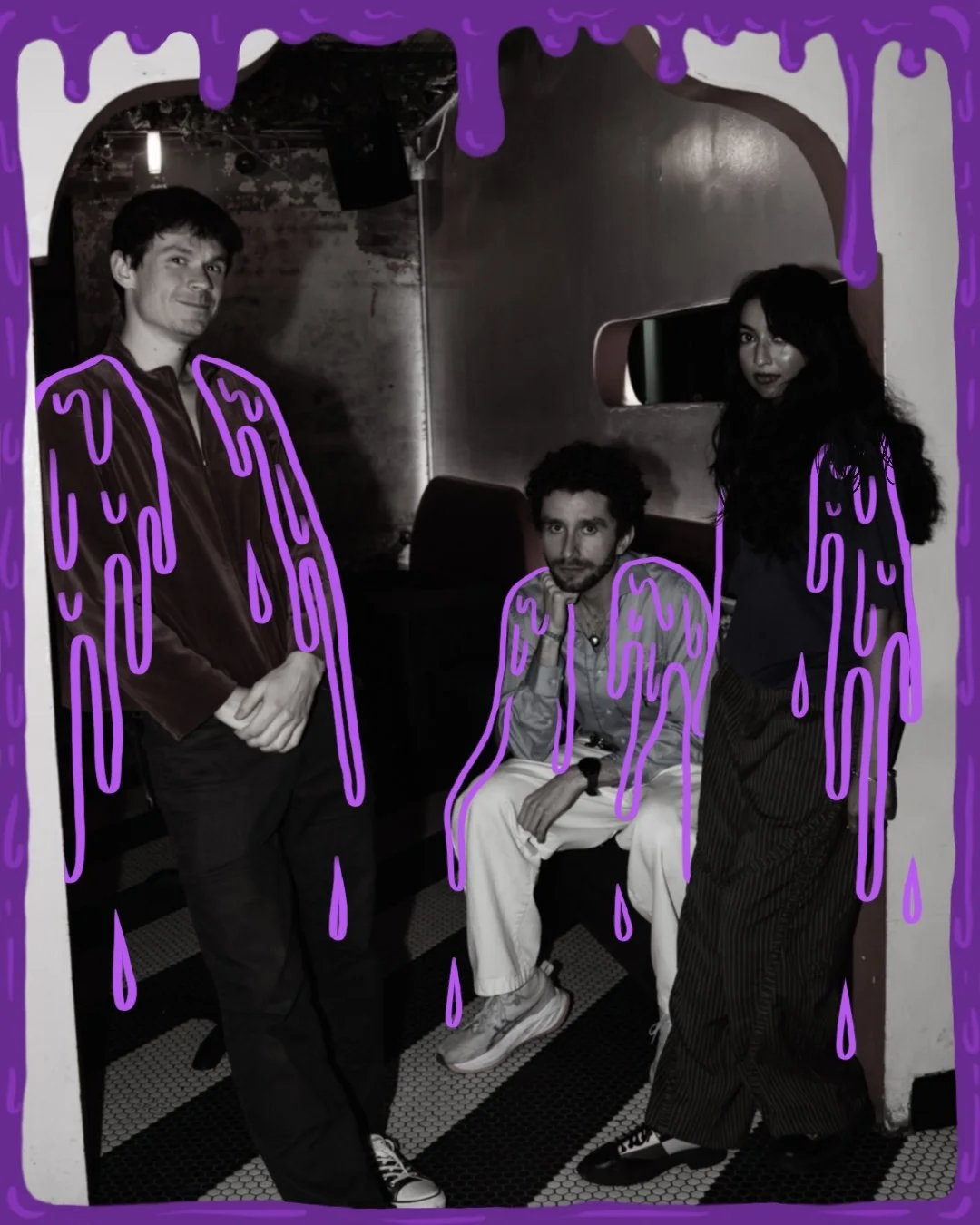
Photo Credit: Ama Wick
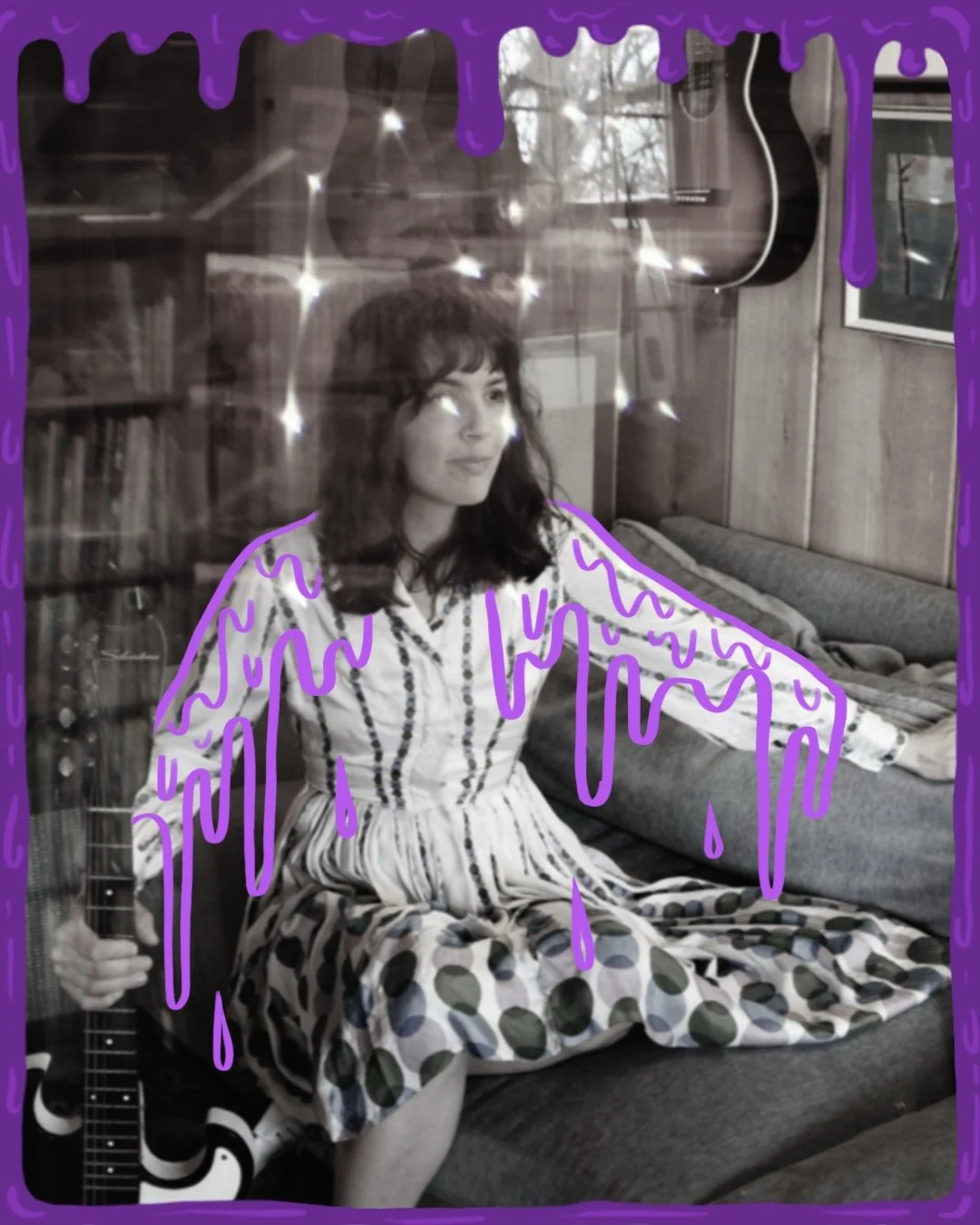
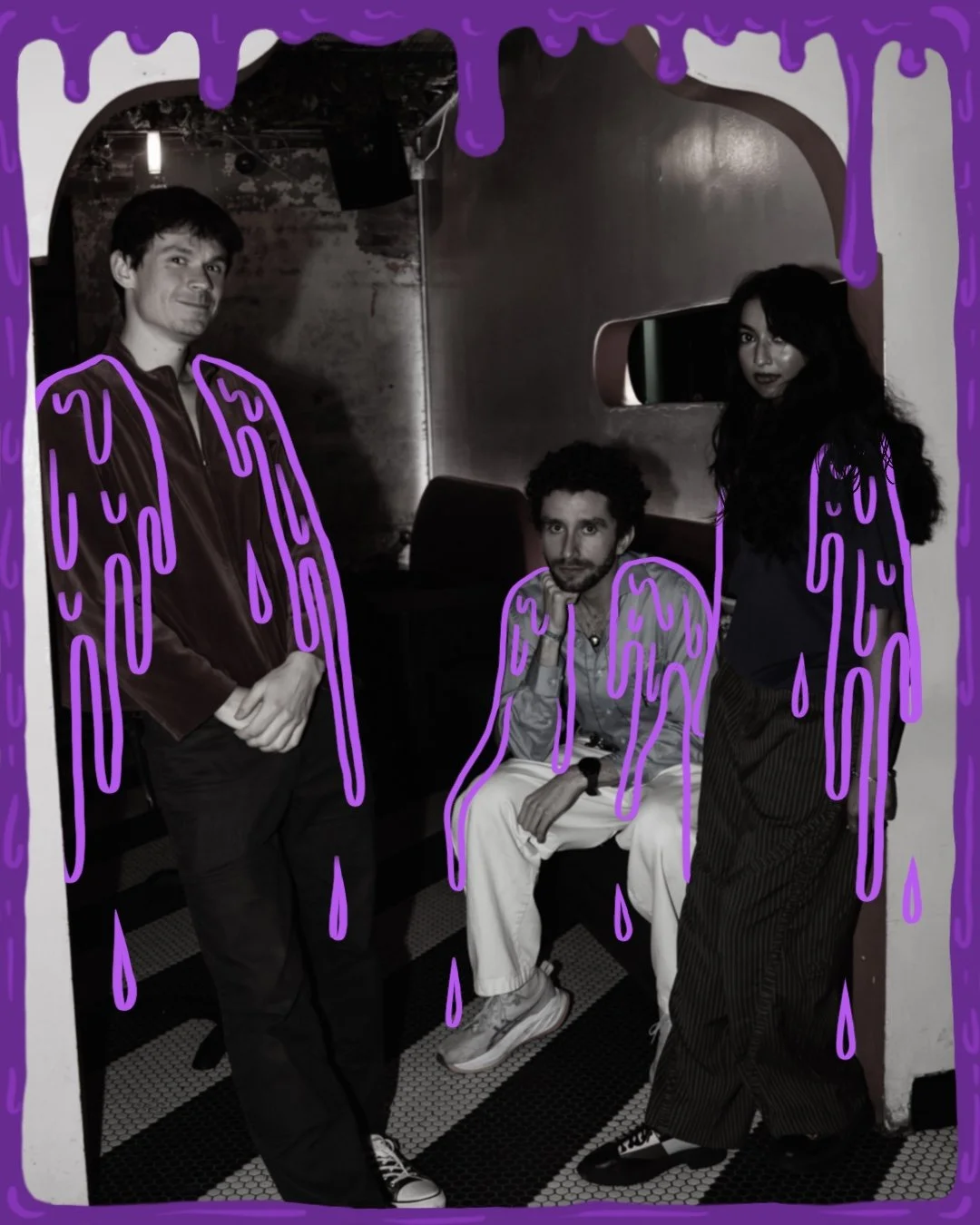
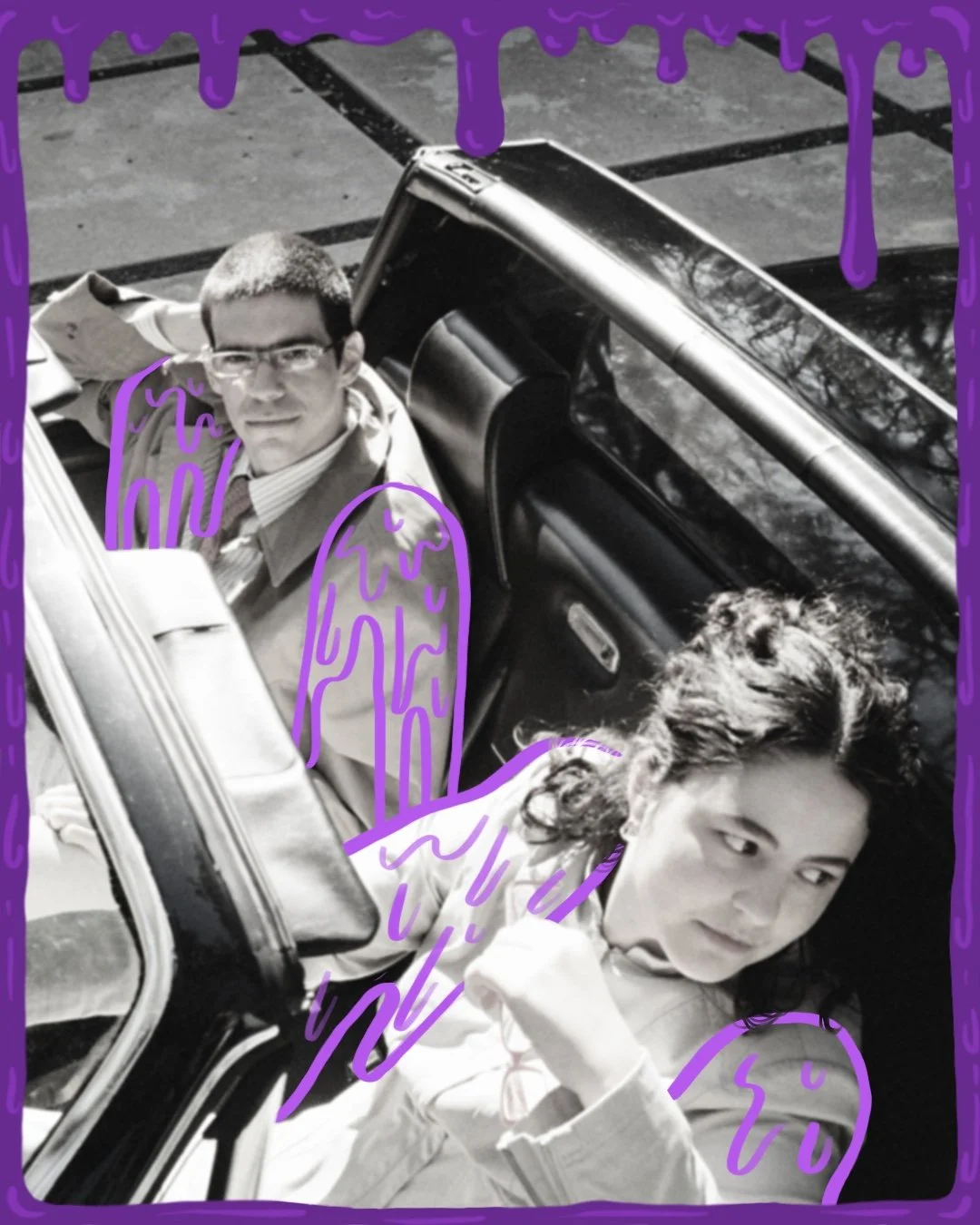
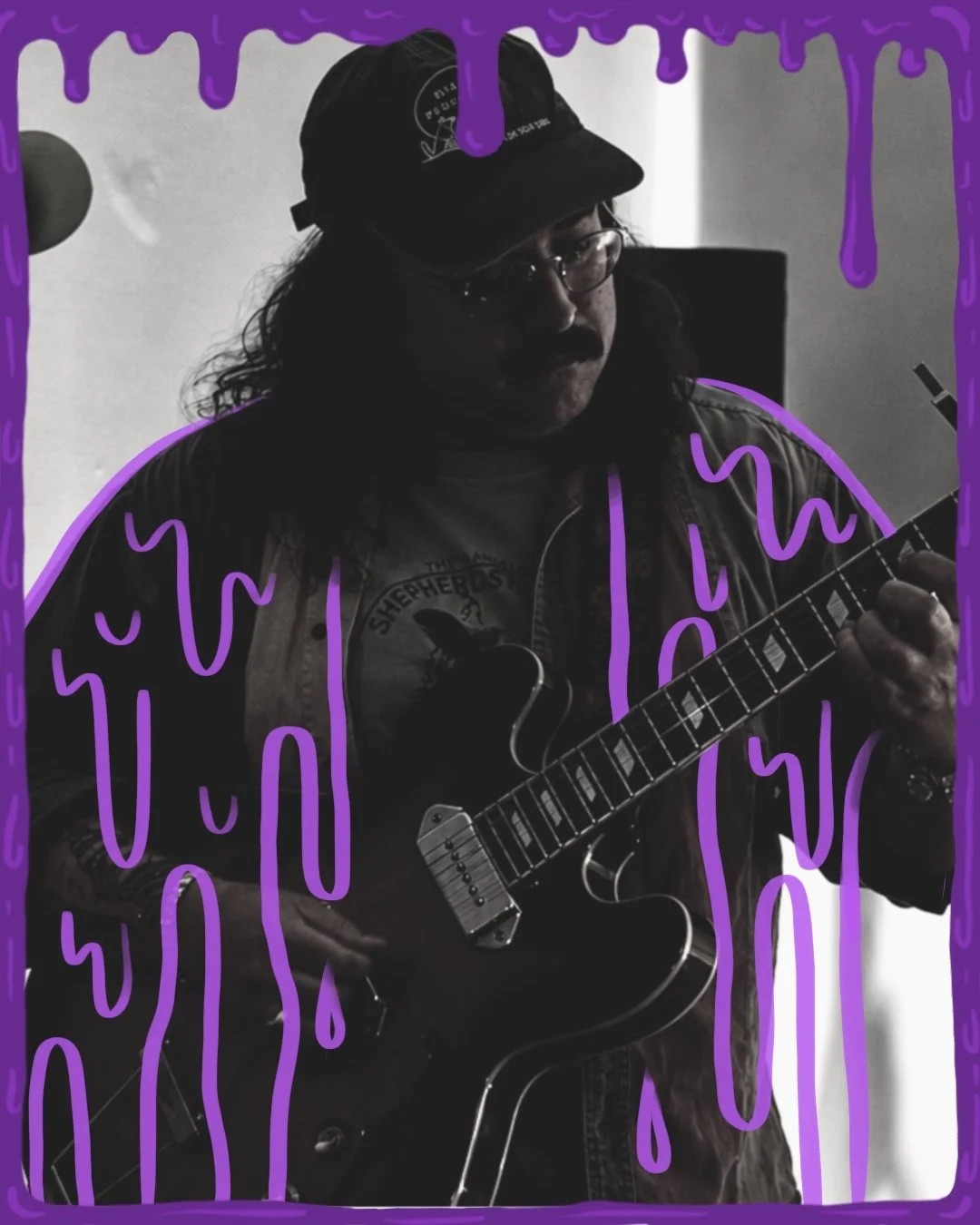
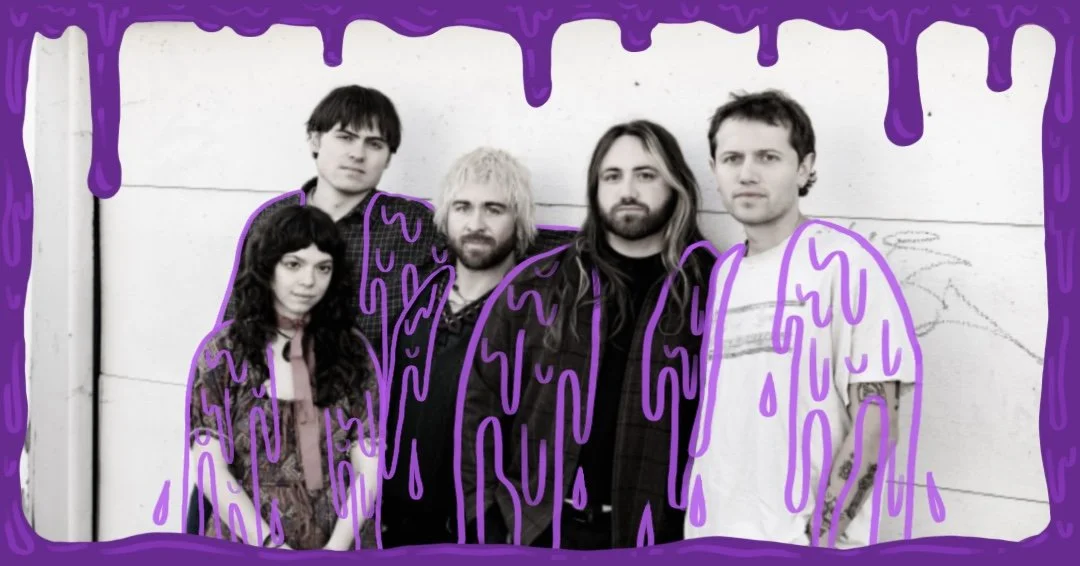
I was fortunate enough to sit down with FORAGER’s Shyamala Ramakrishna, Jack Broza, and Colum Enrique this week, to discuss their history as a band, their craftsmanship and their vision. This came about off the back of my review of their latest album, Even a Child Can Cover the Sun with a Finger, which you can read here.
Where previously I had allowed myself to almost mythologise these three wonderful artists, speaking to them directly made me realise just how human, practical and grounded their process is as musicians, and how sympathetic their artistic vision is to the tensions that define creativity in the 21st century. A few of the key tensions I most enjoyed listening to:
The Ecotone: All three speak extensively about these transitional spaces in which FORAGER’s artistry shines. Whether it be “pulling [inspiration] from ... genres that feel farther from how our own music is perceived”, the deep interconnection between “lyric and melody... in what they’re trying to communicate”, or “learning [almost entirely] by playing with other people”, FORAGER’s emergent creativity comes from the blurred boundaries between genres, between the audible and the aesthetic, between the internal and the external world.
And this filters down right from the top, from their identity as a group: whilst each of them has a unique story and perspective on their shared work, “we all have a sense of where our values and worldviews overlap, and that overlap is pretty large”.
Creativity as Self-Embodiment: Shyamala discusses this tension between extensive technical training and creativity, and how the former can often betray the latter. In the context of a move from classical training to composition, she points to this perception of a “perfect performance”, and how this “can make you feel inadequate - even when it's not aligned with your truest self”.
Colum and Jack also share their perspective on this tension between process and outcome: Colum mentioning the historically "very close relationship” between live performance and their production, and how that has become more fluid over time, and Jack noting how much they “trust each other” in their understanding of FORAGER’s musical identity: “Maybe that's cool, but maybe it's not FORAGER”.
The “Black Box”: the closing exchanges of our conversation focused more explicitly on the purpose of music in the modern world. All have important insight about how algorithmic marketing leads to poor artistic choices: trying to sound overly catchy or deep in order to “stop the scroll” and ending up with a finished product that sounds “shallow”; letting the algorithm decide whether a “very young demo” is good enough to finish, and succumbing to the attitude of “why finish this if no one's going to like it”. Shyamala puts this explicitly: “the skill required to market and promote music to an online audience is almost the opposite of, and corrosive to, the skill required to take a long view of the world and metabolize it through music.”
In spite of this, their approach is one full of optimism, collaboration, and creative genius. I wish them all the best for their upcoming tour, and look forward to experiencing them live in London in September.
The transcript below has been edited for the sake of brevity and clarity.
Forager! How long have you been playing music together, when did you start writing, and what made each of you pursue a career in music?
Colum: We've been a band for five and a half years. It was around April or spring of 2021 when we first played together, just an informal, casual jam. We'd known each other in different capacities for maybe seven years before that. We'd all been young adults living in the city (in some cases all over the country) before we started playing together in New York.
In terms of our music careers, we've each done different things over the past eight years professionally. Shyamala is a practicing lawyer. Jack and I both do freelance performance on our instruments, and Jack does a lot of production and mixing as well. We both teach; private lessons, larger classes at schools, one-on-one lessons. I used to work in education full-time — I had a classroom of 27 kids at one point — and then worked in school administration for a little over a year.
Shyamala: I think it's useful and important for artists to be transparent about how they cobble together a career, because it helps other people. I've certainly benefited from reading about how others have done it. Since my day-to-day work outside FORAGER doesn't revolve around music, it's really only recently that I've been able to step back from other paid work to focus on the band. I didn't feel I could until the touring became so intense that
I couldn't hold a regular job alongside it. So as of this fall I've stepped back to focus on touring — some of it out of the country. Before that, my job was representing workers in labour and employment issues, which gave me a lot of interest in how people make the rest of their lives work alongside their paid responsibilities. That's a recurring theme in my own life — figuring out how to pay myself for the time to make art is an evolving project, and right now it's leaning heavily toward the music.
An inspiring story for people like me. I also wanted to follow up on how each of you have come to “Forager full-time” at different speeds. That probably speaks to the strength of your shared artistic vision, given how much music you've been able to put out. I'd like to use that to dig a bit deeper into your writing process and your key musical inspirations. Would you say your influences are a fairly disparate mix, or are there any specific names that really shape your sound?
Jack: It's pretty varied. We keep our pool of references large and pull from things fairly abstractly. There aren't specific touchstones we're trying to closely follow, but there's a broad aura of music formed from everything we've each listened to, studied, and played over the years, and that informs us in countless ways. I think the moments when we're most directly pulling from something are usually genres that feel farther from how our own music is perceived. It's less "let's sound like this band" and more "what if we borrowed this sound or approach from something more obscure?"
That leads into something I've seen mentioned elsewhere, that you take a very live-performance-first, improvisation-first approach to writing. Is that a fair description? Could you walk me through how a song goes from an idea to a finished product?
Colum: I was actually thinking about this yesterday during rehearsal — we were workshopping a new song Jack had brought in as a demo, the first time we'd worked on it together. In many cases, especially some of the earlier material, the live performance and the record they had a very close relationship.
Especially in the earlier days of recording, it felt safest to lean on what we already did live and try to package that as closely as possible for the recording. As we've gained more experience writing, performing, and recording, it's become easier to move away from that. I was wondering yesterday whether, when we eventually track this new song, we'll take that same approach again, or whether this might be the one where we make a real departure. I think it depends on the mood and the material: some songs lend themselves well to that approach, and maybe in the future we'll write songs where that attitude just doesn't click.
Shyamala: On the improvisation point, a lot of the musical traditions we've each studied or grown up with are heavily rooted in improvisation. I grew up with Carnatic music, Indian classical music, where most of a two-hour concert is improvised, and the traditions that make up jazz are similarly improvisation heavy. But there's a tension, because we're making pop music, and the goal isn't for it to sound like a jam session where people have to work to understand complex ideas.
There's real potential in the ideas that come out of one-off improvised moments, but we also need things to be tight. I think there's a way to combine both, drawing on our backgrounds while making sure we never make a record where people have to search for reasons to like it — it has to be immediate.
I think what we're circling on is this tension between process and outcome: what a song sounds like in its final form can change as you develop and test ideas that might have come from just an intuition or a single sound. Where do lyrics and vocals fit into the writing process? Do you typically track the music first and then approach the lyrics, or does it ever happen the other way around?
Shyamala: Most, if not all, of the ideas we bring to the band already have lyrics attached. It's rare that we jam on a chord progression and add words later: lyrics are usually central to a song's identity by the time one of us pitches it to the group. Of course, more lyrics often get added afterward; it's common to write a verse and chorus, or a verse and a bridge, and let it sit before finishing the rest. That happens to us too. But it's rare that we spend much time on a musical idea that doesn't already have a lyrical concept behind it. There's something almost like painting in it: I don't think you can really have a lyric and a melody that aren't connected in what they're trying to communicate.
That was actually going to be my next question: whether you see melody as integral to the lyricism itself. I was also surprised to hear the lyrics come first. Would you say you all share a similar view of what you're trying to say with your records — some kind of collective artistic vision, or is that more fluid?
Jack: There's very little sense that we're building a set of songs around one theme. I don't think we've ever felt lyrical material was outside "what the band is trying to say." We trust each other: if something works musically for the band, it is the band. There's more scrutiny on musical decisions than on lyrics. "Maybe that's cool, but maybe it's not FORAGER".
It's interesting that the piece you wrote looked for lyrical through-lines across the records, because those really just emerge as songs get collected together from different lyrical voices, not from a pre-planned narrative. Even the song order on a record is usually shaped more by musical flow than lyrical direction.
Colum: Now I'm actually wondering, since lyrical ideas are always ultimately communicated through Shyamala's voice, what it would be like if Jack or I brought in something that felt totally opposite to what she'd naturally do. Like using golf or spikeball as a metaphor for navigating a challenge.
Shyamala: It's funny, I've been in other groups where people wrote lyrics for me to sing, and I'd think, my voice can't say this. It's not just that I don't connect with the specific image, it's that the idea can't come from me if I don't believe it.
Jack: I write and sing my own songs outside FORAGER, and sometimes I'll think a lyrical idea just wouldn't feel right coming from Shyamala. But nothing's ever actually been brought to the band and rejected by the group.
Shyamala: I think we all have a sense of where our values and worldviews overlap, and that overlap is pretty large. The fact that we've sustained consensus-based decision-making for five and a half years, and still feel close through it, shows how much our perspectives align. That's probably why this kind of conflict — "this song isn't something I think we should say" — basically doesn't come up.
I don't know if you'd relate to this, but I think songwriting, more than poetry, forces you to sacrifice some of what you're trying to say in favour of the aesthetic value of the words — the connotations, the syllables, the meter — rather than pure meaning. If you have the technical range to fit that universal framework, that's genuinely impressive, and if consensus works for you as a group, that's fantastic. I had some questions about the album itself, but I think it might be more interesting to follow a few tensions running through this conversation — process versus outcome, and the a priori idea versus the after-the-fact reading of a finished piece. Do you have any stories, individually or as a group, about a moment when you felt you'd really found your sound?
Colum: This has happened to me more than once: a family member or friend hears a song by a different artist and compares it to us. I find those moments interesting, hearing what people close to you think about your music, or really what anyone thinks, in conversation rather than online. They often don't have the vocabulary to describe the connection — it's more an intangible feeling, sometimes one I completely disagree with, sometimes one that I see.
In a way, we're always trying to piece together what makes us who we are, and there will probably always be some distance between how we see our music and how others hear it. Even if there were a general consensus among fans and friends about our sound, there's still a tension: "no, we don't sound like that," versus "that's cool, we were actually going for that sound!"
So figuring out our sound is often more about how we agree or disagree with the reflections people give back to us.
I guess that’s the movement of a musical identity from an interior world to an exterior one, and vice versa. In that vein, I also wanted to ask how each of you came to music in the first place, specifically what inspired you towards creativity? Obviously your technical training is very much at the forefront of your musicality as a group. I was also interested in whether your inspiration towards creativity was wrapped up in that, or whether your creativity comes independently of that?
Shyamala: I didn't study music formally in school, but I had a very long training in Carnatic music. A roadblock I think a lot of people from a classical background face is that you're building toward an aspirational endpoint, and falling short of some idea of "perfect" performance can make you feel inadequate - even when it's not aligned with your truest self. It took me until adulthood to even consider writing music, because writing, performing, and producing contemporary music are entirely different skills from classical training.
What makes a good singer in the kind of music we do isn't who can hit the note, it's who communicates in a way that reaches and compels the listener and introduces an idea in a distinct way. That's different from classical art. It took me a long time to realize that sounding conventionally "nice" wasn't the point, which is where I think a lot of vocalists doing their own music let the writing take a back seat. Composition, as its own interest, is separate from vocal training, and I'd always been drawn to it, but only as an adult did I start asking what I actually have to share with the world, and how to do that in a distinct and new way rather than the prettiest way.
Colum: I started studying with my cousin when I was about eight — she's a classical pianist and percussionist, and an excellent teacher. I learned piano and classical percussion with her for a couple of years, and she introduced me to the drum set, though her knowledge on the drums was a bit more limited than my appetite for it. After about two years it was clear where my heart was, and I had a new teacher for another two years, through the end of middle school, after which I mostly stopped taking private lessons and learned instead through group settings: a rock band in middle school and early high school, jazz ensemble in high school (a small, young program, since the school itself was new), and an external Latin jazz big band with weekly rehearsals and concerts around the city.
I grew a lot in that program, and occasionally took lessons with drummers whose playing I admired. In college (where my degree wasn't in music) it was the same pattern: as much time as possible playing in group settings, alongside practicing and studying on my own to bring more to those group contexts. Essentially, my whole musical life has been learning by playing with other people.
Quick follow-up: would you say most of your creative development has come from playing directly with other musicians? Do you think that's a sufficient vehicle for creativity on its own?
Colum: Not for everyone, but for a lot of us, the reason we started doing this in the first place is that it feels good, and the best way to experience that has been doing it with other people, bouncing ideas off each other. It's always surprised me how much that's allowed me to grow and change. There are things you can only really do on your own, for your own experience, but in general it's more fun to listen to music, go to shows, and play music with other people.
That speaks to one of those universal truths about the emergent properties of collaborative creativity. To close, I had a few more critical questions I wanted to ask. To what extent do you think creating and marketing music in 2026 is all a big game, and why?
Jack: It's a game in the sense people talk about with the gamification of technology, I think. So much of marketing and music now runs through algorithms. Looking at my Instagram feed, there's something a little dismaying about every artist being pushed toward gamified, clickable, "stop the scroll" short-form content just to deliver their art. I understand why — we do it too, and it's changed our lives when a video takes off — but it's a little strange and icky that being a musical artist today means doing that kind of content.
Since FORAGER’s social reach has grown, other artists have started asking me how to succeed making short-form content for the algorithm. I'm torn between wanting to share genuine insight about connecting with a loving audience, and wanting to say, "let's not even talk about this, I wish none of us had to." It is what it is. A twisted game, maybe a Squid Game type of game.
Shyamala: I'd add that the skill required to market and promote music to an online audience is almost the opposite of, and corrosive to, the skill required to take a long view of the world and metabolize it through music. It's like the difference between staring at your phone two inches from your face and looking at a landscape you're part of: different faculties, different parts of your brain. When I'm doing one, it gets harder to do the other. We actually only want to be good at one of those two things, and we wish someone else could just handle the rest, but this is the economy we're in.
Colum: One thing I'd add: when you say "game," it makes me think of some of the strategies we see online. One thing we don't do, which I think has changed how people relate to their own music: artists posting a very early demo and asking their audience, "should I finish this?" It's strange to me, because the implicit logic is "why finish this if no one's going to like it", which assumes that if a clip doesn't do well, no one would like the finished song, when really you might just be misled by the algorithm.
Even if you assume the algorithm is right and people genuinely don't respond, I don't think that's a healthy relationship to have with your art; only finishing something if it gets the reception you want while it's still in its infancy. That's not a criticism of the artists themselves, since it's hard to hold them fully accountable for systemic pressures. But it's one kind of strategic game-playing we're glad we don't do, because I think it works against making the art as good as it can be.
I love those answers. It raises the question of what our relationship to social media is even supposed to be: are we in a pub with friends, on stage, in a public forum, or something entirely new we still have to figure out? The relationship between artist and fan/customer is now so fluid, it’s fundamentally destabilising. My next question is in a similar vein: would you say your writing comes from a place of optimism, cynicism, or both?
Shyamala: I'll speak just to the lyrics I've written, since others should characterize their own work. On the surface, some of our lyrics are cynical — they describe interactions and themes with a bitter gaze toward the world. "Your Good Time" is a bitter song on its surface, and "Split Lip" wrestles with a cynical view of what it means to bring another life into the world. But I think that's a surface-level reading, because the earnestness underneath (being open about the feelings the songs contain, asking vulnerable questions, wearing emotion on their sleeve) is actually an optimistic stance. Even when it reveals a sense that something isn't right with the world, the act of sharing those feelings with an audience is optimistic, because it comes from a love of people.
Jack: You can also write and explore ideas you don't wholly believe, or don't believe at all. Sometimes it's just a fragment you're interested in extrapolating for the sake of a song. So there isn't necessarily a direct line between feeling optimistic and writing optimistically, or writing cynically and actually being cynical. Fiction has an authorial perspective even when the text itself didn't happen — it still reveals a worldview.
Final question: in your opinion, does music solve the problem of self-expression, or does it confound it?
Jack: I think it's a communication tool, and like any communication tool, it can be used to tell the truth or not. Music made very deliberately and honestly will always capture something about its authors, but ultimately it's just the tool we've chosen to speak to the world. We're representing ourselves through it, but I don't know that it's fundamentally more honest or self-revealing than other art forms.
Colum: I immediately think of pop songs over the years that clearly aimed to express some kind of depth, and instead landed as shallow or vain to listeners. Though who's to say whether that was a shared, independently reached conclusion or just a handful of opinions everyone absorbed. But it raises the question: if someone is delusional and expresses themselves in a delusional way, are they doing a good job of communicating who they are? It's a good question, but I think Jack's answer is right. Ultimately music is a tool to communicate something, not the solution to our identity.