MELT Exclusive: Tristen
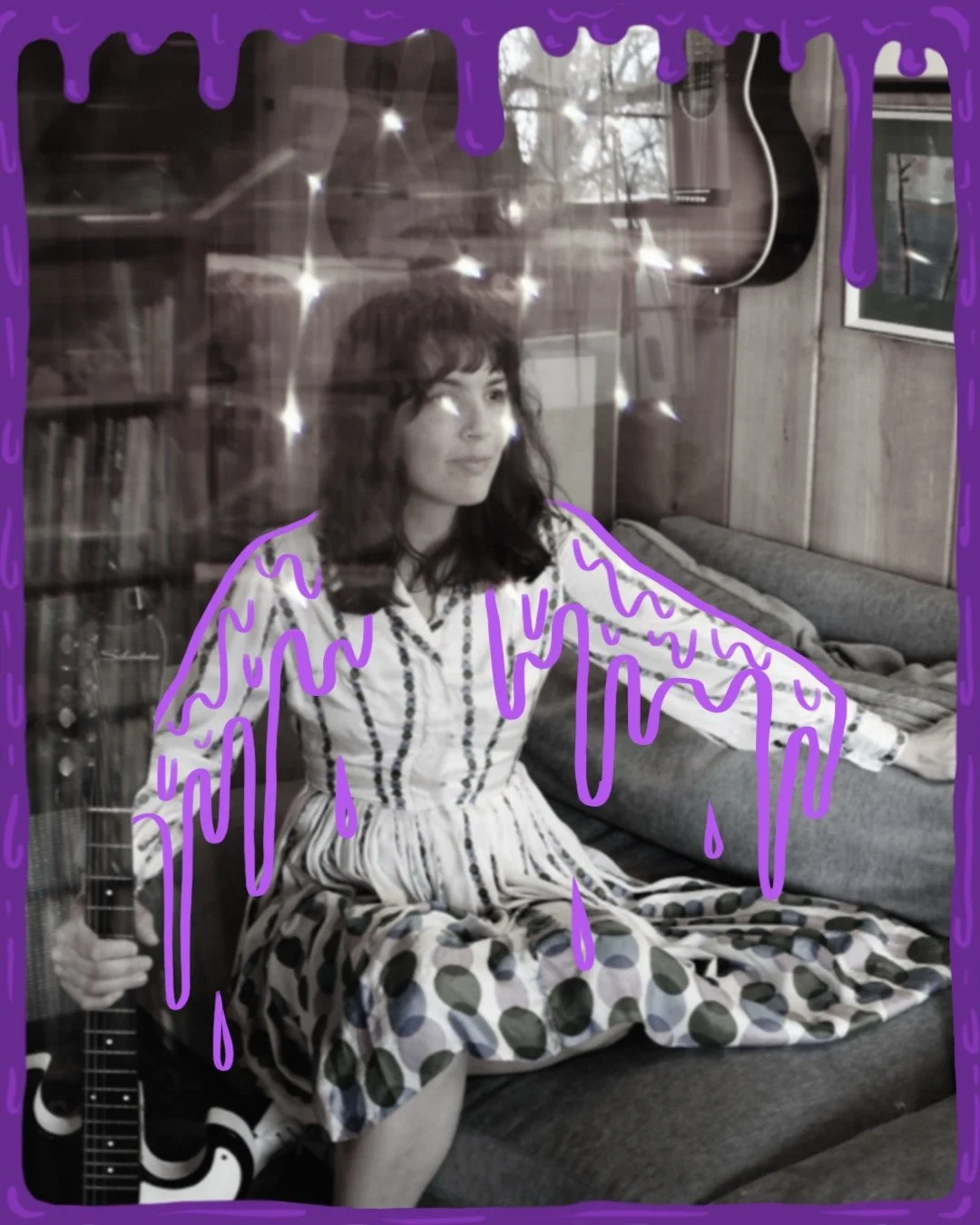
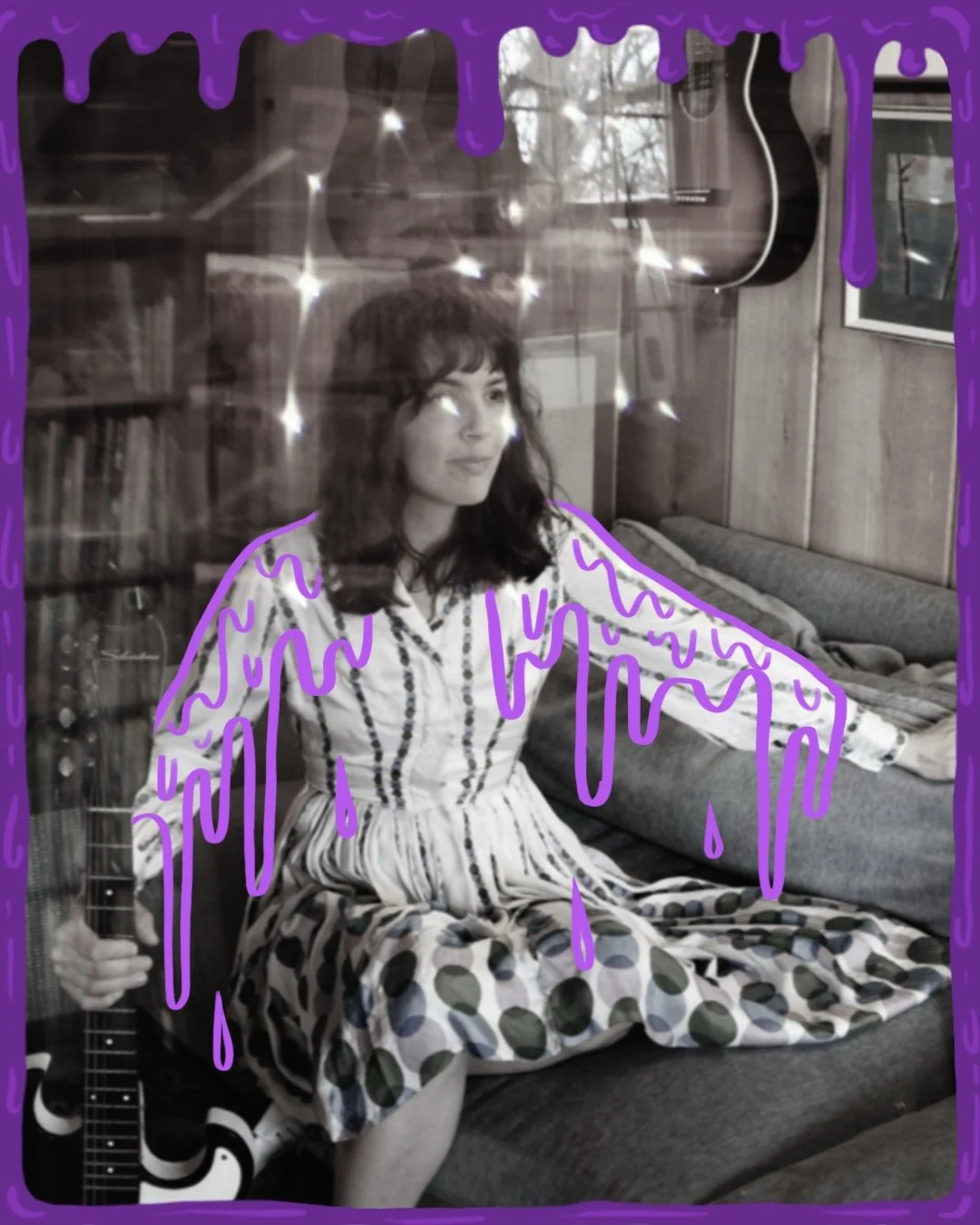
Photo Credit: Emily Beaver
Since Tristen first began etching out the Americana-rooted swoonings of her songwriting project over a decade ago, the goal has always been singular— independence, both financially and artistically, to pursue a streamlined sense of creative freedom.
Over the course of five studio albums, she’s found exactly that, in part through her partnership with producer, long-time collaborator, and husband Buddy Hughen and in part through sheer, musical self-determination. As wispy and ephemeral as Tristen’s tracks can sometimes seem, they are rooted in an unshakeable sense of identity: in a centralized idea of what an independent artist can be and yearn for in the modern state of the industry.
I caught up with Tristen on her stop in St. Louis in support of her newest record, Unpopular Music. Her live performance, in addition to the album itself, reflects a mature and clearly-defined mindset.
Tristen knows exactly who she is as an artist, and Unpopular Music, even in its intentionally unpolished moments, puts that fact on full display.
This transcript has been lightly edited for the sake of brevity and clarity.
How has the tour been so far? This isn't your first stop, is it?
This is the second stop. So the way that I tour now, because I have kids, is ideally four days a month. So little circles, and then we're doing a ten-day thing, which is a lot, for the West Coast. But in general, I try to keep it to four days. It kind of spreads out the workload of the whole thing. And then also, I don't have to be away from my kids, which is hard for me.
So being on the road, what it looks like for you, has changed a lot since earlier in your career?
Yes. Well, I mean, there are various stages of it.
In the beginning, I was grinding it out, and I didn't care. I just wanted to play every day. There wasn't much to come home to, you know? So it was fine. It was always a four-piece, and we would all share a hotel room and crash on floors. And no one cared.
I remember the first tour I went on, we did ten days. I came home, I counted the cash, and everybody made 80 bucks. And we were like, ‘Holy sh*t, we made 80 bucks!’ [laughs]
Then I reached a point, we reached a point, where we realized that our life was traveling, and we wanted it to be more comfortable because it becomes your every-day, right? So then as you do it more, your expectations kind of grow and you expand. You make a little more money, you spend a little more money, and you kind of make it as comfortable and as sustainable in a mental health way as you can, which I think is important for any job.
I'm a fan of the four-day work week. I think 25 hours a week at a job is a lot.
But nowadays, I'm looking for a rhythm. Some people really like to put out a record and then tour for three months and be done and then just shut it off and go somewhere else. My vibe is just a rhythm so that there's a system to how it all works, and it's consistent so we can just have a method and just go.
So what's your favorite part of being on the road now?
I love performing. I mean, that's my art. It's part of who I am.
It's part of how I remember who I am and even part of how Buddy and I see each other. We have this whole other life we've built, but then when we do this, we get to see who we fell in love with and who we were as kids. That's the reason I'm here.
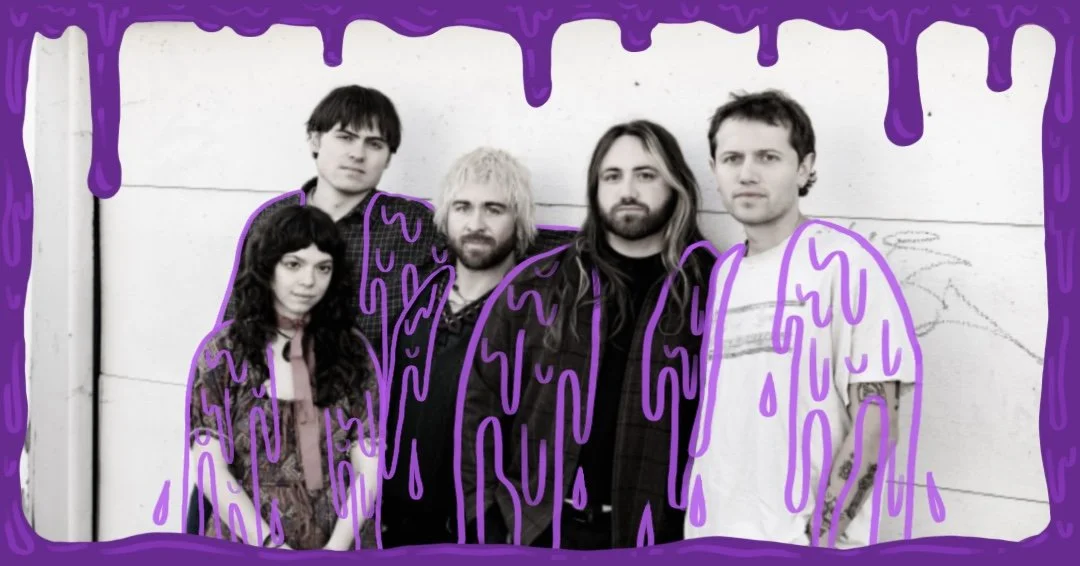
And also I get to play with this band, which is the sickest. They're rippers, and they're really good. So I feel very cradled in the arms of this group, and we all get along really well and we've all done it a bunch. There's no personalities to work out. We're all on the same page, which is rare.
One of the reasons I wanted to be a solo artist was I didn't want to have to wait around for anybody. I wanted to do this sh*t, keep it going. I would be the Paul McCartney cracking the whip in the band. And I hated being held back by people not wanting to show up.
But I've been playing with these guys for a while. It's very steady and very comfortable.
You mentioned that a lot of bands will finish the record and go on tour for three months in support of it, right? We’re a few months removed from Unpopular Music, so I’m curious where you feel like you're at in the cycle for that record? Is this tour still in support of Unpopular Music?
Definitely this is in support of that record. This is the first time I'm hitting some cities in a long time. And honestly, this timing has to do with my youngest going to preschool. She's finally old enough for me to be able to do something like this.
But also I've sort of changed my mind. I have goals as far as internet culture and the culture of the way this whole thing works. I love putting out physical stuff. That's how I like to work towards things.
But the hope is that I'll be consistently putting things out. And then I have a cover album that's almost done. But we're touring, so it's making it hard to completely finish. My hope is to consistently put out music and to consistently tour. And then if I need a break, because it can happen, then [I’ll take one]. But I want things to be really, I think, consistent and spread out.
It does take convincing because it's not the normal way. But I think in country music, people do it a lot. I don't have a lot of leverage, just the level that I'm at— the unpopular music level. But I do think that I approach everything with [the mindset that] there are no rules and we can figure out a way and we can do it ourselves. I feel like every musician is like a pirate on the ocean, and you can link up and collaborate, which is great. But also everybody's on their own ship, and we don't need to compare or worry if one person finds buried treasure.
This metaphor is going too far, but yeah [laughs].
That kind of feeds into my next question— what does Unpopular Music, obviously it's the name of the album, but what does it mean to you? What does it symbolize?
Well, it's a joke. It's funny because, in the 1920s and 30s, they put out a lot of these magazines that were the popular songs of the day. So there's a lot of those floating around, and I saw one and I thought, ‘Well, what if it was unpopular music?’ Which would be appropriate for me.
And then also Bertrand Russell's Unpopular Essays, which is a famous book of his. I think just sort of being countercultural, feeling at odds with your culture, which is a daily conversation for me and my family.
But also I think, in a world where everybody's faking status and trying to seem a certain way and needing that kind of affirmation, it's liberating to be like, ‘This is what this is and it's okay.’ We're making rock and roll music in 2026. It's kind of niche at this point. It's not really mainstream. I don't know if it even fits in there, and that's okay.
Has how you define yourself and your sound in relation to popular music changed over the course of your career?
I don't even know what pop music is. That's the thing. It's funny for me because I don't know if it's a musical descriptor really.
I think what I'm doing is accessible, but I don't know. I think I'm on the inside. I can't really say anything other than I like simplicity, and I like trying to [have a] simplicity of ideas. I'm trying to relate and communicate with people.
From an outside perspective, then, it feels like you dove back into some of your Americana roots on this record. Was that a conscious decision or am I reading into that from the outside?
I think you're sensing something there, but I think what I've always been trying to do is simplify and distill. When you have children, you have to be really intentional with your time. You can't just pick up and work on stuff every day like we did before. You have to think about, ‘Okay, do we have a sitter, or are they at school today? Or we're going to work on this on Monday and Tuesday— we're going to get together.’
There's no time. I think it's more of an efficiency thing. We've spent a career trying to find our process, so we would rely on other people. But by the time you get to Sneaker Waves, we are fully self-sustaining, meaning that Buddy is mixing. We made that conscious decision. In the world where advances were going away, we knew we needed to own the means of production.
As we created that process, then we get to practice it over and over and over again to refine. If things become too difficult, earlier I would be like ‘No, this song has to work [in this specific way].’ Now, if I go in and we open it up for the day and it feels wrong, we will just start over from the beginning. Or we'll cut the song and we'll close it, go to the one that's working. We follow the path of least resistance creatively because we don't have time.
We just don't have time for things that aren't enjoyable, that are difficult. So what you're hearing there is me insisting on simplicity.
[With] Sneaker Waves, even when I listen to it now, I'm like ‘What's all that jazz on there?’ We got flutes through delay and all this fun stuff. That was a time when we would layer and take away and layer and take away, and now I'm not like that. You're also seeing Andy coming in and being consistent, Linwood coming in and being consistent, people that we're playing with that can make up good parts.
The whole thing gets really fluid and efficient at that point.
So for you personally as a songwriter, has this changed your process or your approach? You mentioned the path of least resistance— does that change at all where you draw inspiration from in your day-to-day?
No; I think with writing songs, they come to you. It's about being really disciplined about stopping what you're doing and either getting the idea down or actually sitting and finishing it. My issue now is not finishing.
So I've got a couple years of stuff that's unfinished, but even now we're talking about coming up with the beats first, switching things around a little bit. But it can go any which way. For me the song is all about figuring out— What's it about? What am I writing about?
I just think there's so much music out there. There’s so much good sh*t. Why am I taking up space? But then there's the songs that just kind of flow out and happen and they come together really quick, and those are the ones we just kind of follow. If it's hard and difficult and we get lost in the process, then we just move on.
And how do you feel like you've grown the most as a songwriter through this whole transition you've talked about?
I think that there's just a confidence that comes with age.
I don't have anything to prove anymore, which is wonderful. When you're young, you have a lot to prove. You're figuring out your aesthetic senses and what your taste is and what bands you like and what you don't like. There's a lot of negativity; you need that ambition and that sort of black-and-white thinking to push you through what's very difficult. But as I’ve gotten older, I’ve meditated on Sonder, which is the understanding that everybody is so different and even the fact that we can come together on anything is a miracle. Taste is so subjective, and the reasons people are listening to music are so subjective.
So the older I get, I think it's just more confidence. I spent every penny I had, in the beginning, on getting my gear because it's always been about how I can not be impeded by money. I've always been trying to remove barriers so that I could be like a painter and just go down to my studio and make something. It's taken so long. Now, we even started doing our own artwork. You just have to learn the program. So you get older and older, and the technology gets better at the same time, and you just sort of learn.
I feel like a lot of younger artists are in the process of trying to get where you're at now and have that same space and self-sufficiency. It's probably hard to distill it into one piece of advice, but do you have one for those artists?
It's not the gear; it's the ear.
It's not about needing fancy gear. You need solid gear. It's not that expensive, and it's one piece at a time. When I started out, there was an M-Box Mini in 2007, and I just plugged in and I figured it out. I learned to play instruments through recording.
So my one piece of advice is to learn how to record your ideas and get your ideas to a complete enough place to communicate them to a group if you want to play live. Just learn how to record. That's where this is all going. It's all DIY. And then you can be free, and you don't have to convince anybody of anything.
I think, nowadays, it's hard for a lot of us older people— who grew up with the old model— to shed wanting to wait and shop their record for a deal. Everything needs to be: just make it, put it out, figure out whatever it is you need to do to get your music heard through the Internet and through live music.
Be on a scene. Find out where that scene is happening and get in there and collaborate because that's where all the magic is. At the end of the day, there's no shortcut. And if there is, it can't hurt you to know how to do all this stuff. Then, when a snake oil salesman comes, you'll be able to see right through it.