
Even a Child Can Cover the Sun with a Finger — FORAGER
Even a Child Can Cover the Sun with a Finger — FORAGER
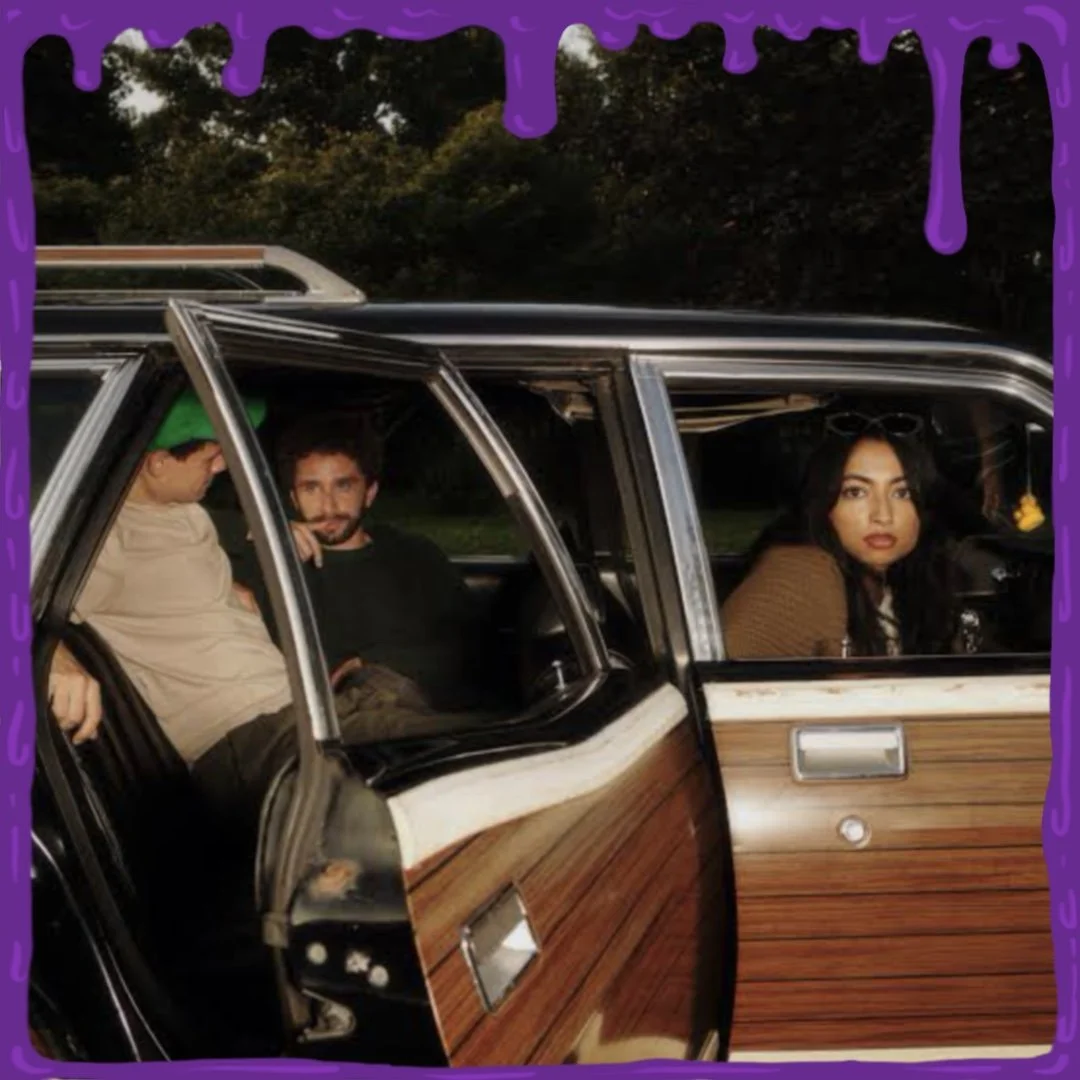
Forager is a three-piece indie rock band from Brooklyn, releasing music for just over five years. Their records cross boundaries between folk, jazz, psych pop, and progressive rock, indulging in playful, ironic, and highly self-aware tones, all underpinned by the quality and enthusiasm of their musicianship.
Lead vocalist Shyamala Ramakrishna is a Yale law graduate with an intoxicating voice: clarity in every register, microtonal precision, and power that bleeds through the polyrhythms, carrying the ear through key changes with ease. The band is co-led by multi-instrumentalist Jack Broza, whose technical skill in both the lead and rhythm sections gives radical colour and satisfying depth to Forager's tracks. The trio is completed by drummer Colum Enrique, who makes finding a pocket for every one of Ramakrishna and Broza's ideas look entirely intuitive.
Forager released their sophomore album, Even a Child Can Cover the Sun with a Finger, in February 2026, their most complete project yet. Most criticism focuses on Ramakrishna's voice, the theory behind their experimental sounds, and questions of genre. What I find most compelling is the depth of narrative they've built around identity - what it means to create in the contemporary world, and how we construct our self-perception from the prevailing images of the Zeitgeist.
I propose a journey in four stages, elucidated through lyric, voice, genre, and rhythm: The Challenge to the Self, The Return to Youth, The Game of Symbols, and All Pretence Dissolved — a journey from superficial to profound self-reflection.
The challenge to the self:
What am I even doing here?
“Your Good Time” provides us with the opening salvos. Menacing power chords and a sparse sonic landscape lean into the doubtful themes brought to bear in the lyrics: the people and media you give your attention to, can they ever reflect your interests? Who writes the rules of this new social game?
“Your Good Time” asks us “What it costs” to live authentically in a world curated by forces external to you; where danger can emerge even from under the warmth of your own duvet. It asks us how to live within the structures of those who bid for our attention with colour and stimulation and displacement; of those who forge the pathways we walk down: in that picture, well every attempt to live just “felt like a dare”.
The return to youth:
Who was I supposed to be?
“Age of Mythology” asks us to parse the sources of our inner mythologies, of the choices, ideals and memories that define our presence in the world. The tone of this piece is lighter and more playful, but the sense of foreboding that characterises the opening song persists, albeit through a more chorus-laden keyboard beat. The pervading images in “Age of Mythology” reflect this inner dissonance, where memories of childhood, cassette tapes and the gamelan, appear fleeting before the realities of the present: “download before it’s gone”, “Every time the air would sing/other voices channelling/till I could no longer hear it”
And so, to save facing the Sisyphean recurrence of the idealised past, as it cracks and pours into the crystallised present, the voice puts itself back in the driving seat: “I don’t wanna control a thing/But nobody’s gonna do it for me”.
Thus begins “Double Dutch”: the lightest, poppiest number so far, leaning more heavily on the electric guitar lead lines whence Jack Broza’s musicianship most brightly shines.
This song builds on the idea of self-conscious performance that we’re asked to confront in “Your Good Time”, and on the overbearing role that childhood identity can have on how we perceive ourselves in the present. Only this time round we’re asked to confront a different consequence. How do you know your memories are faithful to you? Do these past versions of ourselves surface only as a function of our current mindset?
“I was prodigal, episodic and young,
Diabolical, hyperbolic young love”
——
“Crocodile tears, echo everything
I hear in your voice,
Till I don’t know what’s real or fake”.
And if the past expectations set for ourselves can overwhelm us, eclipse us in the present, well “Even a child can cover the sun with his finger, it’s easy”.
The game of symbols:
Does no one else ever stop to think?
“Haiku Nursery Rhyme” opens up so many new sounds to this project. A jumpy, funky, twittering, shuffling deck of cards, this one is best just listened to.
“Leave a Little to the Imagination” is a distinct shift in mood. Much calmer, pensive. It marks a sincere dive into the next phase of Forager’s journey into identity: if inner meaning really is just a construct of performance, learned biases and selective memory, Imagination suggests that the answer is to live out these elements. The song indulges itself, in a sultry yet composed voice, in the mythologies of femininity, attraction, gender roles, and relationships. It’s the performance of normal, an honest experiment in living by the canon:
“Sometimes I want a stranger
To come up to me and say
‘I want to be inside of your world’
——
“You’re making me nervous
I put on the good dress
——
“Sometimes I want a stranger
To wrestle the crowd and see
Me toss my hair for the first time”
——
“Sunday after 8….
You’ve been out late…
I don’t want to know”
But before we can get too carried away, the reality of this experiment comes gently crashing down, as feathers on a snare: how could I ever know who you are, if you’re part of this game; how could I ever claim to know myself…
All pretence dissolved:
Under nothing at all, I am everything.
“Pomeranian” is the masterpiece of Even a Child Can Cover the Sun with a Finger. Released as a single in late 2025, its shimmering duality, mesmerising vocals, themes on the gentrification of cool, the missing self in the perpetual social game, are at the heart of this project. It of course helps that it is catchy as hell. Mitch Mosk wrote a great piece for Atwood Magazine, if you’re looking to dive deeper.
“Autobody” submerges us further, with broad, sweeping, resonant chords, a snare-rim heavy beat, and a closer look into how reality presents itself to the disinterested participant, to the voice without a centre: the mundane now the uncanny, the imagined now the lived experience. Only then do we scratch the surface of our potential, “am I stuck here forever/an unlived animal?”
“Autobody” concludes with a gradual decrease in tempo and decay; a giving over to the dream state.
“Disaster Friend” starts to swell again, first with deep aching bass notes, before breaking out into absolute victory: a half-time breakdown, power chords, and entrancing vocal high notes. Thematically this track is the most ambitious yet, its visual field now at a universal scale, pulling us ever closer to this project’s conclusion. We’ve challenged ourselves, found the gaps in our memory, their impact on our self-perception; indulged in the idealised versions of ourselves, judged those of the people around us, and failed to find an overarching narrative.
So, we embrace the serenity of living in doubt, with more questions than answers,
“Close your eyes, you love the dark,
Could we be a pair of dying stars?”
In this world, all images coexist - a strong declaration that in the totality of our feelings,
“I’m just passing by now,
You’re a flash in time now”.
“Split Lip” sticks out slightly from the thematic thread, somewhat self-contained around its subject: the question of motherhood, framed as the modern view of autonomy against the buried joy of becoming a mother. The song sits outside the musical register developing in the second half of the album, with a much darker and uncertain tone. Thanks to the gratifying richness of its chorus sections, it still cements its place in the project.
If it plays a role in the thematic context of the project, “Split Lip” does ask us the future value of decisions made in the present, but with more urgency than in tracks like “Pomeranian” and “Leave a Little to the Imagination”: some choices create permanent change. Seeing the people our mothers become gives us a glimpse of what those changes look like, but refrains from providing answers:
“Did she end where I began
Like nothing men do,
Or will it mend me
To try to mend you?”
“Like Dancers” is the final track of this album. With a temperate, lazy (yet purposeful) drum track, a pulsing, reverb-heavy keyboard chord progression, and gently airy vocals, the closing song of the album feels more grounded, physical, peaceful. The lyrics begin with probably my favourite couplet of the whole album:
“You take a breath,
Like the pause in rain
As you pass under a bridge
On the interstate”
The rest of the piece plays on the ideas set out in these lines. Past loves, regret, our changing values, the things that once excited us, that excite us no more, even the stage itself: all of these things live on inside us, quietly venturing out from the darkness, asking for our breath.