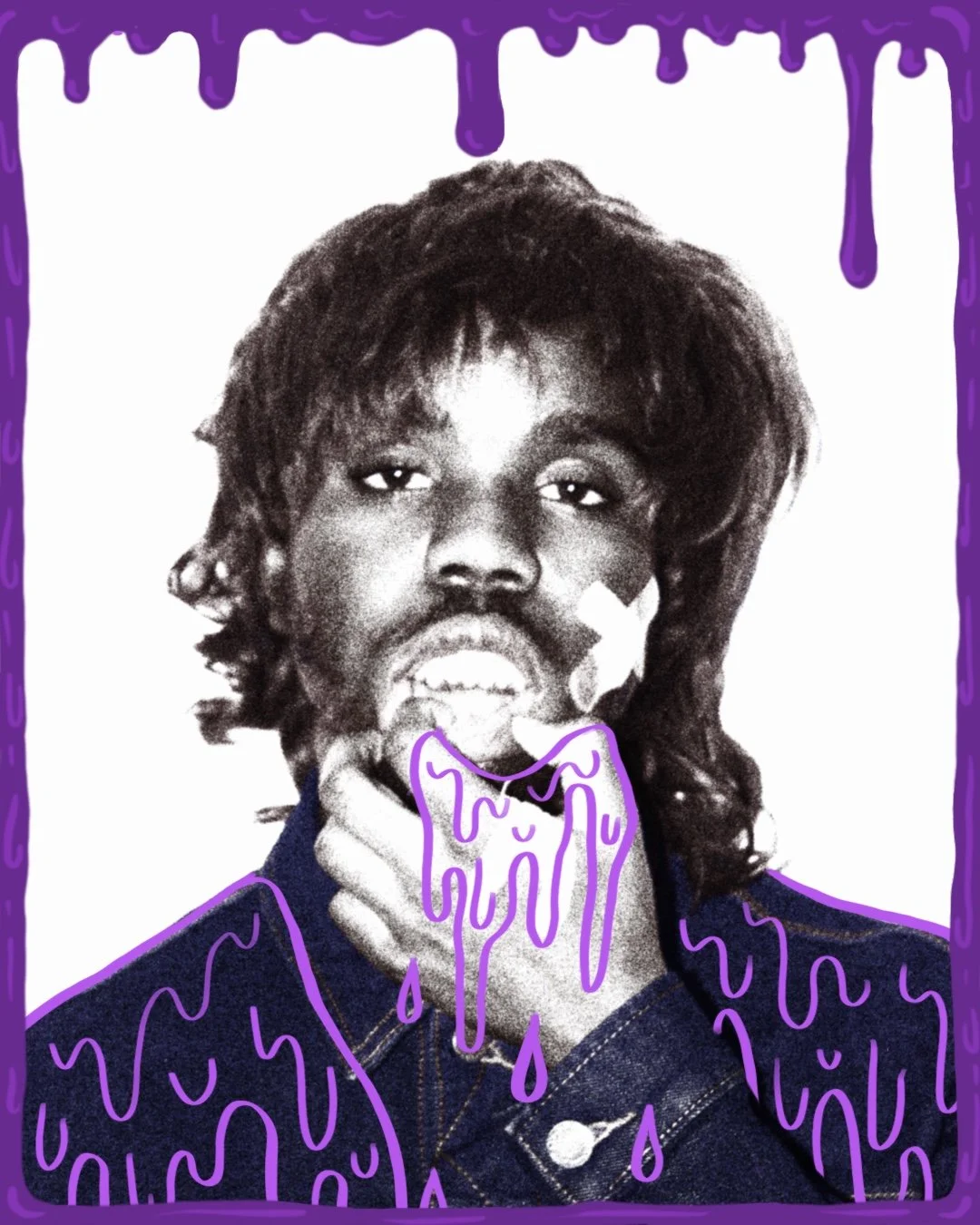
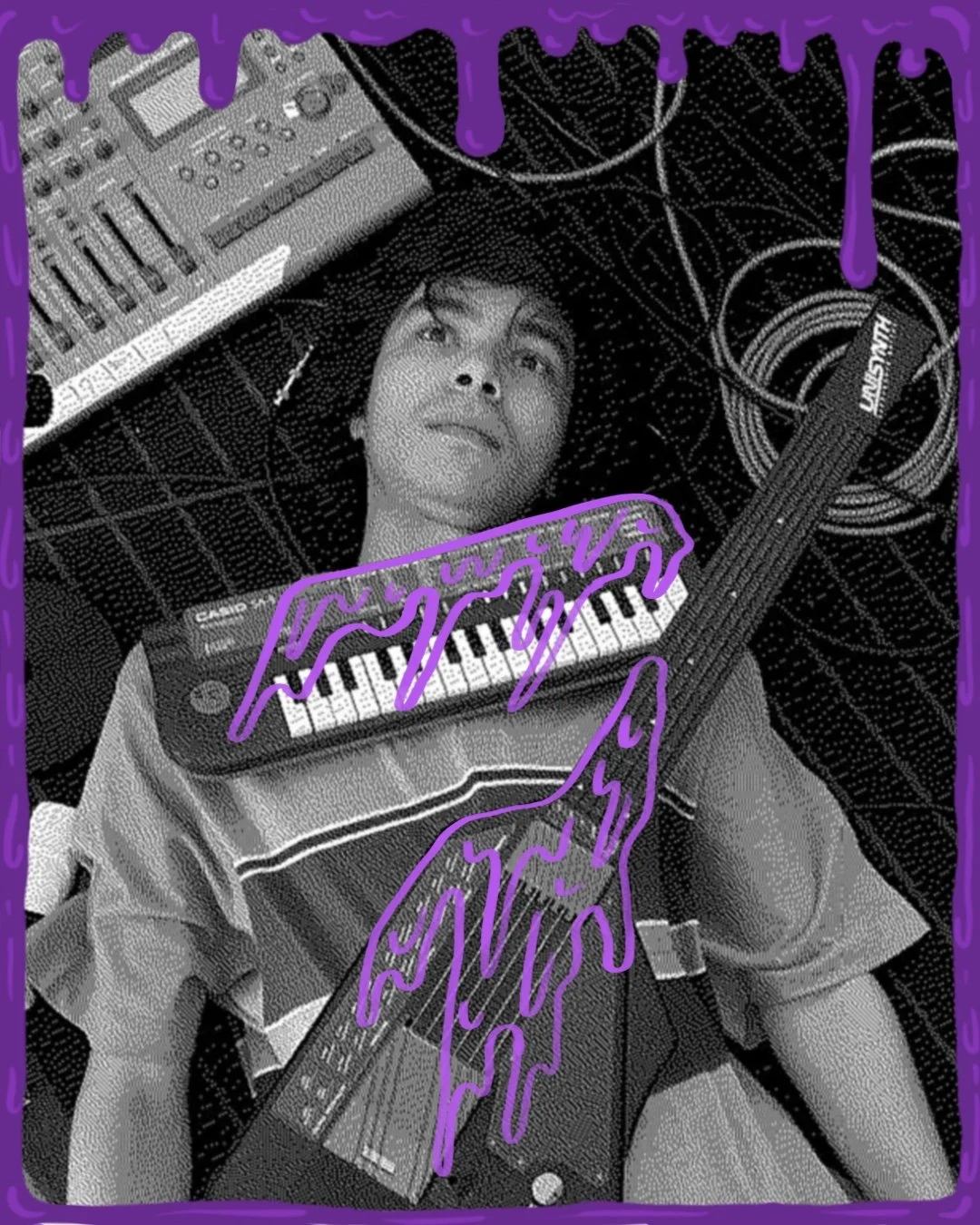
MELT Exclusive: Smidley
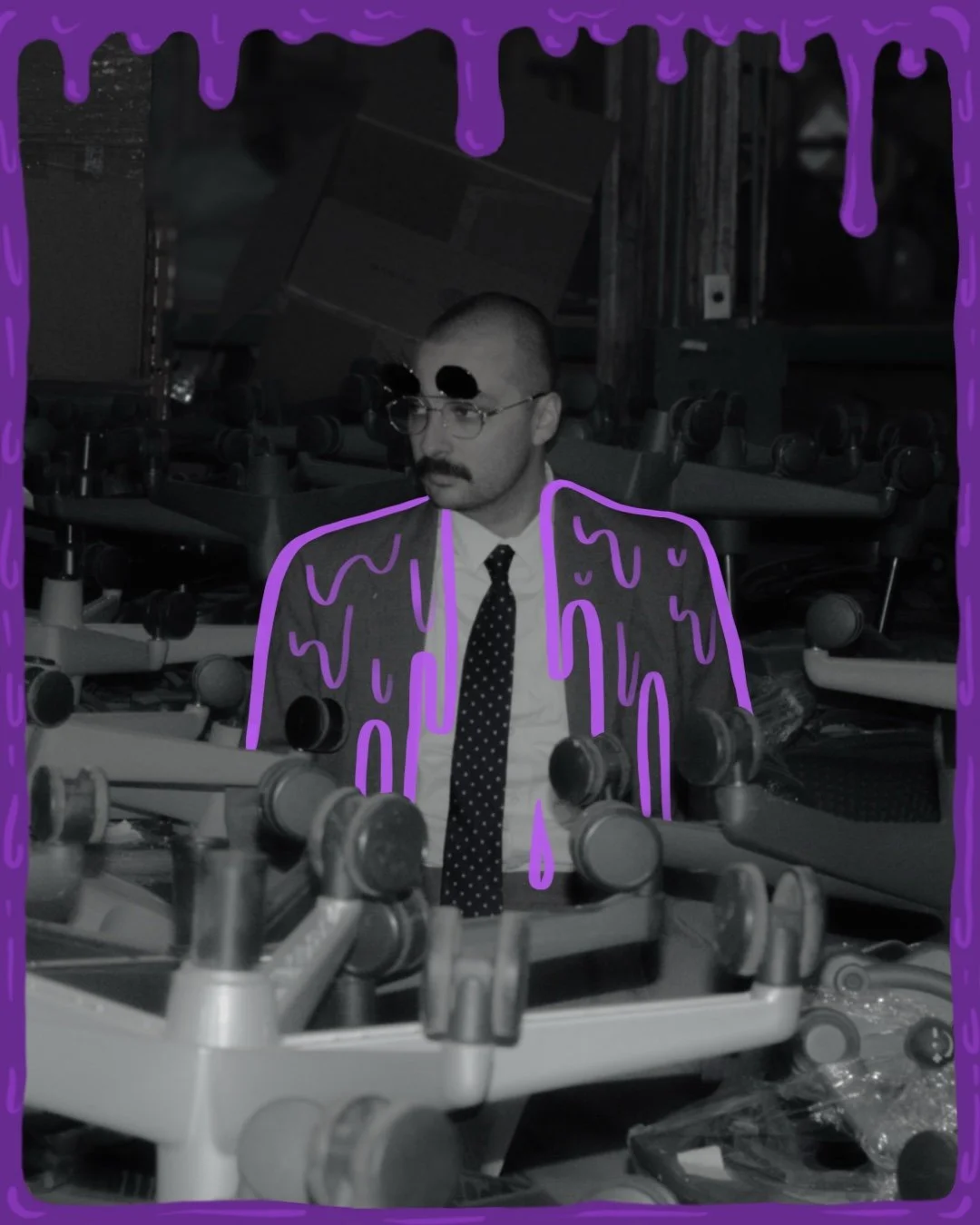
Photo Credit: Brett Torrence
What does it mean to leave something behind, especially when the past feels so freshly put to rest?
That’s the question that St. Louis-based songwriter Conor Murphy asks across his new project, Murphy Horse—his first release under his solo project Smidley since the decade-long tenure of Foxing, the post-rock outfit of which Murphy was the lead vocalist, came to an end. The ‘ends’ that Murphy speaks of across the record of course relate to Foxing, but it’s more than simply a reflection on the conclusion of a singular musical project.
Murphy Horse is about feeling lost more generally— a sense of clear intention that has been deprived of definite direction but met with a resounding sense of love. But in terms of sonic purpose, it’s also the first Smidley record that, for Murphy, has felt purely like its own project. No longer are the efforts for his solo work simply an aside to his work with Foxing; the whole of his creative energy and musical aspirations are crystallized in this project, and for the first time, he feels like he’s truly come to realize the full breadth of indie rock and pop-inspired influences that shaped him as a songwriter in the first place.
I caught up with Murphy at a coffee shop in St. Louis to talk extensively about Murphy Horse and where he’s at creatively. See the full transcript of the interview below.
This transcript has been lightly edited for the sake of brevity and clarity.
Tell me specifically, to the best of your memory, what about the sound and the idea of Foxing attracted you to the project when it started over a decade ago?
When we started it, Josh Cole, who is a former bass player in Foxing, hit me up. He was actually serving in the military in Afghanistan. And he wanted to put together a band, and the way he described what he wanted it to sound like was Aphex Twin meets Neutral Milk Hotel. I was like, ‘Yes, that sounds awesome’.
Obviously, if you listen to Foxing, it sounds nothing like that. Because as soon as we got together, we just started writing like emo songs.. Because that was what was, I think, familiar to all of us. And I was in a Midwest emo band right before that, so that was what we were making—very inspired by Algernon Cadwallader, you know. But that was also not necessarily what I ever was listening to the most. I was always listening to things like Sufjan Stevens and Bon Iver, sh*t like that.
And so when we made our first Foxing full-length, we used a lot of strings, and horns, and, reeds, just more orchestral elements to it. And I love that. We kind of got away from that with later records, but also dove more into electronic sounds.
So I always really loved the path that Foxing took. But the number one thing that was the throughline for all of it was it was always based in drama, and things that felt, for us at least, like they were cinematic, or theatrical and serious. The biggest thing was everything was very, very serious.
Which is funny, because nobody in Foxing is a serious person. Everybody is an extremely goofy, ridiculous person. Which is really why, whenever I started doing the Smidley project on the side of Foxing, it was like a counterbalance to it, where everything was more based in humor, and lightheartedness, and fun.
Because it was like, I can't possibly make more sad, serious, dramatic stuff. It weighs on you at a certain point, especially when you're not, I'm not an enormous fan of extremely sad music, or like serious, dramatic stuff.
I like plenty of it. But for the most part, the things I gravitate to, or towards like throughout my life have been things like ABBA, and the Bee Gees, or just fun, kind of dancey stuff.
As Foxing evolved over those first couple of full-length records, how do you feel like you grew the most as a songwriter and a vocalist during that time?
I had never written a full song start to finish by myself. I always played in bands and we would write things together. And I think when we were making Foxing's first album, it was the first time that I ever wrote a song from start to finish. It was a song called ‘Rory’ I wrote on a piano. It was like a verse, a chorus, a verse, a chorus. And slowly over that album and the next one, I was writing more full songs by myself. And then we would expand on them as a band and make them into a better version of that while also still doing the collaborative stuff.
Eric, our guitarist in Foxing, he would write full songs, and he's a brilliant songwriter. So I learned a lot from doing that and then also from Eric, who I've played in bands with since I was like 12, 13. I was in school for music in grade school, high school, and then in school for audio when I was in college, but Eric is the person that really taught me the most about music theory and chords and what it takes to make a real song instead of just a collection of tapping guitar parts or something.
When we finished Foxing’s second album Dealer, I had some songs that I had written for the record that didn't belong with Foxing at all. They just didn't make sense. They were too upbeat.
So that's what started Smidley; it was an outlet for me so that I could not feel like I was trying to push Foxing in a place that was more palatable to me. I could focus on just being a member of that band and going towards a collective vision while also having my own vision on the side that was more geared to my interests. And that's what it has really been up until now, now that Foxing is on hiatus and, I don't know, it could come back someday. Could not.
Now everything I write is for Smidley.
When you came away with that first batch of songs, was it immediate for you? Like, ‘Okay, this should be a solo project now.’ Or when did the idea for Smidley come about?
I would never have time in my life for another band. I would neither have the time nor the bandwidth to meet with two groups of people and try to get on the same page about things. I write constantly, and I have several albums worth of songs, material.
I can always make a solo album. If I had to turn in 10 songs today, I'd be able to do it, you know? But I would definitely not be able to do Foxing and be in a band with other people where it's a democracy. It would be impossible for me, too much.
So how did you go about kind of refining the direction for that first Smidley record, the self-titled one?
I think refining it was not even on my radar. It was more a matter of trying to start and finish something on my own. You know, it felt less of like, I want this to be good and more like I want it to happen. I want to prove to myself that I can do this. What really refined it was the people that played on the record.
I recorded it in Philadelphia with Joe Reinhart, who also mixed this new album, and he's been somebody I've looked up to forever. He was in bands like Algernon Cadwallader and Hopalong. And he's just the greatest guy, one of my best friends.
And he kind of defined the sound of the record, because I knew nothing about guitar tones and bass tones or anything like that. I've been a recording engineer for a long time. But when it comes to the things that make a sonic sort of flavor to an album, at the time, I didn’t know what to do with an amp or pedals or anything like that. That's just not really my thing. So he really did that as well as the people that played on it.
Eric Slick from Dr. Dog did the drums on the album. He's like the greatest drummer on the planet.
You mentioned Sufjan Stevens and ABBA as examples of what you were listening to before and at the start of Foxing. When you started to approach Smidley as a defined project, do you think there were any influences that expressed themselves in a fresh or in a different way than you were expecting?
I think when I was making the first Smidley record, I was still feeling the same thing I felt with Foxing, which is that there's a sound that I should be making, like it should sound like what somebody would expect. A Midwest emo influence.
I wanted it to be more fun and lighthearted. And I wanted it to sound more like Broken Social Scene, you know, indie rock. But at the same time, I was still kind of falling into the tropes of what an album by a person from Foxing would [sound like].
I love that first Smidley album a lot, but it honestly really wasn't until this album that I felt like I could allow those, my favorite artists and my favorite influences, to really kind of shape the influence of the album.
One example I can think of is the song, ‘Fuck This’, on the first Smidley album, there's all this percussive stuff going on, and I wanted it to sound like a disco-y kind of thing where it's like ‘Ring My Bell’, you know, just triangles and bongos and stuff like that—which is now all over the new Smidley album. This is really the first time that I've allowed the things that I love the most to influence the record rather than the things that I feel like people would want to hear to be the driving force in writing and recording.
On that note, what is your perception of the carryover of the fanbase of Foxing to the fanbase of Smidley? Do you think there's a lot of crossover there? Or do you see yourself setting up a new kind of fan base with the Smidley project?
I mean, it's hard to say.
I think there are plenty of people who like both things. Foxing has a discord and a Reddit community. I'll chat, you know, I look up stuff all the time about ‘Does anybody like this?’ [laughs].
It seems like there's a lot of people that [have specific things they love from Foxing]. But I also do think, if you really like serious dramatic music like that, things that are more post-rock or brooding, sad music, this is really not like the album for you. So I get that people would listen to this and be like, ‘Hey, I can respect what's going on here, but it's not for me.’ The same way I feel like there are plenty of artists, even artists that we've toured with, where I'm like, ‘I love these people and what they're doing is incredible. It's just not really like the type of music that I listen to.’
For the most part, when I put on a song on my headphones, it's something maybe a little more upbeat.
So you're saying this newest album is the first one where you fully let go of any sort of expectation— or sense of obligation to those expectations— not necessarily of just the Foxing fanbase but just in general?
Absolutely. I think the way I could put it best is, with the previous two Smidley records, my entire life revolved around Foxing. And I felt like the Smidley albums were part of almost a world-building with Foxing where you have these albums by our band and then these albums on the side by one person from the band, but they all kind of go together.
And I think, now that Foxing is not currently a band, I don't feel that obligation at all. I don't feel like I need to be adding to the world of Foxing. I feel like I actually owe it more to myself to carve my own path here and make exactly what I want to make.
And there's so much freedom in that. I would love for [Smidley] to be successful in some way, but I do not expect that at all. I feel like I'm starting from scratch with it, and I'm 33 years old. It could just not happen.
But I know that if I keep making these albums that it'll bring me joy and it'll be an outlet that I can be really proud of.
And so using the second Smidley album as kind of a bridge point from where you were at creatively with the first album, how do you feel like you grew through
‘Here Comes The Devil’? I don't want to use the word discomfort, but kind of just easing yourself into the depths of what you wanted the solo project to be, what was the sense around the second album?
I think the biggest thing with the second album was that it was the first time that I really wrote and recorded something almost entirely on my own. The only people that played on it were Adam Schatz, who plays saxophone on a song on that album. He also plays the saxophone part on the new Smidley album. And then Eric from Foxing played a solo on that album, a guitar solo, and then also mixed the album after it was all done.
At least for me, that is by far the fewest people that have ever been involved with a project that I worked on. So I did all the drums and the guitars, the bass, the trumpet parts, the vocals, synths— every part of it was entirely on my own.
That was really the biggest thing. I think second to that would be the actual songwriting. But I think at that point, I already kind of knew what type of songs I wanted to write. With those songs, I was trying to define this concept—which is kind of a pretentious word for it. But I wanted this theme to the record around the idea of a journey through hell. I wanted it to be this narrative thing.
And I think because of that, it all had a similar theme and vibe to it, which is another thing that I shirked on this album, because I don't want to be beholden to anything other than what I think would be cool and fun in the moment.
And you worked with Shinra Knives on the second record. I saw in, I think it was a Brooklyn Vegan article, you mentioned their album from 2022 is one of your favorites from that year. Was that sort of like a dream collaboration for you?
It was and is a dream collaboration, but he's my best friend. He's from St. Louis.
Okay, I didn't know that!
He's, for my money, the most talented and innovative electronic artist that I've ever listened to. I love his music so much. I love him so much. He worked on that album and the last Foxing album, and on this with me. So he's so f*cking good.
The song that he does, ‘Corpse Flower’, we wrote that together to be an opening song on the last Foxing album. And we decided not to use it. We used a different song for the opener instead. And it made no sense being just a track on the Foxing record. So it was really kind of the first song that was like, ‘Cool. We'll just open the smithley record with that.’
I love that song so much. And what he does on it is insane. It was actually to the point where, it's the odd man out on the record in terms of what it sounds like. But because of that, I love it so much. And I think it's important that it's on the record. So Ian [Shinra Knives] and I worked on transitions between songs throughout the record so that it had his imprint on it throughout.
That's the only song that he's featured on, but he also did a lot of other stuff on the album as well.
Is that something you want to do more of in the future? Those types of collaborations?
Yeah, absolutely. I mean, there’s four people in Foxing. It was always nearly impossible to be on the same page and agree to do anything, especially things that had to do with writing songs. For all four of us to agree to collaborate with anybody would be insane.
The only reason why it worked with Ian is because he's our friend, and even that was something that, by the end of writing the record, it was too tense to finish off altogether. With Foxing, again, it's extremely serious, and everybody has hard-lined opinions about every single part of it. And we all love each other very much, but it's also just a struggle to do that stuff because of all of that.
I say all of that to say, when you have the freedom of just one, it makes it so it's anybody that I want to work with and that wants to work with me. It's very easy to do that. That's what happened with Lucy Dacus and NNAMDI and Dominic Angelo, all these artists that worked on this new album. All I did was text them and just say, ‘Hey, do you want to do a verse? Do you want to do a part?’
Instead, with Foxing, I feel like that would have been like a months-long kind of debate that would have created fights just to suggest that somebody would work on something.
So Foxing definitely evolved over the course of its run of albums, right? Do you think that was something that had to be very intentional and something very thought out, or did it kind of come naturally with the territory of what you were doing within those genres?
I think I wouldn't say it was intentional.
Well, okay. Yes and no. I think that after every Foxing album, we all had our version of what evolution meant, and every subsequent album was basically a kind of compromise of what we thought evolution was with the band.
I'll never forget after our first album, we were in my basement and practicing, and we were all talking and we were like, ‘What do we think the next album is going to sound like? What is it going to be like?’ And I said that I thought it should sound like Belle and Sebastian and Broken Social Scene. And everybody told me that didn’t make sense. They were all probably right. It was probably a stupid way to go about it.
But everybody had a different idea. And so Dealer, the second Foxing album, I think it sounds like all of us trying to put it together, which I love.
I think that was the thing that made Foxing great, was that it was anarchy. You really see individuality from every member and how each member is evolving rather than this collective vision according to one idea. It was a bunch of different stuff happening.
That being said, we always talk about it, especially in our later years with Foxing—maybe we made a big f*cking mistake by not just sticking with one sound. Because we're constantly just like, ‘Oh, you like that album? Here's something that's not like that at all.’ [laughs].
It’s maybe not the smartest way to do it, but it's the way that we did it that made us feel the most proud, and I look at each one of those and I'm so, so proud of the way that we evolved and the way that we came together in the end to make something that, for my money, just didn't sound like anything else being made.
How do you feel like that idea of evolution looks different or similar at all within the context of Smidley?
I think that, throughout my career with Smidley specifically, it has evolved from being a side project, a runoff of songs that I wrote for Foxing that didn't make the cut, into being something now that is actually important to me.
This is something important to me in that I take seriously. And I want to define a catalog of music that I can look back on when I'm older and say this is my finest work. That's my goal with all of it, to eclipse what I've done in the past with songwriting and production and everything to create something that feels entirely my own.
I think we're getting kind of onto the last train of thought here, but with Murphy Horse, I'm always curious how the lead singles are chosen. Was it a label thing, or?
So I've experienced it both ways, with labels choosing singles or suggesting or just saying whatever you want to do.
This label that I'm on now, Royal Mountain, is the best label I've ever worked with. And that's not a slander towards Hopeless or Triple Crown. We even self-released a couple of records.
But Connor Mackey, I guess you would call him A&R for Royal Mountain, he really just runs the label. He is the most supportive and collaborative person I think I've ever worked with on the label side. Every decision that we've made with singles or art or anything like that, none of it has been hard-lined. It was all just truly conversations.
We just had a call today. We have a weekly call on Tuesdays where we just talk about what's going on and what we’re doing next. And it's such a beautiful relationship. It’s only a conversation around what makes the most sense, about which song should come out or which song should come out first. For instance, Lucy Dacus sang on our lead single ‘Capstone’, and so there was a conversation around that. We had a tour with Lucy Dacus, so we had to think about if it should come out right before the tour, or should it come out during? Things like that.
‘Capstone’ came out strategically at that time so that people would have some familiarity with it before we did a tour with Lucy. She ended up coming out on stage with us and singing it every night, which is amazing. She's the greatest person.
And then ‘Love In Every Direction’ was the second single. I felt like that song was the strongest one on the album. That made the most sense to follow up while people were paying attention.
And then ‘Murphy Horse’ being the last one was mostly because I think it's the most representative of all the elements of the album. It feels the most like connective tissue between any two songs, and it's the title track. I feel like it displays the sentiment of the lyrical ideas of the album the best.
Really, the whole album is about what you and I have been talking about this whole time with Foxing. It's about leaving something. And I hope it's broader than just leaving your band, but it feels like everybody in the world is getting laid off right now or their jobs just don’t exist anymore. Not just your job laid you off, but your job just doesn't exist.
And that's kind of how it feels for me, at least with music. I think a huge part of why Foxing ended— and this is just my perspective, not speaking for anybody else in the band— was because we couldn't treat it, I couldn’t treat it as a full-time job anymore, and I didn't want to half-ass anything we did with that band. To me it was a decision of, if I can't give this project everything I have, then I don't want to give it really anything. And so this album is a reflection on the fact that all of a sudden I have no f*cking clue what I'm doing with my life. I've known what I was doing since I was born. I dropped out of college to do music and that's been my thing for 15 years. Now I have no clue what I'm doing,
So the lyrics on the album are really looking at that fear. I'm too old to really try something new. But that fear is met with the idea of looking around and realizing that you have all this love and you have all these friends. A huge part of the record is about my wife. We're about to have our third anniversary of our marriage. We've been together for 10 years, and a lot of it's about her.
I am so scared about what I do next with my career, but I know exactly what I'm doing with my life, which is being her husband and just being as good as I can to her and having the best life that we can together. So it's fear and love.
And if there was one word (or one phrase) you would use to describe your feeling around this release, how would you distill it?
I think it's just freedom. That would be the one word I would use. And that's not to say I was chained down by Foxing or anything like that. It's truly a matter of letting go of all kinds of preconceived ideas about music or about my own career—it's the freedom to truly just be present with everything and to expand on the present and live with the things that I'm making.