
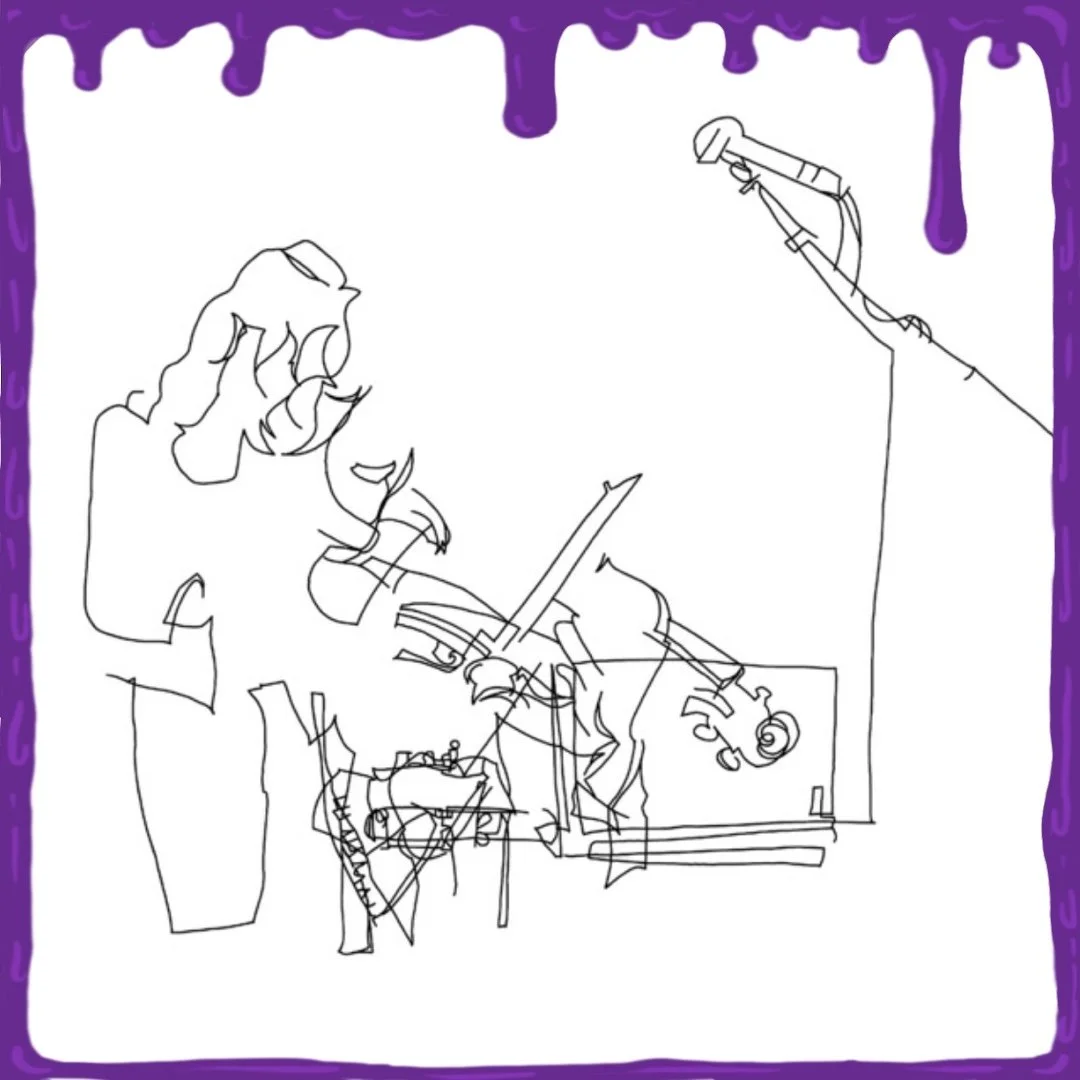
valley and structure — more eaze
Brooklyn-based experimentalist more eaze (Mari Rubio) has never taken on more than her adept arrangements are capable of handling on any of her myriad solo full-length projects, and that statement stands as true as ever on valley and structure, released via Thrill Jockey Records in early October.
That’s not to say that she’s unambitious—in fact the exact opposite. It’s simply that the spaces she creates, and the way in which she manages to fold each instrument and recurring sonic motif into the cohesive body of a project, is nearly unimpeachable. As subtle or as wild as her experimentations may get, they always come back to the serene, melodic root that’s at the heart of more eaze’s work, and dissonance and discordance are worked in through careful contraposition instead of rashly induced disagreement.
On valley and structure, Rubio handles each layer of each track with intensive care, but it’s the stunning volume of the project as a whole, the way it weaves in and out of its titular structure and backbone, that makes it a truly remarkable album.
more eaze’s foremost talent is creating sonic landscapes that contain multitudes—not just in terms of instrumentation but in terms of relayed emotion and catharsis. At the most powerful turns in her work, the lush emotionalism of Tchaikovsky is constantly evoked, albeit accomplished on a smaller, more minimalistic scale.
valley and structure is organized in five tracks, culminating in the 20-minute “once you say yes to the structure, you never get out”.
Once the steadily swelling strings and gentle acoustic pluckings of “they tried to shove me in the structure” have had time to fully establish themselves, Rubio slowly introduces a level of disharmony into the proceedings—small semblances of tape distortion begin to creep into the repetitive—and immediately intelligible, progression of chords and harmonies, until they grow louder and more plentiful across the track.
“what’s wrong with the structure?”, likewise, opens with strings, but this time they sound hollow, distinctly more distraught. It gives the track both a lighter and a more piercing feeling, and that is immediately augmented by the steady wind instruments and soft acoustic guitar strummings she uses to set the baseline for the track. This is when you can start to put your finger on the theme of the album—more eaze is working within a defined structure, within a repetitive loop of chords and strummings that, while entrancing, keep her melodies and improvisations relatively subdued.
That continues on “once you say yes to the structure, you never get out,” which shouldn’t come as a surprise based on the name of the track. But halfway through is when the crest of the album breaks, and more eaze’s solitary piano walks us across the bridge. The strings on the track abruptly turn dark, less harmonious, and the composition as a whole loosens its grip on its structure. Or maybe the structure loosens its grip on the composition.
Either way, it’s clear we’re operating in distinctly new territory now—the same motifs and instrumentations as before abound, but this time things are looser, less harmonious, more open in nature. By the end of the song, we are whirling in mid air, wind whipping past our face while the epoch of destruction passes by, a gnashing of teeth on soft, freshly-baked bread. more eaze manages to introduce true discordance to the fold while keeping everything the project has put forth to that point intact; nothing is cast to the side in pursuit of the album’s shift.
And then we’re back—at least to an extent.
“i’m in the structure,” with its drenchingly reverbed vocals, poses a compromise between the two spheres, as does “how can we get out of the structure,” the album’s closer. Both incorporate the gnawing strings of the second half of “once you say yes to the structure,” and both are distinctly more dynamic, and more wild, than valley and structure’s A-side. And yet by the time we reach the end of “i’m in the structure,” more eaze has found a level of serenity and comfort again in this new milieu. There is harmoniousness, and pleasure, to be found both inside and outside of the structure that the album sets for itself.
more eaze’s ‘structure’ is largely communicated through repetition and, in that repetition, a constant sense of beauty, so it’s difficult to answer the question the album’s tracklist poses at its conclusion. But it’s in the asking, in the exploration that valley and structure undertakes across its five tracks, that the evidence of more eaze’s brilliance lies.