
Somewhere Good — Tara Clerkin trio
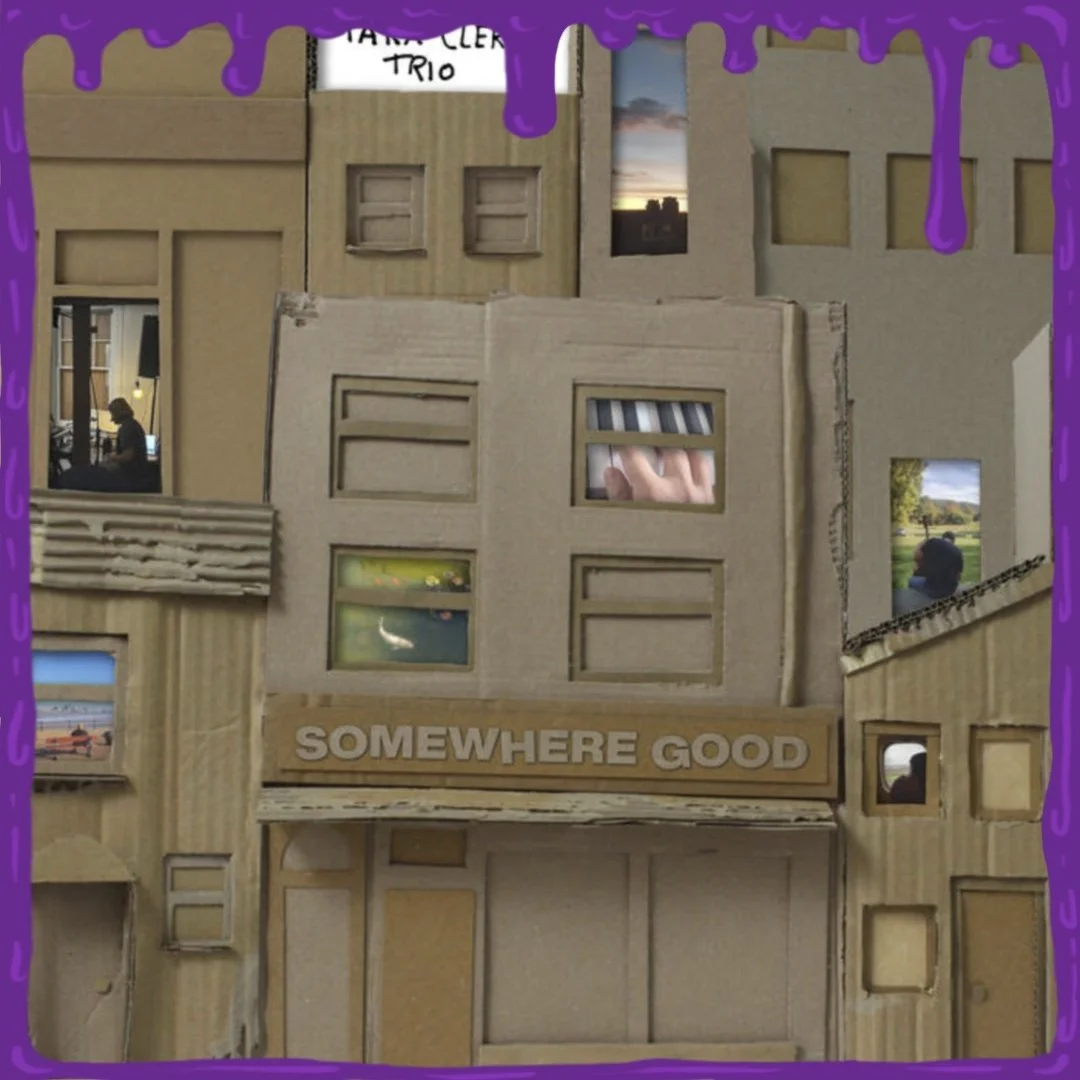
Somewhere Good — Tara Clerkin Trio
Somewhere Good, the second full-length release from the Bristol-based experimental group the Tara Clerkin Trio, doesn’t defy genre in the traditional turn of the phrase. There’s plenty of descriptors with which it can be tagged— across its 41-minute runtime, distinct trip-hop, neo-psychedelic, ambient, and chamber jazz influences peek their bleary heads around dimly-illuminated corners, only to reappear again and again in the album’s deeply intentional twists and turns. But these motifs and crystallized notions blend together into something that quickly rises above its component parts.
Somewhere Good is not a deeply cohesive work, but that is clearly an intentional act on the part of the trio. It, instead, is complex enough that a new sonic wrinkle is revealed with each successive listen— like a tapestry, its intricacies and woven pieces are too labyrinthine to fully extricate.
From the very first pairing of tracks, “Lake Walk” and “Lazy Daisy”, it becomes clear that not a single aspect of this album is simple, at least not in the sense that we use when we talk about the usual bold-faced simplicity of a project with ambient and minimalist roots. Even when the idiom seems to be, simply, “Set the drum machine and go,” the trio’s deep attention to detail shines through. On “Lake Walk”, Clerkin’s fragrant vocals grace a rhythm section carved straight from the annals of trip-hop. But in their clarity and fullness, they seem to echo the sweetest tones of vocal jazz while still managing to hold tightly to the insistent and repetitive qualities the track commands.
“Ups & Downs”, with its homage to Nat Adderley’s deep, blowing tones on “Biafra”, introduces us to a different dimension of the album entirely. While sampled vocals form the track’s ‘B’ theme, this is Somewhere Good’s fullest foray into its jazz roots— it is the most direct recognition of the album’s dominant undercurrent.
“Silently” then ventures back to the trip-hop idiom that we began the album with, its layers flashing and collapsing only to reappear, at no point disrupting the unity of the piece as a whole. “There Was A Nice Sunset,” “Somewhere Good,” and “Slow Island” then form the project’s final movement, drifting from refractive chamber echoes to psych-rock reverberations and spacious chimes and to the shimmering piano spatterings of the penultimate track.
“Movin’ On”, as the album’s conclusion, serves the listener a bit of a curveball. It fully embraces some of the zaniness and eclecticism that has been brimming below the project’s surface for much of its duration, with an almost-maddening amount of carnival and novelty sounds scattered across the track’s sonic landscape.
Yet, even at its most avant-garde moment, Somewhere Good manages to avoid any sense of self-irony. Each track is so staggering in its depth, so easily waded into by the listener, that even the left-field experimentations of “Movin’ On” seem par for the course.
Somewhere Good accomplishes this through its willingness to toy with a sense of both the familiar and the unfamiliar. At certain turns, the project is using sampled, R&B and trip-hop drums, but a wild swing into a mode of expression worthy of the post-bop masters of the 1960s never feels out of the question.
It’s hard to call this album ‘jazz’ in any commonly-accepted sense of the genre, but I’ll venture a claim in that direction anyways.
If all proclamations about the ‘future of jazz’ are false— the truth lies somewhere in the intricacies of Somewhere Good.