
It Goes On — Westside Cowboy
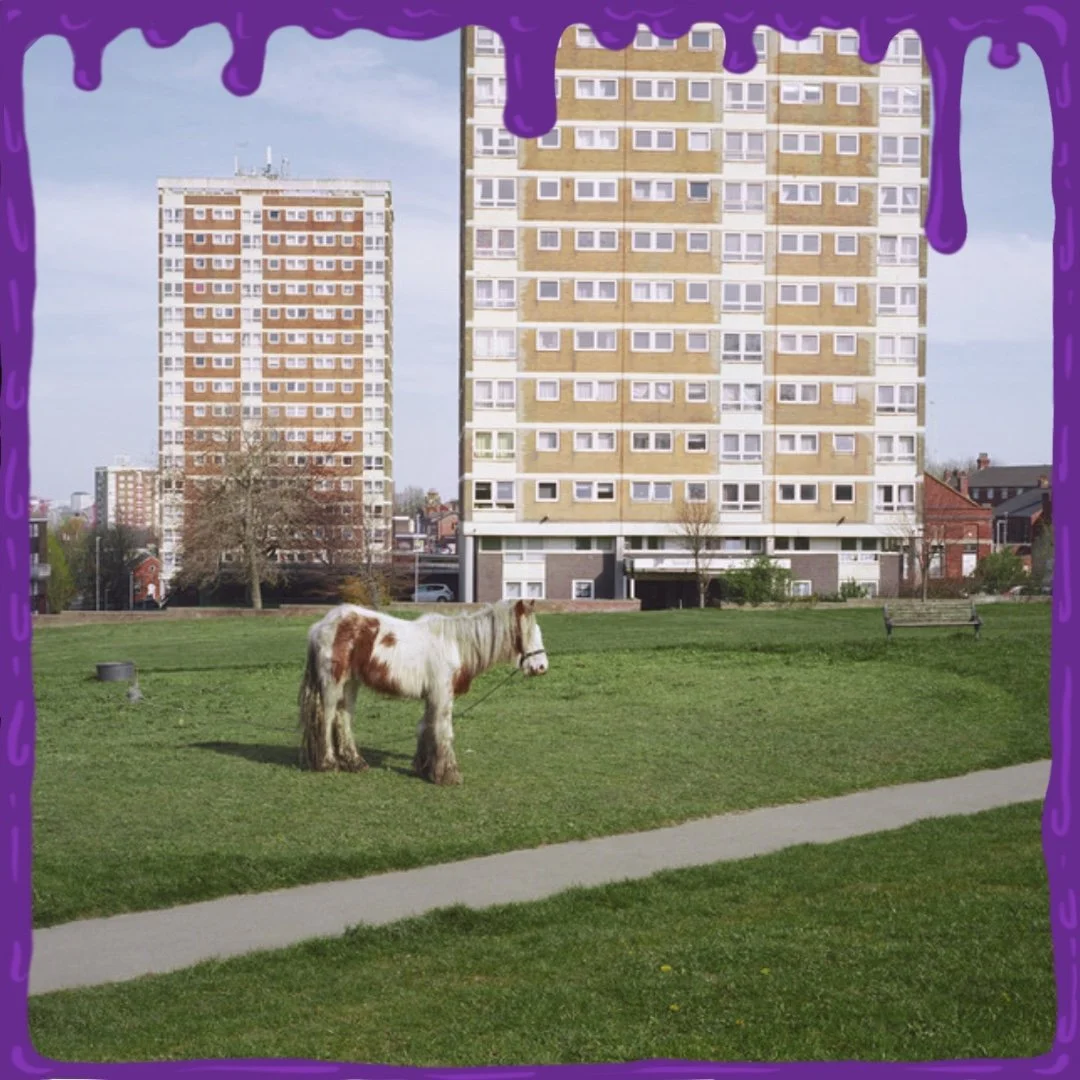
It Goes On — Westside Cowboy
Not many albums are appointment listening for me. I spend Friday, Saturday, and Sunday steeped in whatever load of music has been dropped on us for the week, and although I have projects I prioritize, most can often wait until my Saturday morning coffee to be thoroughly engaged with.
But after Westside Cowboy’s efforts in January on their So Much Country ‘Till We Get There EP and their handful of singles in the leadup to the release of their debut album, It Goes On, the start of my Friday couldn’t have gone any other way.
The project opens as you might expect, with an almost deadpanned, Lou Reed-esque delivery and pedal steel embellishments on “Kick Stones (The Boys)”— punctuated by a distinct sense of longing and time passed across Rueben Haycocks’ earnest narrative throes. But as it develops, and as Westside Cowboy’s Brittania alt-country sound transmutes itself into different shapes and forms, It Goes On only becomes more enticing, more inescapable.
It is, at first glance, an album about change— about growing up and slowly losing your grip on what was dear to you in your adolescence. The narrative themes play around a central vision of a relationship, one that’s slowly torn apart by the narrator’s inner failing and indecision, and that’s pretty solidly established by the time you reach the heart-wrenching “Take My Leaving As I Love You.”
But It Goes On is more than just its ingrained narrative. On “Worried Age,” Haycocks sings not just of an individual relationship but of an entire zeitgeist— in between verses that paint wisping pictures of a threadbare love, a constant refrain echoes in the chorus.
“We are a worried age/We are panic feels more real than a thought/In the vivid dreams of a careless death/Oh it eats and it sleeps and it walks”
Forgive the digression, but this plays more largely into a question that’s been tossing around in mind recently. To what can we attribute the sudden resurgence of the mass appeal of fuzzed-out alt country?
There are the obvious reasons— a general aversion to over-polished production (which, in part, may be a response to the fast-fashion efforts of AI companies) and a revival of the hero worship surrounding acts like Neil Young and Wilco. But there is a tenuous combination of earnestness and apathy that permeates It Goes On that, in a way, made everything click in my mind.
The muted tones and earnest expressions of alt-country are attractive because they are an answer to the anxiety and the perfectionism that defines our world today. There is honesty, and a sense of vulnerability and a bucking of expectations— not in a daring, but a strikingly candid way— that harkens back to what David Foster Wallace discusses in his answer to postmodernism in “E Unibus Pluram.” There is nothing (at least obviously) put on or constructed about acts like Westside Cowboy, MJ Lenderman, and Brown Horse. When Westside Cowboy sings about the passage of time, therefore, it feels as though an entire life has been laid out before us on a stained oak dining room table— with all of its blemishes, all of its wrinkles, and all of its earnest pain and hope scattered across the chipped edges of its narrative canvas.
What makes Westside Cowboy, and It Goes On, so enticing is their refusal to adhere to one expression of this sentiment.
The open-plain crescendoes of “Kick Stones” are immediately followed by the Strokes-reminiscent riffing of “Paperchains.” “Dobro” employs an undiluted, electric country guitar in its unwavering verses, but “Big Wheels” and “Coyote,” which serve as the sonic releases of the latter half of the album, turn that sound on its head with a plainer, more delicate tone in their driving rhythms.
It’s too much to ascribe a band with being representative of a zeitgeist at any point in their career, let alone on their debut album. But It Goes On, at least for me, is an uncannily perfect encapsulation of what it means to etch out an indie rock niche in our modern artistic climate. There is a constant magnetism threaded between its 11 tracks— a beating, bleeding, and unmistakably proud heart that gives the project its life.
Honesty and vulnerability can so often be a narrative construct in music. With It Goes On, it feels like the real, breathing thing from start to finish.