
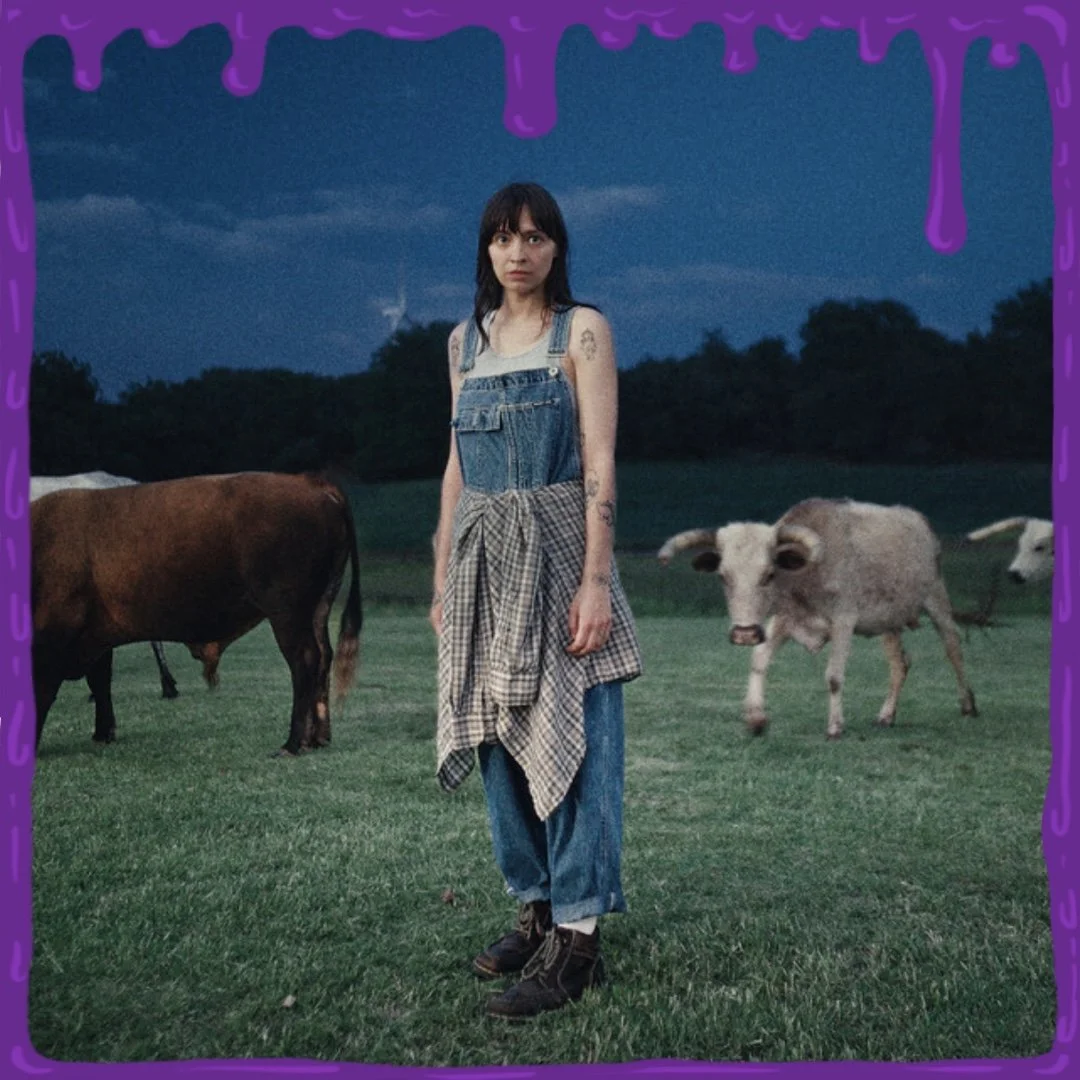
Doom Country — Hudson Freeman
Doom Country—the latest effort from Dallas-raised songwriter Hudson Freeman—doesn’t dwell on unfamiliar topics considering his particular brand of despair-centered folk. The wide open spaces and general malaise of the southern portions of the Great Plains and the rising dawn of Northern Texas have generated art, especially in recent years, that focuses much of its legwork on capturing the pure sense of futility, the bittersweet heaving of, as Freeman dubs it, ‘Doom Country’.
But there’s something in Freeman’s expression that makes Doom Country, in its totality, feel imminently fresh. It’s not a pervading sense of optimism, which is often tacked on in order to redeem the dismal tone of many of these works, nor is it a diluted sense of apathy.
It’s an inward focus, rather than any sort of sweeping, grand-handed societal critique, that allows Freeman’s voice to take center stage on the project, and it’s his own reflections and personal failures, brought back to him through the overarching landscape of the album, that gives it its central emotional thrust.
Before we get to the narrative throughlines, though, it’s worth remarking—this is one of the most intriguingly mixed albums I’ve heard in quite some time. The heavily compressed drums—sometimes squashed, sometimes vibrating with life—run in the middle of expansive, distorted guitars to create the churning rhythms of the first half of the project. And while the second half takes a softer, more sparse approach that features more finger-picking and more ambient textures. No matter what the overarching energy of a track is, though, it still manages to feel open.
It’s like you’re watching the tall grass of a Colorado plain be swung back and forth by a brewing storm—there’s a vitality in each track, but it’s not crafted simply by the left-right placement of the guitars or the ceaseless drive of a crushed kick drum. It feels distinctly unconventional, and that’s to the project’s credit.
But that openness also brings us back to the narrative sphere of the album.
On Doom Country’s third track, “Texas in Flaming Tongues,” Freeman’s second verse mentions, almost in passing, a drive to Dallas—and it seems like this is where Freeman’s personal reflections truly take over the album.
“I thought I was a taker ’cause I took my time
I drove to Dallas thinking through my thought crimes
I tried to get inspired, feel invention, grit my teeth
Nothin' did wash over me”
I’ve done that drive. And considering the fact that Freeman went to college in Springfield, Missouri (and has a whole song dedicated to the now-defunct Celebration City in Branson)—it’s quite possible that I did that exact drive last summer, straight through the dusty expanses of Oklahoma and into the heart of metropolitan Texas.
Let’s just say there’s a lot of time to think (and not many places to stop) when you’re barreling down I-35 or US-69.
I’m not going so far as to intimate that all of Doom Country is about this sort of road trip, especially because it would be rather easy to project one of my own experiences onto the work. But when you expand that picture out over the whole canvas of Freeman’s reflections, it at least serves to crystallize the narrative picture of the album a little bit.
First, there’s the snatches of radio, seemingly taken from the evangelizing stations that populate AM frequencies all across that portion of America, that set the texture and tone on the album’s first and last track.
Then there’s the clear reflective bent with which Freeman undertakes each of the tracks on the album. The narrative perspective here is important—most of the tracks on the first half of the album begin with a definitive “I” statement, turning the focus of the project inward.
“Left Behind” starts with the lines “You caught me naked, thinking / I'd been raptured too /But I was mistaken, faking / Nothing left to do.” “I-40” begins with the lines “Oklahoma makes me dizzy / And the windmills all resent me, I can tell / Wild buffalo get busy /While I binge on mawmaw's TV, all is well.” “Turning Green” starts with “When you came, I was red / In a spring field, where we met / You were bored, down the stairs / I was turning a page on the porch / I looked down / Saw my hands turning green.”
It’s a familiar ‘You, I, We’ narrative formulation, but the key to understanding it is that none of the characters, outside of the narrator, feel tangible in the slightest. The ‘you’s and the ‘we’s are all wisps, flitting by as quickly as bystanders on the side of the highway as Freeman zips past, ‘gritting his teeth’ and baring himself to remain alone with his thoughts.
Doom Country is not unattached from the actual places and memories that make up the bulk of the narrator’s upbringing. Those things are merely abstracted. They exist to help formulate the image of the self that permeates the album. And that self is reflected back at the narrator in the dusty plains and the sun-induced mirages on hot asphalt.
It’s a Steinbeckian portrait, measured with a certain theme of restlessness that makes each of Freeman’s portraits—of love, of frustration, of loss and familial relationships—that much clearer, even as they remain narratively opaque.