
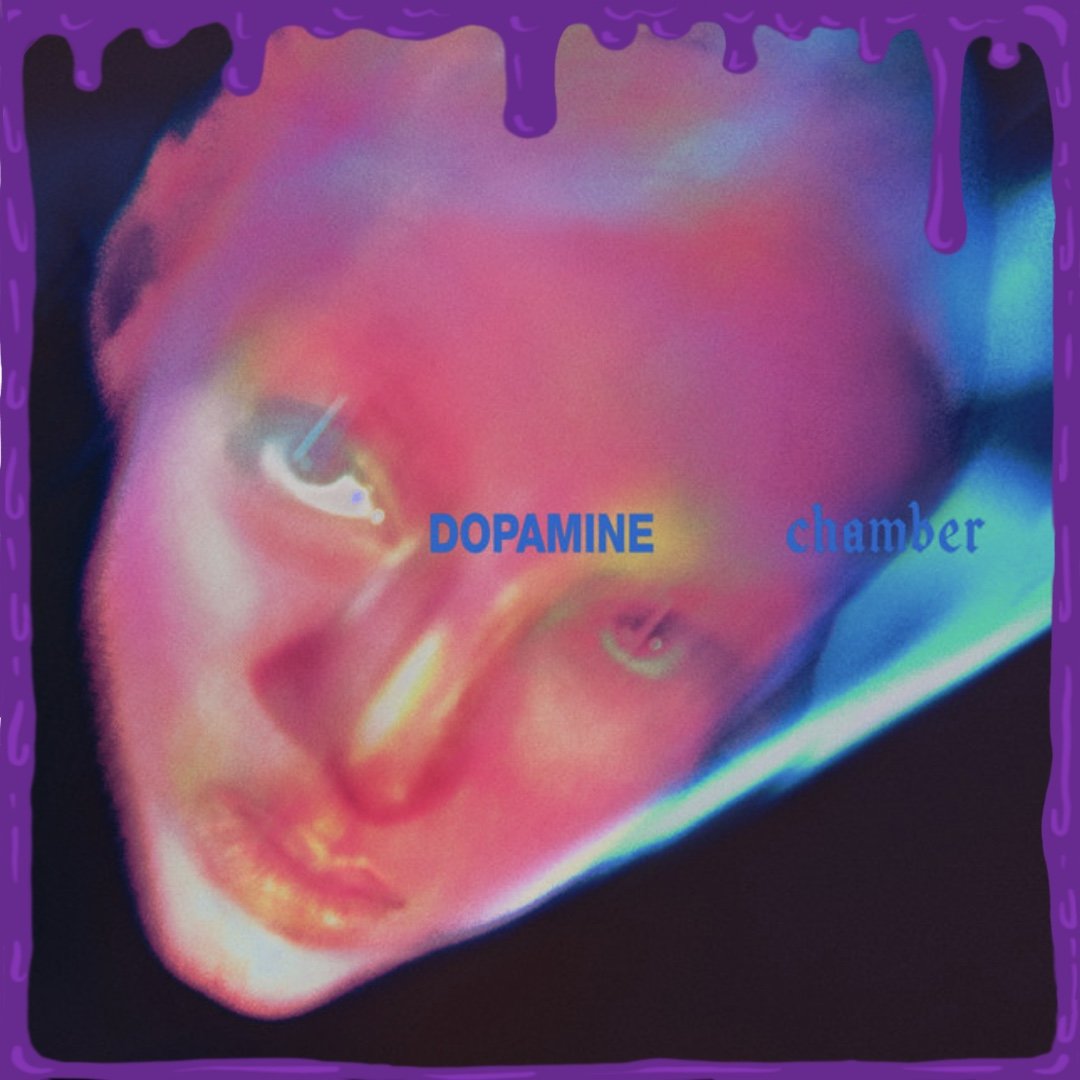
Dopamine Chamber — Fontaines D.C.
Nathan Fielder’s hit new documentary, You Can See Everything, is a testament to the blurred lines between truth and fiction. It forces us to contemplate what’s more real – objective events, or the subjective feelings within them.
Cinema – a theme evoked early & often by Fontaines D.C. on new LP Dopamine Chamber – has its limitations. No film can truly depict life. Even masterworks cannot be more than the artistic imitations of reality referenced by the title “Mimesis.”
Yet from the opening track, Dopamine Chamber paints life as "melancholy hearts in a motion film.” The cinematic motif extends throughout. Dopamine Chamber’s scenes are witnessed not in cinéma vérité, but through dreams, pictures, faded memories. As we look through Fontaines D.C.’s shrouded lens, we find life as not a catalog of milestones, but an obscure, unending whirlpool of emotion & identity.
This effect would not be possible without the Irish band’s distinct sonic evolution from guitar-led pop-rockers to vast, dreamy synthesizers & grandiose orchestrations. The sonic palette draws as much from Tame Impala & cloud rap beats as from britpop. Many of their Irish-centric hallmarks – Gaelic lyrics, even singer Grian Chatten’s accent – are dissolved into a global universality. With these decisions, Fontaines D.C. themselves act out the elusive identities depicted on their album.
We arise at the opening scene, “Six Shot Morning.” The sun rises with a tranquil synth, and a gentle bass throb rouses us from sleep. Chatten’s groggy voice observes the “sky crying” to greet him, whether outside his window or within his soul. “It’s a beautiful world,” he admits. With the entrance of drums, we shakily rise to our feet. “You and I living for a million years,” Chatten intones. “Always.”
As we finally face this crying, beautiful world, we’re consumed by a psychedelic abyss. The reverberated sea is so massive that within it lies an eternity. It’s the eternity that exists every morning – the eternity of the present, one that both always exists and never can be captured. It’s a truth of life that you can’t depict in a chronological sequence. It’s one moment, but it’s always.
This surreal, cinematic tone is furthered by “Marianne,” the psychological thriller of the album. An eeriness pervades as Chatten pleads to the titular Marianne – a lover, a foe? – through a “dream fog.” Swirling, warbled sounds add to the chaos, Our heads spin. We want a minute to breathe, to make sense of the feeling & peer through the fog. But the propulsive bass & drums don’t stop. Time keeps marching forward, and decisions need to be made before we can understand their consequences – even if we sense they may be dire.
We finally get our moment of reflection upon the stark opening of “Happy For You.” A lone, gentle guitar arpeggio places us in a quiet room, as Chatten recalls an argument with a lover. He sounds secure & measured as he “swears” he would understand if she left him. But our heartbeats lurch as the rhythm section kicks in. In the second refrain, Chatten’s desperation has grown – he’s breathier, his voice cracking. And then, a wall of distortion smashes us in the face. First, it’s a tremor; but before long, it’s our whole experience. Chatten wails over the wall. By presenting the same chorus as euphoric, accepting, anxious, rageful, anguished, the band articulates the shifting & uncertain nature of emotion.
Even with this stylistic evolution, Fontaines D.C. keeps a penchant for pop catchiness. Occasionally on Dopamine Chamber, this tendency can restrain the full dreamlike effect of the album. “Demolition” is such an example which seems to fight against this evolution – but perhaps this is intentional. At one point Chatten describes being taken “far away from true romance,” a presumable reference to the album’s predecessor, Romance. It’s telling that within their ode to ephemeral identity, the band fails to fully realize their own transformative mission.
“Tongue” is another song where we just can’t keep up, as Chatten’s words flow & flow in an unending stream. But like in “Six Shot Morning,” Fontaines D.C. shows us beauty within the chaos. A masterfully delicate piano breakdown shakes up the blasting beat, before opening up to a gorgeous orchestral eruption of brass, strings & synthesizers. The path to beauty, we see again, is unpredictable.
“Where Is Gone” gives our movie its Western. Opening with sweeping Ennio Morricone strings, the sound evokes the imagery of early Lana Del Rey. Accordingly, we get a new, female voice delivered by Rosalia. As it builds, the singers come together – with Rosalia’s double-tracked voice joining Chatten’s to magnificent effect. Their melody becomes a call from our collective past. We see desert sands, an old abandoned town. The singers’ memories become our own. We’re stuck in the past as much as we’re stuck in that abandoned town. And as strings swell again, we find beauty not in our escape from memory, but in the futile yearning for it.
“Intimate” acknowledges our “final scene.” The catch with the eternal present is that it continues on after we’re no longer in it. While our collective present lives “always,” our individual present is ultimately “dying and dead.” Fontaines D.C.’s reflection upon their place in the sea of humanity pays homage to their countryman James Joyce: “His soul swooned slowly as he heard the snow falling faintly through the universe and faintly falling, like the descent of their last end, upon all the living and the dead.”
With this as its final message, the album leaves us quizzical about its title. The band declares a dopamine chamber as a means to “kill the pain” in “One Man,” but the album hardly runs or hides from pain. Rather, it zooms into pain, and concludes that it’s a key part of what makes life beautiful.
On “Where Is Gone,” we hear a moment described as “another show to hurt you and make you feel alive.” And what is Dopamine Chamber, or any album of its caliber, if not just that? As listeners, we consume this record as a “show” of our own, living through the experience from an even further step removed. We view Fontaines D.C.’s motion film of life, just as we are characters within it. The events that befall us as characters can cause us pain. But that pain itself is the Dopamine Chamber for us as viewers– no drink, drug, or movie can better make us feel alive.