
Cost of Living Adjustment — Cola
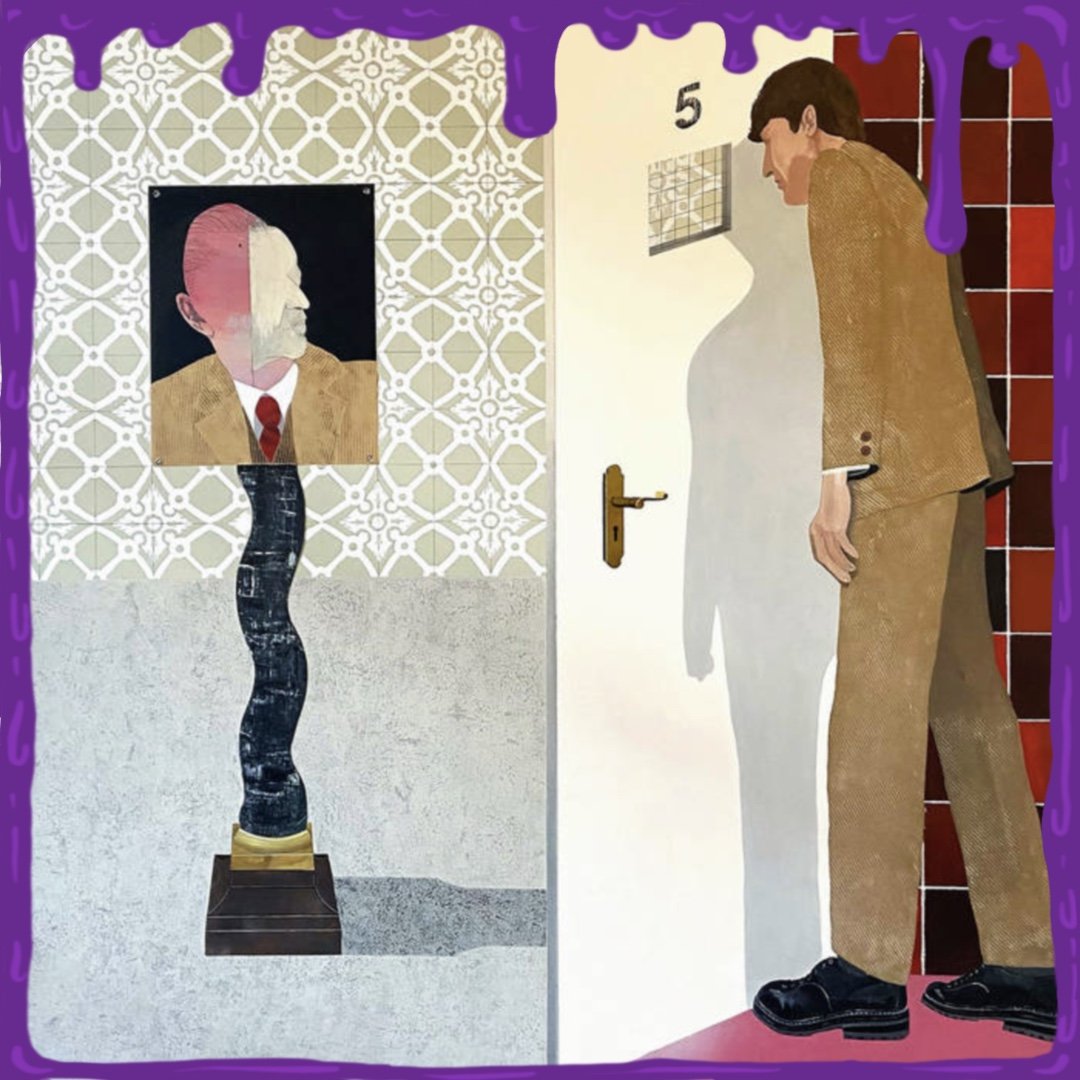
Cost of Living Adjustment — Cola
Cola’s foundations were laid in the dying moments of Montreal post-punk outfit Ought, but across their first trio of studio albums, Tim Darcy, Ben Stidworthy, and Evan Cartwright have etched out a vision all their own. With Cost of Living Adjustment, their particular, percolating punk sound has taken on a fuller life— one that extends beyond its ostensible social and political critique to craft a concave image of tangible life, love, and death in the modern, industrialized world.
When taken individually, Cost of Living Adjustment contains such a wide variety of sounds that they are, at times, difficult to reconcile with one another. When taken in tandem, though, Cola’s unique creative imprint, and their sprawling brand of post-punk, unifies the tracks into a singular, sweeping movement.
Beginning with the fuzzy downturns of “Forced Position” and “Hedgesitting”, vocalist Tim Darcy sets a series of darkened theaters for the record, pairing lines as abstract as “I can’t tell if the rain came, / I can see where the lightning strikes,” with a string of more personal and material remarks that serve to ground the listener in the specific moments the record creeps in and out of over the course of its 11-track run.
“Fainting Spells” reins in some of the frenetic energies of the first two tracks, but this pairing is then re-established when the early portion of the album’s social critique crystallizes on “Haveluck Country” and “Polished Knives”. While “Haveluck Country” takes on a more balanced, punchier approach, plucking and tumbling over a bouncy, stabilizing kick and “Polished Knives” prefigures some of the more glowing moments of the latter half of the album, both songs paint a picture of a capitalistic delusion— one of success, glamor, and an achieved suburban perfection.
But even at their most bold-faced, Cola’s critical images are still modest, almost empathetic. On “Polished Knives” he sings of an unabashed, if clearly misguided, hope, etching out lines like “Our union was strong as our love, like a brook in the bay / In the shifty days there were fifty ways to leave our doldrums babe,” over an instrumental that’s as reminiscent of the glitzier tones of ‘80s pop-rock anthems as it is of Cola’s own, more obscure sonic moments.
“Much of a Muchness” represents the beginning of the project’s descent. It’s the closest they get to the Strokes-like cyclical riffing they’ve been toying with on the earlier tracks, but in its fullness, it opens up the door for the album’s second movement— one that culminates in “Conflagration Mindset”, a track exploring the seemingly contradictory feelings of grief, emptiness, and community Darcy felt after his home was destroyed in the L.A. wildfires.
It’s this deeply personal touchstone that defines the entirety of the project’s commentary. Not only is Darcy a poetic singularity, but his images, consistently grounded in the real, tangible lives of both himself and his characters, evoke a sense of authentic turmoil. Like a tacit Edward Hopper painting, it refuses to divulge its full message— there’s a continuous sense of something missing, something withheld from an otherwise mundane and normal scene. But there’s also a deep warmth, one that forces the listener to recognize that defining Cost of Living Adjustment purely by its social commentary is not only insincere but a tragic rupture of the album from its true essence.